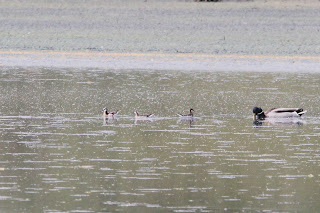
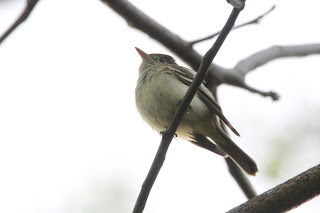
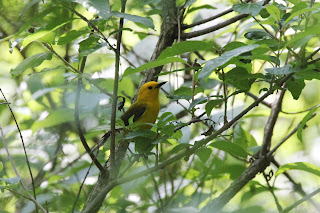
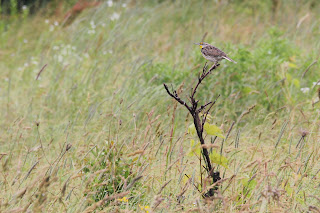
Showing posts with label Big Year. Show all posts

Sunday, 2 January 2022

Middlesex Biggish Year—What Happened???

As some readers may recall, in January 2021 I decided to go for a laid back "biggish" year in Middlesex County. I wasn't going for any records, but wanted to see how well I could do if I actually put in some effort. For the first six months of the year I was really cooking...but then, I just faded out of Middlesex birding existence. 

For all intents and purposes, I still think I did a biggish something, just that something was a "Biggish Half-Year". I got a job in Algonquin Park starting in July, and with incredible luck (and perhaps a little bit of hard work), I have managed to keep employment here throughout the remainder of 2021, and into the new year. As such, no new Middlesex year birds, save for Marsh Wren and Baird's Sandpiper when I visited home over Labour Day weekend. 

My grand total for the year was 228 species, 226 of which I saw by June, which certainly exceeded my expectations. Remember those codes from way back when? Here is the breakdown. 

Code 1: 129 species

Code 2: 61 species

Code 3: 24 species (1 new)

Code 4: 9 species (1 new)

Code 5: 4 species

Which adds up to 227, so I missed adding something in there, but it probably isn't crucial, so meh, close enough. Its a "biggish" year, I don't need to put in THAT much effort figuring it out. 

Basically I saw all the code 1 species (yay me), all but two of the code 2 species, all but 10 of the code 3s and then didn't see a bunch of the others, as expected.

There were many highlights from the year, some of which I will detail below:

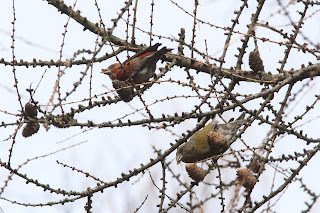
It was a great start of the year with winter finches. Quite funny actually, crossbills had pretty much all left by the end of November, and then bam, on January 1st I found over 40 White-winged Crossbills. Pine Grosbeak ended up being the only winter finch to evade me. 
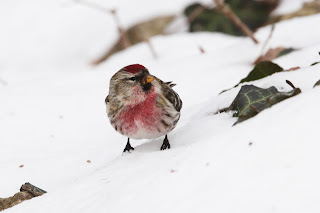
Common Redpoll

Red Crossbill

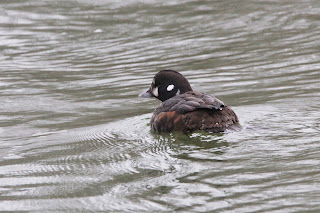
First big rarity of the year was a Harlequin Duck that we had to do some sleuthing to find out the most likely location that is was being seen at. Seems I picked the right spot, and managed to refind it!


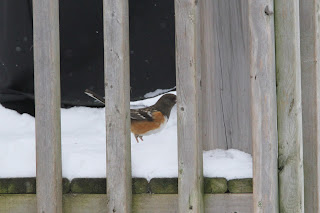
First (and I think only) OBRC bird of the year was a Spotted Towhee coming to a feeder in North London. My first lifer of the year as well. 


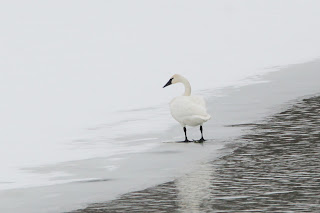
A Trumpeter Swan down along the river was another great pick up. I only encountered one other pair during the year.

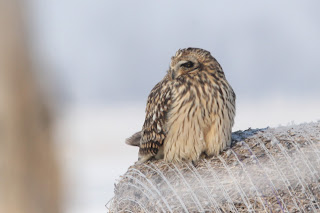
Short-eared Owls, always a highlight. This photo is actually from Lambton County, but I could see them from Middlesex...

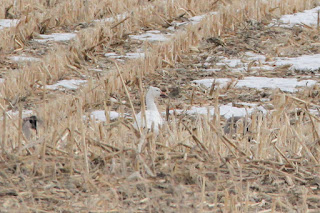
I saw two Snow Geese in 2021, and this is one of them. It was not at the original reported location in Strathroy when I went, but I found it on a hunch in a nearby field. 


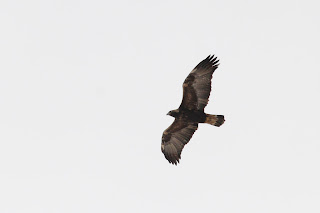
Golden Eagles didn't give me nearly as much trouble in 2021 as they did in 2020. This is one from Newbury, where they overwinter.

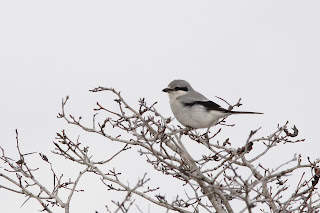
Some Northern Shrike action is always appreciated. 


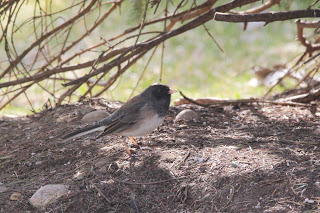
Arguably the "rarest" bird I found this year, a "Cassiar" Dark-eyed Junco from North London in March. I just didn't seem to luck out with any good rarities this spring.


Common Ravens are a formally rare species in Middlesex, but we now have a few breeding pairs. This pair occupied the site in 2020, and then again in 2021. 


I found several Vesper Sparrows throughout the course of the spring. A species I had honestly only encountered a handful of times before.


A good sized flock of 30+ Lapland Longspurs in April was a highlight. 


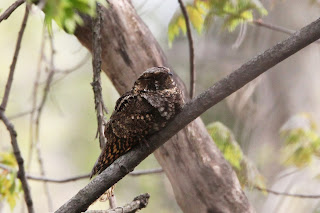
This is one of two Eastern Whip-poor-wills that I saw this year. 


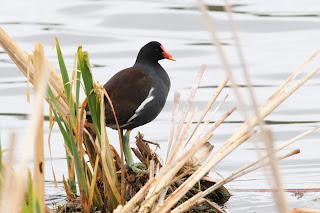
A Common Gallinule took up residence at the Strathroy Sewage Lagoons for a couple of weeks, proving that I had not needed to abandon my schoolwork and drive over there as fast as possible. 


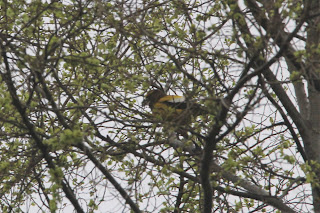
Evening Grosbeak!!! Very few were reported this year in the county, after the previous fall's major flight. I was lucky enough to come across a grand total of three.


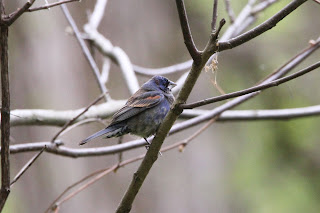
A rarity that was enjoyed by many was a Blue Grosbeak in Kilally Meadows in North London back in May. It was extremely elusive, and despite me birding there every day for most of May, I only saw it twice. Easily could have been "my" bird, as I had walked right by where it was found several times that same day! 

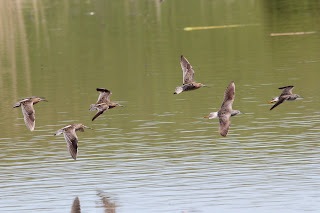
We enjoyed a variety of shorebirds in Middlesex this spring, including dowitchers, Ruddy Turnstone, White-rumped Sandpiper, and two phalaropes. My only Black-bellied Plover of the entire year anywhere in Ontario was a single bird that flew in at dusk at the Dingman Wetland in mid May.

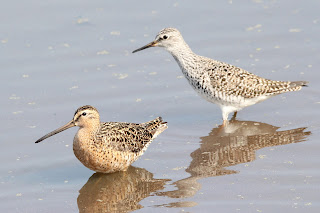
Short-billed Dowitcher

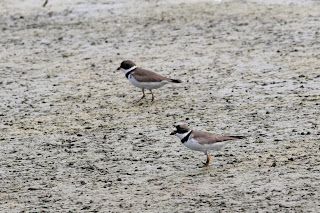
Semipalmated Plover...there was a surplus of these in May

Wilson's Phalarope

Short-billed Dowitcher and Lesser Yellowlegs

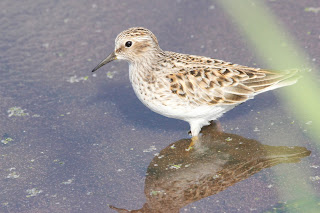
Least Sandpiper

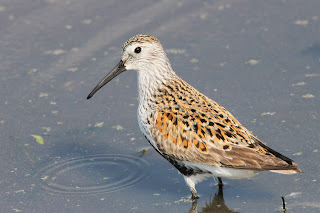
Dunlin

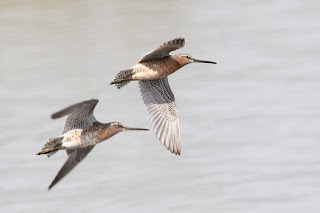
Short-billed Dowitcher

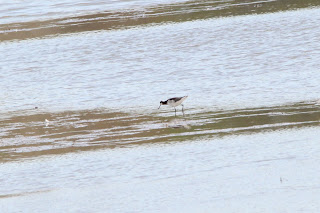
Wilson's and Red-necked Phalarope

What I would consider my best find of May was an Acadian Flycatcher at Kilally Meadows, my spring birding patch. I saw a number of nice birds here this spring, including Golden-winged Warbler, Red-headed Woodpecker, and a couple of Yellow-bellied Flycatchers.


My last year bird before leaving in July was this Prothonotary Warbler that was only around for a day in South London. I had spent some time in Skunk's Misery at the end of May trying to find some, encountering Cerulean Warbler and Acadian Flycatcher along the way, but no luck.


A big highlight of the year was a Western Meadowlark near Glencoe. I first saw it on May 8th, but my photos from late June turned out much better...


Not pictured are many other nice species such as Dickcissel, Northern Mockingbird, Forster's Tern, American Bittern and Upland Sandpiper.

Now for some honourable misses...

Orange-crowned Warbler - this is a tricky species in the spring (although usually I see at least one), so I wasn't really worried since they are a dime a dozen in the fall...but then I just never came back in the fall.

Gray-cheeked Thrush - I don't really have a good excuse for this one. I am very surprised I didn't see any in May (though as I recall, Catharus thrushes were actually fairly difficult to come by). I think this is just one I was also counting on as being fairly easy in the fall, at least as a nocturnal migrant flight call.

Red-shouldered Hawk - this one is all about patience with a healthy dose of pure luck. I did do a few hawkwatches in the spring during a time they were supposed to migrate through, but no dice. Middlesex isn't a great place for hawkwatching, and I find that my yard seems to be as good a place as anywhere (both my Middlesex observations of this species come from there). There was a wintering one early in the year I didn't connect with, and of course, no fall for me!

Red-necked Grebe - not a huge miss actually, as I believe there was only one seen all year! I birded Fanshawe CA pretty heavily in April, but I couldn't find one. 

Cattle Egret - just adding this to say that I searched unsuccessfully for two different birds during my visits home in November

Now, other than those, I don't think that I really "missed" anything. Sure, there were lots of other rare shorebirds (Hudsonian Godwit), some geese (Ross's Geese, Greater White-fronted Geese), a Sedge Wren, and a saw-whet owl, but I wasn't around for those! It stings a bit, but nothing I can do.

So in conclusion, I am quite happy with my six month effort, and even happier that I wasn't able to complete the remaining four months of the year as initially planned. I probably would have surpassed 240, maybe even 250 species, had I been around for the entirety of 2021, but oh well. I had more fun finding a Black-legged Kittiwake on Lake Opeongo in the cold than waiting for a Gray-cheeked Thrush to call while sitting on my back deck in the cold.

Well. That's all folks. 
Friday, 31 December 2021

Ontario Big Year in 2022

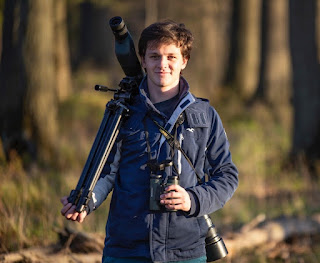
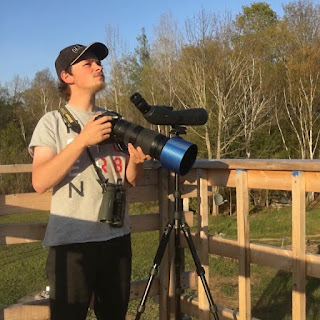
No, this isn't me making ground breaking announcement about my attempt at one of the most grueling ventures in birding, but rather me highlighting two individuals who are about to undertake this exciting task. Starting tomorrow, two of my good friends Ezra Campanelli and Kiah Jasper will begin their Ontario Big Years, and attempting to achieve a new record. These two will be joining forces for an attempt that has been in the work for some time now...and it is finally time to act. Using never before seen tactics, these two are sure to excel. 

Ezra Campanelli

Kiah Jasper

Although in my younger days (yes, even younger than I am now), all I could dream of was doing a big year, I no longer have that desire. Plants have really changed me it seems, That being said, I still love the strategy and excitement behind it all, so I for one am really looking forward to following along with these two. I'm sure I'll get roped into some adventures along the way...it won't take much convincing. 

Ezra and Kiah will sure have a great start to their year, if all goes to plan, as there are a number of lingering rarities that appear as though they will make it to the new year. Some of their top priorities which will keep them occupied for the first few days, at least, include a long staying Black-bellied Whistling Duck and Razorbill(s) in Niagara, Harris's Sparrow in Hamilton, Golden-crowned Sparrow in Toronto, Mountain Bluebird in Wellington, and the possibility of a Prairie Falcon in Durham (and literally as I was writing this, news of possibly even an Arctic Loon in Algoma). Of course, they would certainly take that Glaucous-winged Gull in Barrie if it were to ever pop back up! Townsend's Solitaire and Varied Thrush are two species that are also of high interest, and there a couple options to choose from for both.  

Once they get a number of these rarities, their attention will turn to some of the harder winter species in the province, such as Gray Partridge, Purple Sandpiper, finches, sea ducks, and northern owls. 

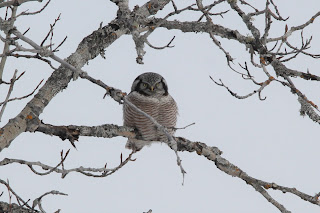
Northern Hawk Owl (Cochrane District, March 2020)

The current big year record for Ontario is 347, set by Jeremy Bensette in 2017, so it will not be an easy feat, but it sure will be a rewarding one. 2021 was a super year for rare birds, with Geoff Carpentier seeing 343 species (and not starting his serious big year attempt until May!), so here's hoping that 2022 is even better. 

If you wish to follow along with their big year progress, check out Kiah's blog and Ezra's website. If you are social media savvy, check out Ezra's big year Instagram account @bigyearbirdxbird where he will be posting photos of each year bird he sees. 

Best of luck to you both, and Happy New Year to all!!!

Wednesday, 30 June 2021

Middlesex Biggish Year: June Update

 June has just come to an end, and as such we have come to the approximate halfway point of my "Middlesex Biggish Year". I ended up seeing two new species for my year list, putting me at 226, which I think is pretty swell! This beats my total from last year, and becomes the second or third highest year list total in Middlesex history (recorded, anyways), and we're only 6 months in! The one bird I was kind of hoping to find this month was Marsh Wren, and I actually went out to the sewage lagoons on a few occasions to try and find the ones that were sporadically reported, but no luck. I will have to cross my fingers for the fall!

The breakdown:

Code 1: 129 species

Code 2: 60 species

Code 3: 23 species (1 new)

Code 4: 9 species (1 new)

Code 5: 4 species

On June 11th, I saw one of my most sought after breeding species for the year, a Prothonotary Warbler in southeast London. We thought that the habitat looked pretty good, but the next day, it was gone. Who knows how long it had been there before it was reported. 

My other new addition for the month was a code 4. On June 1st, the day right after I had wrote I was giving birding a break for a bit, I got an alert for a Common Tern in south London. I skedaddled right over there, and found that it was actually a Forster's Tern, which was soon joined by a second while I was there. Despite being a bit more expected, it was a new Middlesex species for me, so I was happy anyways! I'm up to three tern species this year in Middlesex, which is pretty nuts. Still time to make it four...or five. 


I'll more than likely not be in Middlesex much over the next couple of months, so I will take this up again in September! The only thing I can think of maybe missing (barring rarities) would be Baird's Sandpiper, just because of how unpredictable they are in the county to begin with. I guess time will tell! 

Monday, 31 May 2021

Middlesex Biggish Year: May Update

At what point does a "biggish year" become a "big year"?

May has just come to a close on my "Middlesex Biggish Year", and behind us we leave one of the busiest months of the year bird wise. And busy it was. In an absolute whirlwind of a month I saw SEVENTY (that's seven - zero) year birds. Maybe not a super crazy number on a provincial scale, but for Middlesex, and considering I had already seen over 80% of the birds reported in Middlesex at the end of April, I think it is quite exceptional. My year list now stands at 224 (over 90% of birds recorded in the county so far this year), which just so happens to be what I finished with at the end of last year. I have had a few misses this past month, including migrants such as Orange-crowned Warbler and Gray-cheeked Thrush, as well as some good rarities like Connecticut Warbler (not too torn up about that one, would rather self find my lifer anyways!), Kentucky Warbler (shows up the first morning in a week I don't go to Kilally), and Prairie Warbler. Never did get out to try for Whimbrel (would be a long shot, but doable), maybe next year. 

I should make a quick note about the weather: it sucked. Or rather, it sucked for birders. There were a few "good" days here and there, but nothing compared to what we had last year with "fallouts" of birds. The weather was conducive for migration the first few days of May, then we hit a patch of north winds with not much happening, followed by summer like temperatures with virtually no rain for a couple of weeks. Finally in the past few days we have had winds switch back to north, with temps down to the single digits. The clear nights coupled with south winds meant that birds got going...and just kept going. Although we had a pretty good diversity of birds this spring, we really had to work hard, and the case for many species was fewer individuals than normal (for example, I saw less than 20 individuals of Swainson's Thrush in the whole of May...what the heck??). 

The breakdown: 

Code 1: 129 (26 new)

Code 2: 60 (26 new)

Code 3: 22 (10 new)

Code 4: 8 (5 new)

Code 5: 4 (2 new)

A bunch of loose ends tied up with code 1s this month. In fact, 129 species marks every single one of the code 1s there are to see! It only gets harder from here. Flycatchers, warblers, vireos, gnatcatcher, a few thrushes...you know, the usual stuff.

Bay-breasted Warbler

Big increase in my code 2 list as well, leaving only three remaining (Marsh Wren, Gray-cheeked Thrush, and Orange-crowned Warbler). Quite a few shorebirds added here, as well as some of the more uncommon flycatchers, warblers, vireos etc. I worked pretty hard to get Yellow-bellied Flycatcher and Olive-sided Flycatcher, and it eventually paid off—I saw Yellow-bellied twice in the last week of May, and saw an Olive-sided yesterday in Skunks Misery! 

Yellow-bellied Flycatcher

Code 3s consist of mostly annual rarities, as well as scarce breeders. Up to 22/34, which I don't think is too shabby. A few good shorebirds such as Black-bellied Plover, Short-billed Dowitcher and White-rumped Sandpiper, as well as some rarer migrants like Common Gallinule and Golden-winged Warbler. The scarce breeders were made up of Acadian Flycatcher (seen both on migration and territory), Clay-colored Sparrow (which I actually saw as a migrant in my neighbourhood, a new patch bird!), and Cerulean Warbler. 

Common Gallinule

Acadian Flycatcher

Clay-colored Sparrow

What a crazy month for code 4s! More good shorebirds in the form of Ruddy Turnstone, Wilson's Phalarope and Red-necked Phalarope. Black Tern and Evening Grosbeak made up the other ones.

Evening Grosbeak

Phalaropes

One of my code 5s for the month was the Blue Grosbeak in Kilally Meadows. You can read more about that here. I also had a Western Meadowlark in early May.

So what's next going forward? Well, I think I will scale way back on my birding until the fall. Still a few birds to keep an eye out for over the late spring and summer months, so I guess we will have to wait and see what happens! For now, I think it is time to pay attention to insects and plants :) I have had an amazing time so far this year, and look forward to picking it up again! I guess I can actually sleep in now...

Friday, 15 January 2021

A Middlesex Biggish Year?

Up until last year, I never really wanted to limit myself to just Middlesex County. It seemed like a pretty boring place. I would look at the historical records and think to myself "the good old days are long behind us now". Then we had 2020, when all of a sudden the "good old days" were starting to happen again. I added over 20 species to my county list, a feat I thought would be impossible. Having such good birding in 2020, especially in the fall, lit a fire under me. I wanted to see what else I could turn up. 

And so, my initial plans at the start of 2021 of just trying to see some birds early on and then lay off morphed into a plan to try and see as many birds as I could in the span of one calendar year.

Some may call it a "big year", but I'm more going to call my little attempt a "biggish year". I'm not going for any record (which is like 247 or 248 by the way, set by Bill Lindley in 2020), I just want to have some fun. I know I'll be in the county full time until at least the end of June, so why not? After that, we'll have to see what goes on (I have hopes and dreams that take me out of Middlesex I wish to accomplish, but with the current state of the world, only time will tell how realistic they are!) Chances are I'll get in some birding in the latter half of the year as well.

It seems whenever someone wants to do a year listing attempt, they make up some codes, usually ranging one through six. These detail the likelihood one is to see a certain bird that year. I made up some of my own. They aren't perfect, but I think they'll work for my purposes.

Code 1 

These are the commoners. Just by birding, I am pretty much guaranteed to come across them at some point in the year. There are 129 species in this category, and includes things such as  Canada Goose, Killdeer, Red-tailed Hawk, Eastern Phoebe, Tree Swallow, Song Sparrow, and Yellow Warbler.


Code 2

These are the more uncommon birds that usually require special effort or to get somewhat lucky to stumble across them. They aren't necessarily rare, but I may only come across a few of them in the year. Most are probably guaranteed in a good year. There are 63 species in this category, which includes Horned Grebe, Virginia Rail, Great Black-backed Gull, Gray-cheeked Thrush, Fox Sparrow, and Canada Warbler. 


 Code 3

These are typically annual or almost annual birds, but there are usually only a few records of them each year in the county. Rarer breeders that are more restricted to where they breed, or are uncommon in the areas where they breed, are included here. There are 34 species in this category, including Trumpeter Swan, Ruffed Grouse, American Bittern, Red-shouldered Hawk, and Acadian Flycatcher.


Code 4

These are the rarities. They cannot be expected to be recorded annually. A few of these are irruptive species (winter finches), while others are genuine rarities that may stir up interest from the birding community, even outside of our local one. There are 49 species designated under this code, including Greater White-fronted Goose, Black Scoter, Eared Grebe, Ruddy Turnstone, Wilson's Phalarope, Sedge Wren, White-winged Crossbill, and Summer Tanager.


Code 5

These are the birds that would make my whole year if I saw one. These are the rarest of the rare, with less than five records since 1963 (which is the furthest back in the records I can go for most species, although some earlier dates are included in the spreadsheet). Birds that are also deemed to be highly improbable as a result of loss of habitat or a population decline (ie Western Meadowlark) are also under this code. There are 65 species in this category including Brant, Rufous Hummingbird, Yellow Rail, Marbled Godwit, Glossy Ibis, Mountain Bluebird, and Kirtland's Warbler. 


Code 6 and Introduced/Non-countable

Code 6 belongs to our extinct species, Passenger Pigeon. Two species, Northern Bobwhite and Gray Partridge are non-countable. An exception may be made for Ring-necked Pheasant, but only in certain circumstances may it be deemed "good enough".


For reference, in 2020 when I saw 224 species, the breakdown was this:

Code 1: 128

Code 2: 59 

Code 3: 21

Code 4: 13

Code 5: 3

It will be tough to beat! 

So, what's a good goal? It is hard to say right now! Some years, such as last years, the birding is great (which is what I hope happens again), and others, birders trying for a high year list struggle to break 200. I think we'll have to play it by ear, but in the event of a "good year", I think anything in the vicinity of 220 is respectable! 

This should be fun. Lets see what happens...

Sunday, 24 June 2018

More Moths

It has been incredibly busy as of late! I admit I have been slacking when it comes to the blog, but I find it much more enjoyable to be outside looking for "content" than sitting inside writing ;-)

Anyway, I have been able to set up the moth sheet some more in the last couple weeks, so I'll share some more photos. Exams wrap up on Tuesday, so after that there should (hopefully) be more posts as I am able to explore even more outside!

On a side note, myself and a bunch of my friends, fellow young naturalists, are doing a little *friendly competition* to see the most species in 2018, as well as see how many species we can find collectively. Already we are up to over 730 species! I embedded the iNaturalist project's latest additions on the side bar (below "about me") and you can view the project here.


Black-dotted Glyph (June 15)

 
Canadian Agonopterix Moth (June 15)
 
Large Yellow Underwing (June 16)

Double-banded Grass-Veneer (June 24)

Large Yellow Underwing (June 24)

Elegant Grass-Veneer (June 24)

American Idia (June 24)

Aproned Cenopis (June 24)

Single-dotted Wave (June 24)

Double-banded Grass-Veneer (June 24)

Armyworm Moth (June 24)

Bent-winged Owlet (June 24)

Wedgling Moth (June 24)

Red-shawled Moth (June 24)

Oblique-banded Leafroller (June 24)

Flame-shouldered Dart (June 24)

Unidentified moth (June 24)


Large Yellow Underwing (June 24)

Sod Webworm (June 24)