Showing posts with label Red-necked Grebe. Show all posts

Wednesday, 27 April 2022

The Perfect Storm

If you've been keeping your finger on the pulse of Ontario birding, you'll know that earlier this week we saw some of the best migration of the year to date. Ontario saw a massive influx of early migrants, and localities along Lake Erie recorded 20+ species of warblers (including such gems as multiple Yellow-throated, Kentucky, Prairie, Golden-winged, and Worm-eating), multiple species of flycatchers, tanagers (all three!), orioles, and lots of special sparrows. 

Back at the beginning of April I was planning out my work schedule, and decided to take Sunday, Monday, and Tuesday (April 24-26) off, and then hope for the best. Well, I guess I know how to pick time off, as these days perfectly coincided with the "best" days for bird action! Three days off, good weather for birding...any birder in their right mind would make a beeline for Point Pelee or Rondeau, but I opted for something much closer—the Old Airfield in Algonquin Park. 

There were lots of birds in the air Saturday night heading into Sunday, and I could barely sleep just thinking of what was going to be found the next day. Still, my alarm seemed to go off much too soon. After some stumbling around and throwing a couple of sandwiches together (see Mom? I'm feeding myself), I was out the door and in my car heading towards the best birding location Highway 60 has to offer. I soon met up with Jeff and Angela Skevington, and we spent the day birding together.

One of my first birds of the day was a new one for the year, a Palm Warbler. A good sign.

As we continued to walk around the airfield, we flushed up a pretty exciting bird: a Vesper Sparrow! This is the second one reported in the Park this spring, but I had missed the first one. It was a new park bird for me, ending a dry spell of a couple weeks. This is a very uncommon bird in Algonquin Park, and appears to be on the decline. 

After that nice little flurry of activity, we set up shop in the east end of the airfield and waited to see what would fly by us. I wish I could tell stories of flyover Red-bellied Woodpeckers and House Sparrows, but alas, it was fairly quiet overall. We did, however, see one very good bird...a Cooper's Hawk! It was pretty distant, but unmistakeable. This is another rarity in Algonquin Park, and a new one for my list. 

In terms of year birds, the first Chipping Sparrows and Savannah Sparrows were seen. Another large flight of 3330 Common Redpolls was observed. Why these birds are moving in such large numbers, and why this movement is really only being seen in Algonquin Park, is unknown. We ended up with just over 50 species for the day at the airfield, my first time breaking that threshold this season. You can see the eBird checklist here.

We spent the rest of the day birding around the Hwy 60 corridor. We found the first Barn Swallow of the year at the Opeongo Docks, and then some more of them at East Gate. It was a great day.

Now, while Sunday was a great day, looking at the forecast, I was sure that Monday would be not quite as good. Sure, the winds were south, but rain was going to hit during the night, shutting down migration, and the temperatures were going to drop. Oh boy, I was wrong.

I actually got a slightly later start at the airfield than usual (I wouldn't see much, I told myself). I opted to do my usual loop backwards to get to the marsh/river mouth first, just in case the rain grounded any ducks (a fairly rare occurrence in Algonquin Park). As I approached, in the distance I saw a group of three American Wigeon flying with some Mallards over Lake of Two Rivers. Nice, I thought, but I was half expecting the species (which is very uncommon in the Park) today with the rain. I continued on my way, and spotted a male Blue-winged Teal in the distance all by his lonesome. Huh, things were getting good. I then rounded the corner and nearly dropped to my knees as I spotted as many as ninety Ring-necked Ducks all huddled together in the river mouth. By far the most I have seen along Hwy 60, this could only mean one thing: fallout. I scanned that group of Ring-necks, and came up with several more Blue-winged Teal, as well as some Northern Pintails. A few flocks of ducks started flying around, and I got on some more pintails and wigeon and teal. There actually seemed to be too many birds! I couldn't get on all of them, and it haunts me thinking about what I could have missed.

Northern Pintails

As the fog lifted, I spotted something even crazier: a large raft of scaup in the middle of Lake of Two Rivers. I would later count as many as sixty Lesser Scaup, a very high count (if not a new high count) for the spring in Algonquin. The duck raft was a bit too far to see all of it from the airfield, so I made the decision to pry myself away and go over to the picnic area, which would hopefully get me closer. 

I arrived at the picnic area beach, and soon was sorting through the flock. Unfortunately, nothing super crazy (I wanted a Redhead), but a small group of Red-breasted Mergansers was nice. As I scanned, I spotted a Pied-billed Grebe, which was a new (and slightly overdue) park bird for me. What a day it was turning into. 14 species of ducks for the day already by this point. 

Pied-billed Grebe

I returned to the Old Airfield and carried on with the rest of my day. Birds were in constant motion, despite the rain. My best birds of the day was a pure flock of eight Cackling Geese that flew by, another rarity in Algonquin Park. I ended with 64 species of birds at the airfield. I had other places I wanted to check, so I decided to leave around 3pm. You can see the eBird checklist here.

I had gotten word of some ducks down on Smoke Lake, so I went over that way to investigate. Along the way, I noticed a few ducks flying out of Cache Lake, so I quickly turned into there. Right from the parking lot, I found two pretty nice birds—a pair of Long-tailed Ducks and my park bird Horned Grebe. Nobody quite likes the rain like an Algonquin Park birder! 

Long-tailed Duck

The ducks were gone off Smoke by the time I got there, so I turned back around and headed east. I checked the PLE Pond near East Gate before calling it a day. I was dead tired, but had seen nearly 80 species of birds, including three park birds. It was the kind of day that I have long dreamed about having, and is right up there with the most fun and rewarding birding days that I have ever had.

Tuesday I figured would be a bit more subdued, and I was right to a degree. Because the rain continued into the night, many of the waterfowl lingered into the next day (which is fairly unusual), so that bolstered the day list. As the weather cleared, many had left by mid-morning. Because of the rain, very few new birds arrived overnight, and I got the impression that many of the same birds I had seen the day before were still around.

American Wigeon getting outta there

I spent the whole day in the airfield, and had a few highlights.

As I sat in my chair freezing my butt off, I noticed a bird come flying out of the small trees on the north side of the airfield. It took me a second, but...

"HOLY [I'll let you fill in the blank, be imaginative]!!!"

I was looking at a Short-eared Owl. Sure, not the rarest of rare birds, but for Algonquin Park, this is a very, very tricky bird to nail down, and not a ton of people have seen one in the park before. This is subject to revision, but I believe this is around the 20th record for Algonquin Park. As is typical of Algonquin Short-eared Owls, it continued on its way, never to be seen again. Lucky for me, I managed to get off one good record shot in my excitement/panic. 

Well, hard to top that, and it was only 8:30 am. I spent a good chunk of the rest of the day telling myself "just another little bit" fighting off the uncomfortable cold. The next most interesting thing to happen was spotting some grebes on the lake, both Red-necked and Horned. I had seen one Red-necked in the park prior, but it was certainly still nice to see. 

Red-necked Grebe

Horned Grebes

Other than that, I wouldn't say there was really anything else to write home about, so I'll just let the eBird checklist do the talking. I ended with 72 species, which I thought was pretty cool. I probably could have turned up a few more if I had put a bit more effort in seeking out certain species earlier in the day (I would've had I known I'd tally so many!).

In all, over my three days off I tallied 94 species, including 15 year birds and six new birds for my park list. I would chalk that up to being a success! Sure, we didn't get anything super flashy like Point Pelee or Rondeau or Long Point, but hey, it's early yet ;) 

Sunday, 8 November 2020

Fanshawe Finches n' Stuff

I had been aiming to put out a post detailing the mothing in my yard this past summer, but given the great sightings I have had since my last birding post, seems that will have to hold off! 

Fanshawe Conservation Area is a spectacular birding location only about 10 minutes from where I live. I am looking forward to the breeding bird atlas, starting next year, as my London area square encompassed the conservation area. Should be good!

On Halloween, I started at "The Lookout", as I normally do. I find it can be a great spot to see a variety of waterfowl and other flyover birds. After about 40 minutes, I was quite delighted to see a Red-necked Grebe fly by and land in the north end of the lake! This was my first observation of one in Middlesex, and a species I had been hoping to see every time I had gone out to the reservoir. 


Also on the 31st, I had nine Evening Grosbeaks and another Red Crossbill. Certainly a nice finch year! eBird checklist (Oct 31)

The next few times I went out to Fanshawe (November 3, 4, and 7) weren't too eventful, other than adding Common Redpoll and White-winged Crossbill to my winter finch list for the location. I am not up to eight finch species there this fall, with hopefully still some Pine Grosbeaks and Hoary Redpolls on the way. I also continued to see Red Crossbills, with the largest group being 11 on the 4th. I still have not seen both crossbill species in one day though!

eBird checklist (Nov 3)

eBird checklist (Nov 4)

eBird checklist (Nov 7)

Today was certainly an exciting day as well. Not two minutes after getting out of the car, I found a Northern Mockingbird. Mockingbirds sightings are rare, but increasing slightly, in Middlesex. It was a new year bird for me. I thought for sure I had missed it!


I was a little disappointed that the rowing teams (Fanshawe is where they train) had beat me to the north end of the lake where all the waterfowl were. They flushed basically everything in sight! As such, I wasn't really expecting to see too much on the lake. Finches and other birds kept me entertained, and I had 25 Common Redpolls, as well as a Red Crossbill (type 10). At one point, I noticed a lone duck. I raised my binoculars and, could it be? I got my scope on it, and it sure was! A Black Scoter! A new Middlesex bird for me. I called Bill Lindley, who needed it for his big year, and he came and saw it shortly before it disappeared.


It hadn't been looking great for the county getting all three scoter species this year, even with all the effort put in. I believe that this is the 253rd species recorded in the county this year, incredible! The last record for Black Scoter in the county I can find is 2012, so it has been awhile!

eBird checklist (Nov 8)

Hopefully, we are just getting started! I am expecting some good things on the next cold front (but will it be bean goose good? Who knows)

(Another plug for Ezra's site, it's ready now!)

Monday, 12 November 2018

The East and the West

Last week two rarities were found in the province. One was a Common Eider in Toronto, and the other a Black-throated Grey Warbler in Burlington. Common Eiders, although they breed in far northern Ontario along the Hudson Bay coast, are quite rare in the south. They winter in the Maritimes (the east) but seldom make their way to the Great Lakes. Black-throated Grey Warblers are warblers from western North America (the west). Although they are the most common western warbler vagrant, they are still quite a treat to come across. Lucky for me, those two rarities stuck around until this past Saturday, when I planned to go and try to see them.

The first stop of the day was Humber Bay park in Toronto. We got there early (with my friend Ethan in tow), as the eider was known to head out further into the lake as the day progressed, It did not take us long to see her.


Some other waterfowl present included Long-tailed Ducks, Red-breasted Mergansers, and White-winged Scoters.

Long-tailed Duck

There was a lingering Yellow-rumped Warbler.


I don't get to see too many mockingbirds down where I live, or any for that matter, so seeing one was a treat (despite my Toronto friends laughing when I told them that)


We went to quickly check out Colonel Sam Park afterwards. Nothing really of note was found, but Red-necked Grebe and another mockingbird were highlights (I don't see many Red-necked Grebes either!)

Northern Mockingbird

Red-breasted Merganser

Red-necked Grebe

I saw a bunch of this plant, Oriental Bittersweet, on this day.


We went down to Burlington in hopes of spotting the Black-throated Grey Warbler. As soon as we arrived we saw a group of 25 people all looking in the same direction. We figured that was a good sign.

Within a couple minutes we saw our target bird.


After enjoying the warbler, we went out to see what other birds we could find. There was a lot of waterfowl on the bay.

Mallard

Ring-billed Gull

Common Goldeneye

Redhead

Canvasback

Carolina Wren

All three species of swans could be found.

Trumpeter Swans

Mute Swans

Tundra Swan

With all the bird feeders, there were plenty of fat squirrels.


We decided to try and see if we could get any better photos of the warbler before we left. Everyone else had left by that point, so when we found him again we had him to ourselves pretty much, there were a couple other people just arriving to enjoy it as well. It took some patience, and many failed photos due to the warbler hiding behind leaf (so many perfect shots ruined!), but we left with some photos we were very happy with!


Nothing like the feeling of seeing some good birds!

Thursday, 13 September 2018

James Bay 2018: Part One

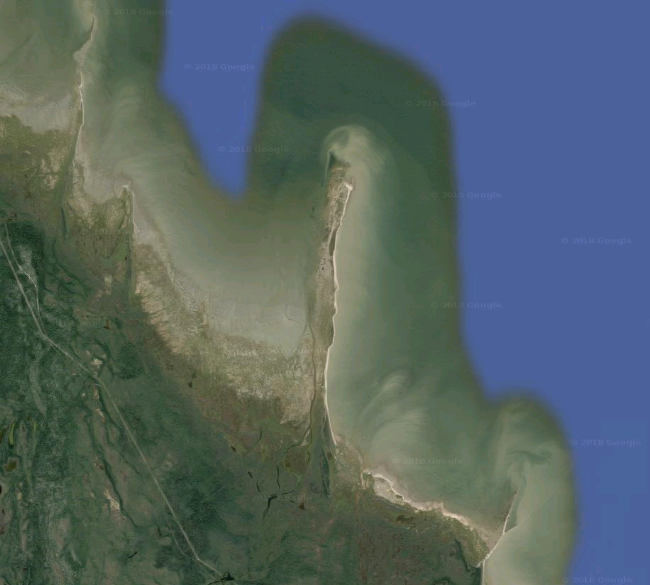
Recently I came back from the coast of James Bay. Why was I in the middle of nowhere you ask? Well, I was a volunteer for the James Bay Shorebird Project, which is a project funded by the Canadian Wildlife Service, Ministry of Natural Resources, Bird Studies Canada, and Trent University, among a few more partners. The purpose of the project is to monitor shorebird presence and numbers on the James Bay coast, which is a major staging area for shorebirds that breed in the arctic. I was positioned at Longridge Point, which is the most northern survey site.

Longridge Point is circled

The study site

I think I will try to to day-by-day write-ups, however I didn't keep a journal, and after a few days things started to kind of blend all together, so some days may lack an interesting or lengthy narrative, but I will try my best. I will look back at my iNaturalist observations and photos to try and jog my memory what went down that day. It'll be fun to relive these moments while writing about them!

Also, I should just note that while out on survey, I neglected to lug around my camera with me most days, so quite a lot of the photos were taken with my phone (digiscoped). Not the highest quality, and I certainly missed a few good photo opportunities, but in the end it was certainly more of an enjoyable walk to not have that extra bulk!

Anyway, I will try to churn out these posts at a decent pace. Hope you enjoy!

James Bay 2018:
Part One
Part Two
Part Three
Part Four
Part Five
Part Six
Part Seven
Part Eight
-----------

August 11, 2018

Today was the day we departed from Toronto and drove to Cochrane. I met up with fellow young naturalists Ethan, Nathan, and Jack. Us four were to spend the better part of the next three weeks together at Longridge. A lot of driving and birding from the car was done that day. We stopped into Hilliardton Marsh briefly on the way there. We also stopped at the sign which marks the "start"of the Arctic Watershed, meaning pretty much all water north of that sign drains into the Arctic Ocean, whereas all water south drains into the Great Lakes.


While enjoying the sign, we heard an odd tapping sound. Black-backed Woodpecker crossed by mind, but I just dismissed it as some trees rubbing to together or something. The tapping continued, and eventually we went to take a look, after all better be safe than sorry, and as it turned out, there was a pair of Black-backed Woodpeckers!


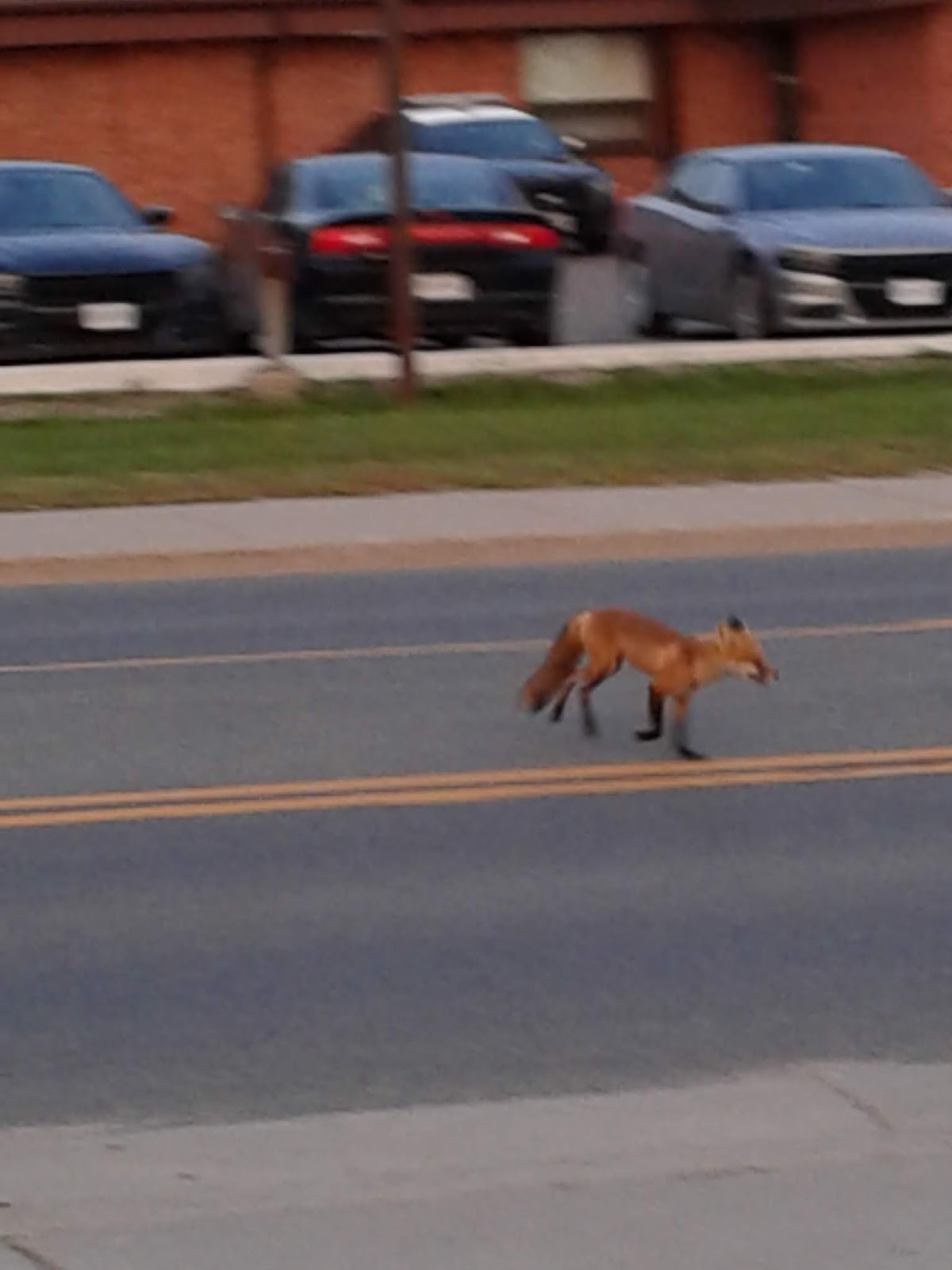
We arrived in Cochrane later that afternoon, where we found this Red Fox running around.


We also looked at a few of the insects the lights had attracted.

Northeastern Pine Sawyer

We then took our last shower for a couple weeks, then went to bed, knowing we'd be up bright and early the next day.

August 12, 2018

Today was the day we were going to be leaving southern Ontario (yep, that's right, I now classify Cochrane as "southern Ontario"). The train was leaving at 9am, so we had a little bit of time to kill. Birding around the motel revealed birds such as Alder Flycatcher, Pine Siskins, Blue-headed Vireo, Ruby-crowned Kinglet, and Purple Finch.

Sunrise over the motel

We arrived at the train station early to load up all our gear.


After loading our gear into the box car, we got our tickets then boarded the train. Soon, we started to make our way towards Moosonee, where we would stay the night before flying out to the field camps the next morning. There was no turning back!

Birding from the train was pretty boring. Lots of waxwings and Merlins, as well as a couple Sandhill Cranes and Osprey. I also saw a Wood Duck swimming in a creek just before we reached Moosonee.

Five or so hours later, we arrived in Moosonee. In less than 24 hours we would be on the coast.

The helicopter that would be taking us to the camps tomorrow flew over. We later learned they were returning from doing aerial shorebird surveys.


We went to the MNR house and dropped off our gear before heading out to check the Moose River, which is right in front of the house. The first bird we looked at on the river was none other than a Red-necked Grebe! Any grebe really is pretty good in the James Bay area, so we were very happy to find this one!


We spent the rest of the day just looking at whatever we could find...birds, plants, butterflies. We made a quick trip to the sewage lagoons, where we saw the first of many shorebirds.

Clouded Sulphur

Yellow Rattle


Least Sandpiper (juvenile)

After a very informative "Staying Safe in Bear Country" video, we called it a night. We set the alarm and went to sleep. Nathan, Ethan, and I were to be the first ones on the helicopter the next day.

August 13, 2018

I can't remember the exact time our alarm went off, but I knew that it going off signaled that we'd be at the airport in about an hour. After some last minute preparations, we loaded up the truck and drove to the airport. And there she was, our helicopter sitting out on the tarmac.

Unloading seats to fit gear

After a briefing on helicopter safety, we loaded up and got buckled up.

The last time I saw tarmac and my feet simultaneously!

The rotors began to spin, and before we knew it, we were off!


This was my second time ever flying, so I found the scenery from the air to be breathtaking. I spend so much of my time looking at birds, so it was nice to sort of be a bird myself for that short while!


About 30 minutes later we saw Longridge Point come into view.


We soon made our descent towards the ground, which conveniently was right in front of the camp. For a different perspective of us coming in, check out this video (thanks Jean!)

We unloaded our gear, and loaded up the gear of the crew heading out. The helicopter took off, taking the old crew with it. Finally, there we were, alone on the James Bay coast!

Of course we needed to start off with a bang, so we went out and almost immediately found a LeConte's Sparrow, which was my first lifer of the trip. LeConte's Sparrow was probably my favourite bird out of everything I saw over those two weeks.


Over the next couple hours, the rest of our crew arrived from Moosonee. As we watched the helicopter fly off after dropping off our last crew member, we knew that (hopefully) that would be the last link with civilization we'd see for the next two weeks.

We did a lot of "housekeeping" stuff for the rest of the day, though we did manage to get out for a couple walks. Birds of note (for me at least, common daily occurrences there!) include Red Knot and Hudsonian Godwit (if I ever say "Hudwit" I am referring to this species). The Hudsonians were another lifer for me....and we saw something like 100 that day!

Hudsonian Godwit

We also came across this "Hudson Bay" toad. They are amazingly coloured up there, and over the next couple weeks we saw many interesting variations. This one was one of the most striking we saw.


All in all, it was a great first day on the coast. We went to bed that night knowing that we were going to have an absolute blast over the next couple weeks!