Showing posts with label Ipperwash. Show all posts

Tuesday, 22 June 2021

Early June Insects

Early June is always a great time of year to go out and look for bugs. I have gotten out on a few occasions to try and nail down some of my target species for this time of year. I have compiled some of the more notable sightings into this post.

Back on June 5th I went to Lambton Shores in search of some of the neat insects that call that place home. I didn't see too much of interest when I visited The Pinery, other than a Cyrano Darner and an Eastern Pine Elfin butterfly on a dock. Its not an insect, but these Northern Sunfish were just off the same dock! 


I visited the MNR parking lot and the Ipperwash Dunes and Swales in search of my main target species, Dusted Skipper. This is a very range restricted butterfly, and I believe that Lambton Shores may be the only place it is found in Ontario. It took a bit, but eventually I found some. 


I also ended up seeing another lifer butterfly in the form of a Common Roadside Skipper.


Several species of dragonflies were around as well.

Racket-tailed Emerald

Slaty Skimmer

Belted Whiteface

Lancet Clubtail

Beaverpond Baskettail

A couple of neat flies were seen too.

Bumble Bee Mimic Robber Fly

Golden-backed Snipe Fly

I next visited Fossil Road on the Ausable River, since it was more or less on my way home. I always enjoy stopping here, as it seems you never know what you will see!

I was mostly focusing on dragonflies, and came up with two species of clubtails, Midland and the rare Rapids Clubtail. I saw a couple Rapids about 4 kilometers up river last year.

Midland Clubtail

Rapids Clubtail


I also saw a Common Sootywing, a somewhat uncommon butterfly species.


A couple days later on June 7th I was back out to the Ausable River in search of a rare species of clubtail, Green-faced Clubtail. I worked the section of river near Rock Glen CA. It took a bit, but I finally managed to find a few Green-faced Clubtails, a new species for me!


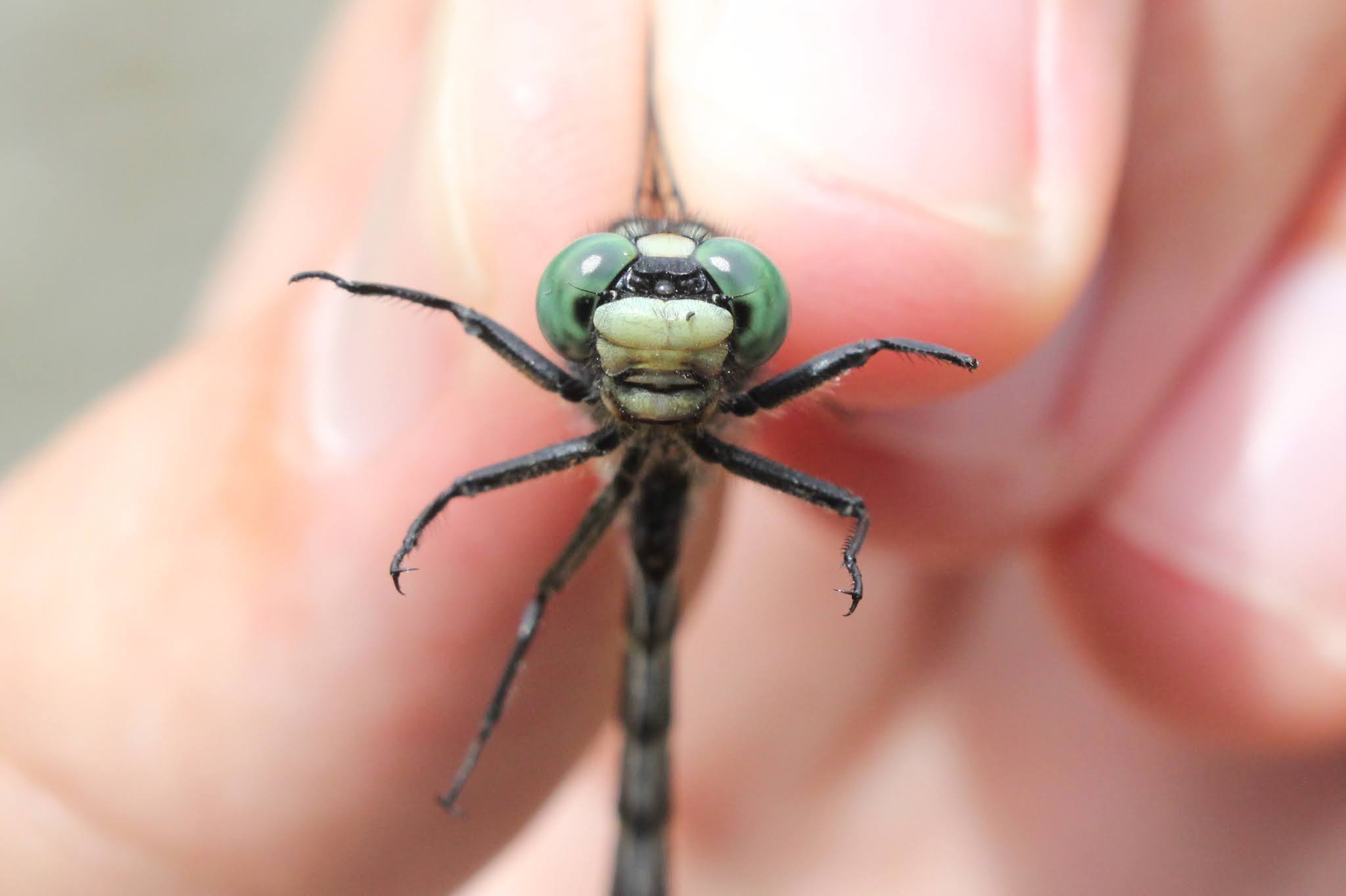

There were a few males patrolling the river, and I caught a female later on.


One of my most notable sightings wasn't even of a live dragonfly. I spotted a dead Twin-spotted Spiketail caught up on some grass! This may be the first record of this species for the Ausable River, and perhaps Lambton County. On the 5th I had seen a spiketail sp. briefly while I was on Fossil Road, which is in Middlesex. If it was the same species, it would have constituted a new county record for Middlesex. Due to this individual's proximity to Middlesex, I can only assume they are present there too. 


After I was done at Rock Glen, I made another stop along Fossil Road. Completely different than just a couple days prior in that there were no clubtails flying around! I did however find an Eastern Red Damsel, a new one for my Middlesex list.


On June 10th I decided to check out some areas close to home for odonates. I figured it was about time for a visit to the Sifton Bog, so that was my first destination of the day. 

I was quite pleased to see that there were several Spatterdock Darners, which I first found here in 2019 (first Middlesex county record) out over the pond, indicative of a breeding population here. None came close enough for a swing with my net, other than this one when I only had my camera in my hand! At least I got a nice photo :)


There were many Painted Skimmers as well, including a couple pairs in copula and an oviposting female, also indicative of a breeding population. The only Painted Skimmer I had seen prior to this was also at Sifton Bog in 2019. Absolutely gorgeous dragonflies. 


My first "in hand" Carolina Saddlebags were seen as well. Another breeding species here.


There were a few damselflies of interest as well.

Azure Bluet

Boreal Bluet

Amber-winged Spreadwing

Boreal Bluet was a new Middlesex species for me.

I made a visit to Komoka Provincial Park next. Here I was in search of another potentially new species for my county ode list, Delta-spotted Spiketail. After a long and grueling hike, I eventually spotted one, but was only able to get off a quick photo. 


There were also quite a few of these cicadas around as well, Say's Cicada (Okanagana rimosa).


I made one last stop at a storm pond in North London, where I found an unexpected county lifer ode, Lancet Clubtail.


It was an enjoyable few days of tracking down insects! Not much else to do these days :-P

Sunday, 11 April 2021

Weekend Activities

Yesterday, after an excellent morning of watching migrant birds (highlighted by over 500 Northern Flickers), I went down to Ipperwash in search of Olympia Marbles. My friend Isabel was with me, as it would be a new butterfly for the both of us.

Not five minutes after pulling into the MNR parking lot (probably the bumpiest parking lot in Lambton County? Maybe Southwestern Ontario?), we found our target. There ended up being several individuals, which was a treat to see. 

There were a few Common Green Darners flying around as well, my first of the year, and probably my earliest ever. I managed to catch one. So far my 2021 swing to catch ratio is about 4:1, hopefully that improves as I dust off my skills...

A few plants of interest in the dunes. 

Bearberry (Arctotaphylos uva-ursi)

Lyreleaf Rockcress (Arabidopsis lyrata)

Rock Sandwort (Sabulina michauxii)

I also found this lichen. Pretty sure it is Sand-loving Iceland Lichen (Cetraria arenaria).


We went to the dunes and swales afterwards for a quick walk. We found another Olympia Marble, as well as come Cabbage Whites. I was hoping to finally get a Brown Creeper for Lambton, but nope...where are they?? I took photos of a couple plants of interest. I will have to come back for some more dedicated botanizing.

Wintergreen (Gaultheria procumbens)

Parasol Sedge (Carex umbellata)

Afterwards, I parted ways with Isabel and started on my way home. I planned to stop into the Parkhill CA on the way for a bit to look for plants, so that is what I did.

As soon as I got out of the car I heard a Ruffed Grouse drumming, and later heard a second. Nice to know they are here!

I made my way down into the ravine. The plants have really come along since I was there two weeks ago. Several species of native wildflowers were seen.

Yellow Trout-lily (Erythronium americanum)

Large White Trillium (Trillium grandiflorum)

Twinleaf (Jeffersonia diphylla)

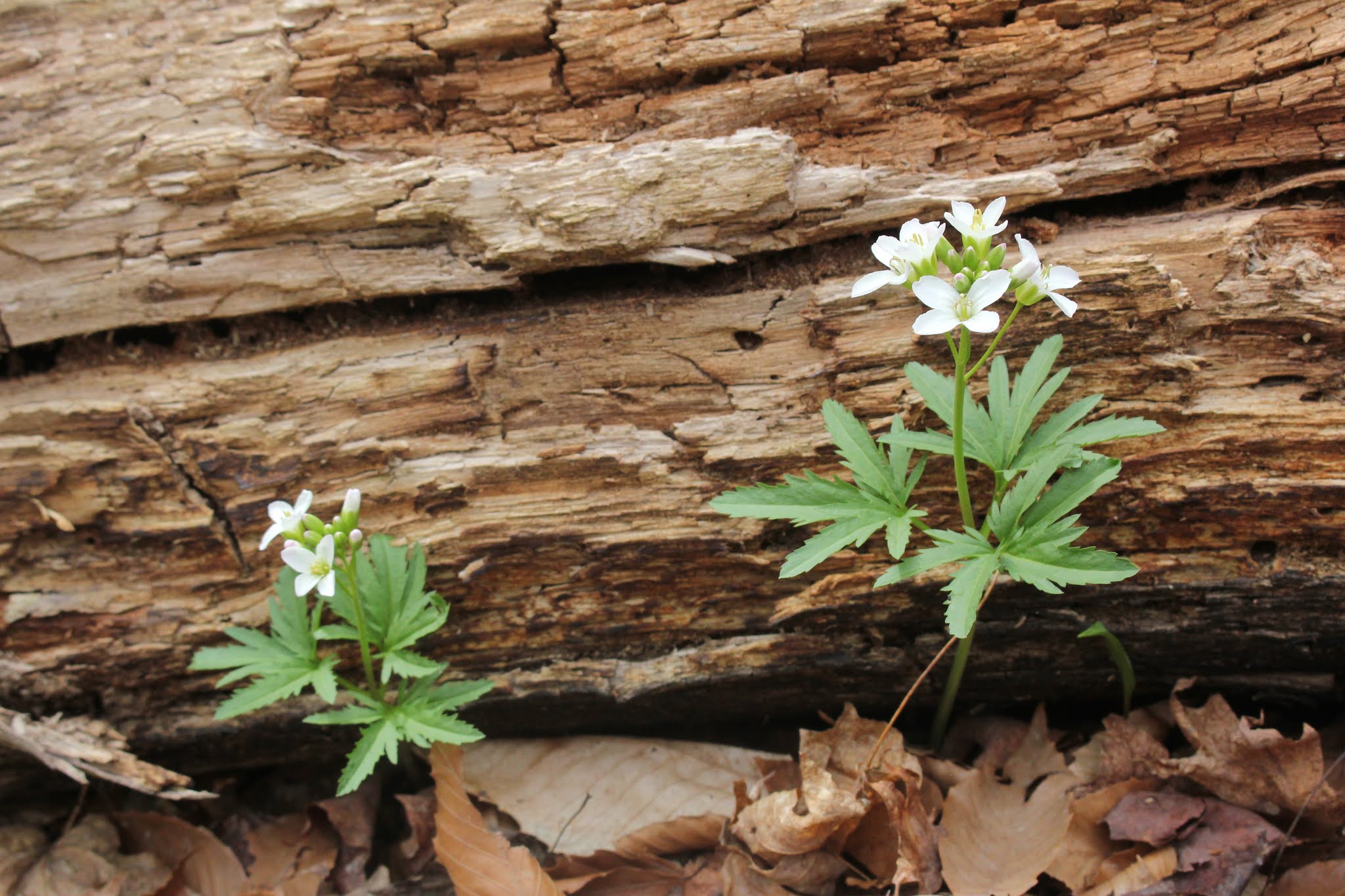
Cut-leaved Toothwort (Cardamine concatenata)

Dutchman's Breeches (Dicentra cucullaria)

Sharp-lobed Hepatica (Hepatica acutiloba) was one of the more abundant flowers. What a showstopper, it comes in a variety of colours.


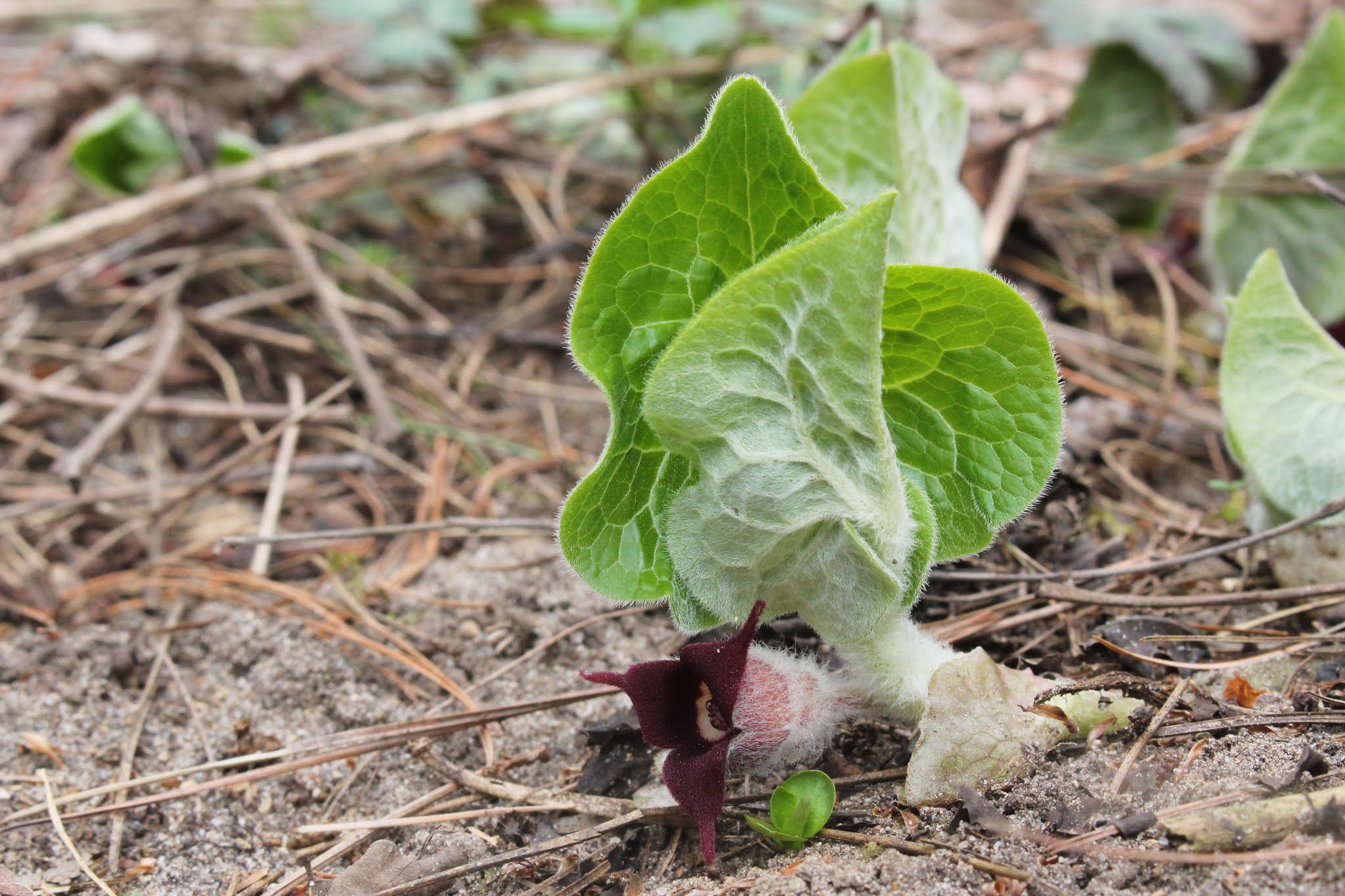
Canadian Wild Ginger (Asarum canadense) was beginning to bloom. The flowers lie on the ground, and this is because it is pollinated by ants.

There were quite a few sedges (Carex spp.) seen, and a few were identifiable to species. One of these was Long-stalked Sedge (Carex pedunculata). The long "stalks" (peduncles) were obvious on the plants which were further along. Another good way to identify this sedge is that the leave apices (tips) come to a sudden point, whereas in other species, the leaf comes to a sharp point more gradually. 

Pretty Sedge (Carex woodii) lives up to its common name. This is a species that I have really overlooked in the past. While I have seen this species once before (I recently realized I misidentified a sedge from a couple years back that was this species), this is the first time I have really appreciated and studied it in the field. This isn't a super abundant species, but can be common in the right habitats. 


Of course, Carey's Sedge (Carex careyana) was a highlight. This is a pretty rare sedge that I saw for the first time a couple weeks ago at this location. It is much further along now.

It could be confused with Plantain-leaved Sedge (Carex plantaginea), which also has wide leaves, and is the same taxonomic section, Carex sect. Careyanae. While the leaves are pretty distinct once you get a feel for them (typically a little less wide, and are noticeably unwrinked), if you can see the culms (the "stem" with the flowers), there is an easy way to tell them apart: the bracts. In Carey's Sedge, the bracts (a specialized leaf) subtending (below) the pistillate spike (female flowers) is green (although sometimes there can be a hint of red at the base) and leafy, and in Plantain-leaved Sedge, this bract is red and basically non-existent—there isn't really a leafy bit. Below is a comparison showing this, Carey's Sedge on the left, and Plantain-leaved Sedge on the right.


I am looking forward to keeping tabs on this population as the plants begin to mature! 

I also finally, after scouring the ravine for over an hour, stumbled across some Harbinger-of-spring (Erigenia bulbosa), my first time seeing this uncommon to rare in Ontario species (I have gone out about four times this spring looking!). Unfortunately, it was past flowering, and there were only like four plants. I was pleased, but admittedly a bit disappointed to have missed it in flower. I must have walked right by these plants when I was here a couple weeks ago. 


I ended up taking the long way back to the car. Pretty uneventful, but I got a nice view of Mud Creek.

Today, I had a tip on where to look for another population of Harbinger-of-spring in the Coldstream CA, so that is where I went. I hoped it would be in flower.

It took a bit of scouring, but finally I spotted some. This is a pretty small species, and is quite easily overlooked. Had I not stopped to look at a Carey's Sedge plant (more on that later), I probably would have missed them!

Luckily for me, there were still lots of flowers present, although the plants were past their peak.


I found some more Pretty Sedge as well. Must be indicative of good habitat.

With all the recent warm weather (it got up to at least 18 degrees today, and around 25 degrees yesterday), plants are way ahead of schedule. The forest floor looked like it was at least late April, maybe even early May. I am certainly not complaining, it was a long winter! 

Wood Anemone (Anemonoides quinquefolia)

Mayapple (Podophyllum peltatum)

Red Trillium (Trillium erectum)

Twinleaf

Dutchman's Breeches

White Trout-lily (Erythronium albidum)

Common Blue Violet (Viola soria)

I left Coldstream quite happy :)


On my way home, I quickly checked on a population of False Rue-anemone (Enemion biternatum), another rare species in Ontario. In more or less full bloom, as expected this year I guess! This is one of my favourite early spring species.

Things might come to a bit of a standstill with this week's weather forecast, but it won't be long now—great things are ahead!