Showing posts with label Ontario. Show all posts

Friday, 31 December 2021

Ontario Big Year in 2022

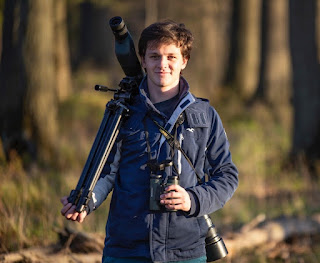
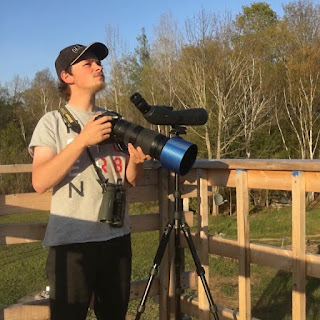
No, this isn't me making ground breaking announcement about my attempt at one of the most grueling ventures in birding, but rather me highlighting two individuals who are about to undertake this exciting task. Starting tomorrow, two of my good friends Ezra Campanelli and Kiah Jasper will begin their Ontario Big Years, and attempting to achieve a new record. These two will be joining forces for an attempt that has been in the work for some time now...and it is finally time to act. Using never before seen tactics, these two are sure to excel. 

Ezra Campanelli

Kiah Jasper

Although in my younger days (yes, even younger than I am now), all I could dream of was doing a big year, I no longer have that desire. Plants have really changed me it seems, That being said, I still love the strategy and excitement behind it all, so I for one am really looking forward to following along with these two. I'm sure I'll get roped into some adventures along the way...it won't take much convincing. 

Ezra and Kiah will sure have a great start to their year, if all goes to plan, as there are a number of lingering rarities that appear as though they will make it to the new year. Some of their top priorities which will keep them occupied for the first few days, at least, include a long staying Black-bellied Whistling Duck and Razorbill(s) in Niagara, Harris's Sparrow in Hamilton, Golden-crowned Sparrow in Toronto, Mountain Bluebird in Wellington, and the possibility of a Prairie Falcon in Durham (and literally as I was writing this, news of possibly even an Arctic Loon in Algoma). Of course, they would certainly take that Glaucous-winged Gull in Barrie if it were to ever pop back up! Townsend's Solitaire and Varied Thrush are two species that are also of high interest, and there a couple options to choose from for both.  

Once they get a number of these rarities, their attention will turn to some of the harder winter species in the province, such as Gray Partridge, Purple Sandpiper, finches, sea ducks, and northern owls. 

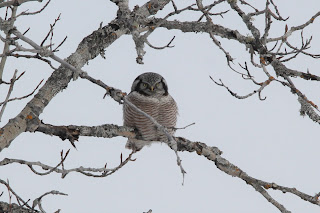
Northern Hawk Owl (Cochrane District, March 2020)

The current big year record for Ontario is 347, set by Jeremy Bensette in 2017, so it will not be an easy feat, but it sure will be a rewarding one. 2021 was a super year for rare birds, with Geoff Carpentier seeing 343 species (and not starting his serious big year attempt until May!), so here's hoping that 2022 is even better. 

If you wish to follow along with their big year progress, check out Kiah's blog and Ezra's website. If you are social media savvy, check out Ezra's big year Instagram account @bigyearbirdxbird where he will be posting photos of each year bird he sees. 

Best of luck to you both, and Happy New Year to all!!!

Tuesday, 17 November 2020

A Varie(gated) Good Day

On Sunday evening, Janet Junker-Lafond posted a picture of a bird she had found in Brooklin (near Whitby) on a Facebook group, asking for its identity. It just so happened to be a Variegated Flycatcher! This South American flycatcher is very rare, with less than ten records in North America (I have heard varying numbers, saying that this bird is anywhere from the sixth to the eighth, so lets meet in the middle at seven). Amazingly, one of those previous records is actually from Ontario, when one was found on the Toronto Islands in 1993! This species is regarded as one of the rarest to ever be recorded in the province.

Janet first found the bird on the 13th, but the birding community was not aware of it until the 15th, so come the morning of the 16th, many birders were on the prowl, hopeful it was still around! It was soon refound, and enjoyed by well over a hundred people. I, unfortunately, was stuck in London, but made plans to go early the next day.

So, after a 3am wake up time this morning, my dad and I were on route for the flycatcher. It was fairly smooth sailing there, and we arrived shortly after 6am. After waiting around for a bit, we hit the trail just as the sky was beginning to lighten up. A Dark-eyed Junco called nearby, the first bird of the day.

Several others showed up, and after nearly an hour of waiting, the bird made an appearance. Definitely gave a sigh of relief after catching a glimpse of it! I couldn't get my camera out fast enough though, and it ducked down.

It began to snow quite heavily shortly thereafter, severely limiting visibility. After another hour of waiting, it once again popped up, and I managed to get what are probably the worst pictures of this individual bird.


Imagine that, a photo of a Variegated Flycatcher not turning out because it was snowing! Check out Josh's post for some much nicer photos which show the identifying features much, much (much) better.

I stuck around for another 20 or so minutes, but it was remaining elusive, so I decided to leave. Seems it came out for much better looks and photos a bit after I left! It should be noted, that people were very respectful of social distancing rules, and many were wearing masks.

It was an interesting couple of hours. Not often one gets redpolls, a Red Crossbill, a Snow Bunting, an American Tree Sparrow, and a Variegated Flycatcher all in one place!

We still had a bit of time before having to head back to London, so we went to Thickson's Point in hopes of glimpsing Purple Sandpipers. It took a bit, but we finally found a couple feeding down on the rocks. Lighting was a bit harsh, but I managed a decent photo. I didn't want to get too close, as I knew others would be interested in trying to see them as well.


These were actually a lifer for me, so extra exciting! 

I had thoughts of Red Phalarope, and lo and behold a few hours after I left, one showed up. It remains the last annual shorebird species I need in Ontario...next year.

What a great morning!

Saturday, 19 September 2020

Brown Booby Birding

 On September 8th, Nathan Hood (remember him from the Cochrane trip in March?) spotted a Brown Booby at Van Wagner's Beach in Hamilton. This represented the first record for Hamilton and the Hamilton Study Area (HSA), so it was kind of a big deal. It is presumably the same bird first spotted by Brendan Boyd in Port Darlington on August 24th, which was later seen flying by the spit in Toronto. This is the second record of this species in Ontario, the first being in Niagara in 2013.

My first chance to go see this bird was on September 13th. As such, I went down and sat at the beach watching the wave tower, hoping that the booby would fly in. No dice. This was the first time the booby hadn't been spotted all day since its arrival in Hamilton! It was, of course, spotted the next day, and on the 15th.

A few days later on the 16th, I went back, this time staying until dark. Again, no luck. This was the only the second time it hadn't been spotted all day, just my luck. It was again seen the next day, and the day after that. I did see a jaeger (either Parasitic or Long-tailed), but that was about the most interesting thing.

Finally, today, I went out again, hoping it would be the last time. Thankfully, it was there upon my arrival! A bit distant for photos, but the looks through the spotting scope wasn't all that bad. The booby is the fourth bird to the right of the leftmost pole on the top railing.


Since it was an east wind, there were a few other things of note. A juvenile Sabine's Gull flew by soon after I arrived, and a bit later a group of three Red-necked Phalaropes and a Parasitic Jaeger also made an appearance. This first year Lesser Black-backed Gull hung around for a bit as well.


Quite a lot of effort, but it thankfully wasn't for nothing in the end!

Wednesday, 3 June 2020

Hairy-fruited Sedge—Keep an eye out!

Hairy-fruited Sedge (Carex trichocarpa) is an uncommon sedge in Ontario, ranked S3, meaning there are between 21 and 80 locations for it in the province. All photos here are from a population in London (not sure if it was known previously, but I stumbled across it last June).


This is a species of wet meadows, sedge marshes, and floodplains in the Northeast, seldom found far from a river or stream. It is rare throughout most of its range.

Carex trichocarpa distribuition (map from FNA)

In Ontario, most records of the species are from along larger rivers, such as the Thames, Sydenham, Grand, and the Don. Smaller watercourses, such as Big Otter Creek and Talbot Creek, also have records. It is apparently widespread along the Thames River especially, and is listed as 'uncommon' in Middlesex county.

While sedges (Carex spp) are often considered pretty difficult to identify (and that's not necessarily wrong!), Hairy-fruited Sedge is somewhat easily recognizable. To start, look for a sedge where the clumps of leaves look 'messy'. 


Scattered clumps of Carex trichocarpa

One of the clinching identification features is the burgundy leaf sheath apex. This is where the leaves meet the stem (also called the culm). This feature is sometimes described as a 'burgundy snake's tongue'. There are several species that may look similar, but this feature is pretty diagnostic.


This sedge often forms colonies of mostly vegetative plants (ie not reproductive), with a few flowering plants. When present, the fruits, which are called perigynia, are pubescent, or hairy, which is where this plants common name comes from. The perigynia are quite large. The female (with the perigynia) spikes are called 'pistillate spikes', and are widely separated from the male spikes, called 'staminate spikes'. Pistillate spikes are typically found below the staminate spikes in sedges.

 
This is a species that is likely quite easily overlooked, and is bound to show up in many new places. From the 2017 Oldham list to the Vascular Plants of Ontario's Carolinian Zone, Hairy-fruited Sedge is listed as uncommon in Middlesex, and rare in Chatham-Kent, Elgin, Oxford, Haldimand-Norfolk, Brant, and the Ecodistrict 7E-4 (parts of Toronto, York, Peel, and Halton). 

This species is currently not listed from Essex, Lambton, Hamilton, or Niagara, but could very well be found there. In particular, Lambton county has lots of potential for this species, since the Sydenham River runs through part of it. Perhaps the Ausable River may have potential for this species as well. EDIT: I just became aware of a recent 2019 Lambton record

Keep an eye out while on your travels through floodplains and meadows near rivers!, streams, and creeks! Perhaps more populations of this species will turn up!

Monday, 22 July 2019

Eight Down, Two to Go

As you may recall, last August I published a post about my quest to seeing all of Ontario's Meadowhawk (Sympetrum spp), which is my favourite genus of dragonfly. Of the ten species, only eight can really be expected to be seen by any given enthusiast, as the two other species, Blue-faced and Red-veined Meadowhawk had only been recorded a couple of times each, at the most.

Back then, I had seen six out of the ten species.

Autumn Meadowhawk

Band-winged Meadowhawk

Ruby Meadowhawk

Cherry-faced Meadowhawk

White-faced Meadowhawk

Saffron-winged Meadowhawk

After my excursion on James Bay last summer, I picked up a seventh species.

Black Meadowhawk
Black Meadowhawk is arguably my favourite ode!

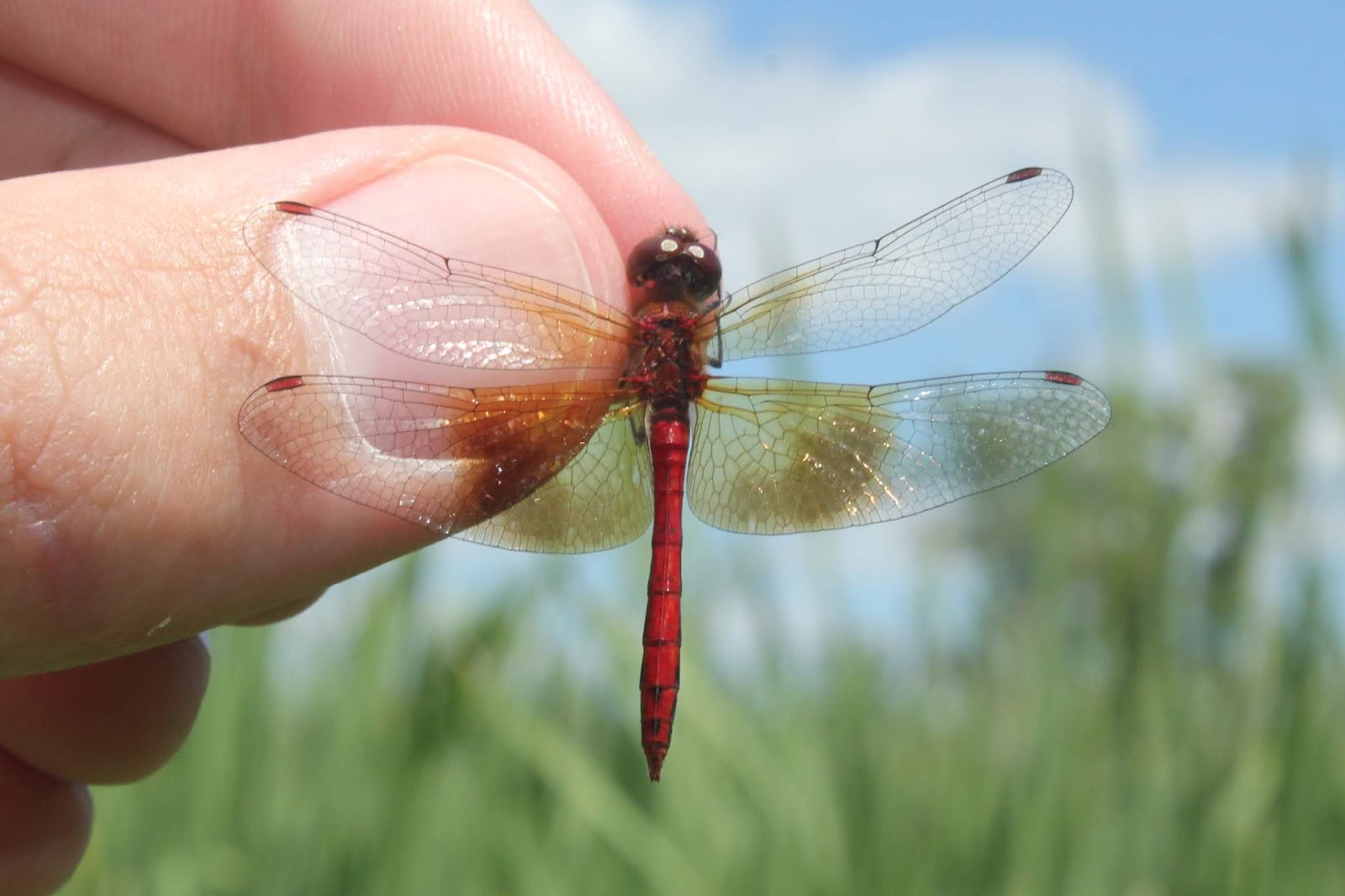
Finally, a couple weeks ago, I caught up with my eighth species of Sympetrum. Variegated Meadowhawk in Toronto. Unfortunately, it was not very cooperative.


It was pretty exciting to complete my set of the expected Ontario species. The hunt is on for the rarer ones now! (Or in a few years when I have the time and resources)

Friday, 17 May 2019

April Showers Bring (Rare) May Flowers

Within the past week, I have been lucky enough to come across a couple species of very rare flowers.

The first was Wood Poppy (Stylophorum diphyllum). There are currently only three known sites for this species in all of Canada.


The second was Drooping Trillium (Trillium flexipes). This species is quite similar to Nodding Trillium (Trillium cernuum), but a range overlap doesn't occur (in Ontario). There were up to six known sites for this species historically, however, currently there are only two sites in all of Canada.


Wednesday, 26 December 2018

Ontario's Next 25 Birds: Part 2

A few days ago, I wrote part 1 of what I thought the next 25 birds for the Ontario checklists were to be. I will now detail my top 10 picks, and a few honourable mentions!

10. Sooty Shearwater

Common off the Atlantic coast, with records all the way up to the far reaches of Nunavut, this is a record just waiting to happen...for those willing to venture far to get it. There is actually a Short-tailed/Sooty Shearwater from Ontario up in James Bay, which makes me think, once again, that may be your place to see one. Short-tailed and Sooty are hard to separate though, so good photos would be a must.

When: October or November, maybe following a weather event?
Where: Southern James Bay, though possibly Hamilton (Van Wagners)


9. Allen's Hummingbird

Sort of an overdue hummingbird! There are numerous records all over eastern North America. Ohio has had a record, and Pennsylvania just had it's fourth this year.  This species is hard to separate from Rufous Hummingbird, and a high quality photo of the spread tail would be needed to ID it. The species will likely show up when a supposed "Rufous" is banded and the measurements turn out to be a Allen's.

When: October
Where: Somewhere with a hummingbird feeder


8. Hammond's Flycatcher

Several records from New England, Wisconsin just got one. We have Dusky Flycatcher, we have Gray Flycatcher. This just makes sense. It would require a good look and photos to ID. Just be sure to check out all late empids!

When: October or November (December?)
Where: Somewhere is southern Ontario, but maybe banded somewhere in the north...


7. Northern Lapwing

Also a tad surprising. Somewhat annual or bi-annual on the Atlantic coast. Probably some sort of weather system will push it into Ontario. Not much to say about this than make sure to check out fields with some Killdeer running around.

When: April/May and December/January
Where: Random field in southern Ontario, probably near a birding hub if a spring bird. Not sure about James Bay potential, but hey, that is always there


6. Red-necked Stint

Annual on the Atlantic coast, the closest record to Ontario is one in Indiana. This species is very likely just overlooked, although once you know what to look for, they should (maybe) stand out a bit. They have likely been up on the James Bay coastline, but coming from someone who was lucky enough to go up there, it would be very difficult to pick out a rarity due to the conditions and sheer amount of little peeps running around. This species was once on the Ontario list, but was later removed.

When: May or July/August/September
Where: Sewage lagoon in southern Ontario or James Bay


5. White-tailed Kite

We have Mississippi Kite, we have Swallow-tailed Kite, so where is our White-tailed Kite? This species is prone to some vagrancy, with records from Minnesota, Indiana, Wisconsin, and New York to name a few. Will likely be found by some hawkwatchers, or as a surprise bird flying over the heads of unsuspecting birders at the Tip of Point Pelee.

When: May
Where: One of those traditional funnels in Lake Erie

This is a juv, adult more likely?

4. Bar-tailed Godwit

Prone to some vagrancy, with records up and down the Atlantic coast, and some inland records as well. Look for a Hudsonian Godwit with white underwings! While I think this bird could be found down here in southern Ontario, our best bet may to keep scanning the Hudwit flocks up on the James Bay coast.

When: May or July/August
Where: James Bay or a sewage pond in southern Ontario


3. Hepatic Tanager

As crazy as it sounds, I believe Ontario is due for a Hepatic Tanager. There are two records for Northern Michigan, and one for Quebec and Saskatchewan. I have no clue what weather events would effect it, but many birds like to wander. Hard to say for sure how one will be found. Likely either banded (Long Point, Thunder Cape) or coming to a feeder somewhere Here are a couple lovely examples:
https://ebird.org/view/checklist/S41544847
https://ebird.org/view/checklist/S32742031

It just has that "weird factor"

When: October or November
Where: North shore of Lake Superior most likely, but somewhere on Lake Erie would make sense


2. Glaucous-winged Gull

With records from New Hampshire, Minnesota, Michigan, Newfoundland, Illinois and Wisconsin, it is only a matter of time before one is detected here. There may be an observer bias, as I know many people don't like to tackle those messy Larus subadults. Hybrids would also have to be taken into consideration. I can find four records of Glacous-winged/Herring Gull hybrids in Ontario. Nevertheless, keep and eye out at your local landfill!

When: November-April, Michigan bird was in May
Where: Anywhere in the Great Lakes region (emphasis on Niagara and Toronto region), Eastern Ontario, northern Ontario someplace (Sault Ste. Marie? Thunder Bay?) and of course, the good ol' James Bay potential


1. Clark's Grebe

My pick for the most overdue bird is Clark's Grebe. Sure, there are limited records for eastern North America, but just look at this bird. Just on the wrong side of the border. It was very likely in Ontario at some point! In addition, I can find about 10 records of Aechmophorus sp. (Western Grebe/Clark's Grebe) from Ontario, meaning they weren't identified to species. These two species can be hard to separate without good enough looks, and hybridization exists. Just west of Ontario, in Manitoba, this species becomes much more common.

When: Late February/March in southern Ontario, May to early June in northwest
Where: Lake Ontario, maybe Huron. Later in the spring, Rainy River and Kenora districts, likely in a sewage lagoon or marsh.


Some birds I had on my "shortlist" but decided to cut include Boat-tailed Grackle, Yellow-legged Gull, Western Gull, South Polar Skua, Temminck's Stint, Bronzed Cowbird, Short-tailed Hawk, Lesser Frigatebird, Arctic Loon, Pacific Golden-Plover, Acorn Woodpecker, Williamson's Sapsucker, Baikal Teal, Common Pochard, Masked Duck, Brown-headed Nuthatch, Black-whiskered Vireo, Eurasian Skylark, and Eastern Yellow Wagtail. A few may be pushing what may be reality, but hey, Slender-billed Curlew is on the Ontario list.

This is birding of course, and there is no way to accurately predict anything. Maybe I'll get some right, maybe I won't. It seems just as likely that a Terek Sandpiper or Wood Sandpiper will show up before my number one pick!

Anyways, that was my take on the whole thing. It certainly opened my eyes to what we need to be looking for!

 Note: all photos from the Wiki Commons

Sunday, 23 December 2018

Ontario's Next 25 Birds: Part 1

A few weeks back, I stumbled across some old blog posts from Brandon and Josh detailing what their predictions for the next 20 birds would be (Brandon: part one  part two) (Josh: part one  part two) However, as you can see, they were both written several years ago, on 2011.

A lot has changed since then, most notably the addition of 11 species to the Ontario list, and 6 more still to be reviewed!

Pyrrhuloxia (2004, added 2012)
Thick-billed Kingbird (2012, added 2013)
Brown Booby (2013, added 2014)
Elegant Tern (2013, added 2014)
Kelp Gull (2012, added 2015)
Little Egret (2015, added 2015)
Eurasian Dotterel (2015, added 2015)
Pink-footed Goose (2015, added 2015)
Grace's Warbler (2016, added 2016)
Common Ringed Plover (2016, added 2016)
White Wagtail (2017, added 2017)
Costa's Hummingbird (2017, to be reviewed)
Macgillivray's Warbler (2018, to be reviewed)
Reddish Egret (2018, to be reviewed)
Great Kiskadee (2018, to be reviewed)
White-crowned Pigeon (2018, to be reviewed)
Calliope Hummingbird (2018, to be reviewed)

For my top picks, I managed to get a "shortlist" of about 46 species. I painstakingly narrowed it down to 25 species. I omitted some species that Brandon and Josh chose, and of course picked some of my own. I am not overly too knowledgeable on vagrancy patterns, so perhaps some of these are a little far fetched, but hey, this is Ontario, and Ontario is weird. I did my best to try and rank them from least to most likely, though I still feel like some are out of order a bit. Anyways...

25. Brown Noddy

Perhaps the most far fetched species on this list, but Ontario has seem some far fetched species. This would most likely be the result of a hurricane. Despite there being practically zero vagrant records up in our neck of the woods, there seem to be a few inland records from the states, including one in Tennessee. Are there probably better choices for #25? Yeah, but none are as fun as Brown Noddy.

When: September or October, but if one happened to show up in August I wouldn't be too surprised.
Where: The Great Lakes region, most likely Lake Ontario or Lake Erie.


24. Steller's Eider

There are a very small handful of records of this species from eastern North America from Quebec and Massachusetts. This is a largely western North America/Northern Russia area bird, though there are numerous records from Europe. They seen to vagrate a lot closer to their core range, all it would take is a one getting really lost...

When: March/April or October/November
Where: If one goes down the St. Lawrence, Lake Ontario. However, I can sort of see this species showing up in the James Bay region of Ontario.


23. Mountain Plover

Not a common vagrant, but there are certainly records in eastern North America as close as Indiana and Illinois. This species has been on people's radars for decades now, just a matter of one going the extra (1300) miles.

When: Maybe late April or early May, but most eastern records are from August or September
Where: It seems everyone wants one to show up in the Pelee region (Hillman, Onion Fields), but any suitable sod farm or field may yield one.


22. European Golden-Plover

This species is practically annual in Newfoundland, and breed in Iceland and Greenland, so in my mind it would make a lot of sense for one to be seen in Ontario. A reason I decided to include European Golden-Plover in the top 25 and not Pacific Golden-Plover (also be on the watch for those!) is due to their ease of identification. European Golden-Plovers should be in theory much easier to pick out and identify due to their white underwing and white undertail coverts.

When: May for spring migrants, though I think fall (August-October) would be more likely
Where: Maybe Hillman Marsh? James Bay in the fall may have potential for this species. If they get lost enough, the bay will funnel them right to where most of the birders set up...


21. Shiny Cowbird

A species that may be showing more of a northward vagrancy trend? Hard to say for sure, but definitely one  to watch out for. Case and point: https://ebird.org/view/checklist/S45356889

When: May or June, perhaps one in the late fall/winter
Where: Likely some random bird feeder, although southwestern Ontario would be ideal for birders, I think the north shore of Superior may have more of a "pull"


20. Surfbird

Another oddity. There are records from Pennsylvania, Maine, Texas and Florida, proving that they can vagrate. To be honest, not exactly sure what speaks to me about Surfbird, but shorebirds are weird, and Ontario attracts weird. It appears most eastern North American records are Spring birds, which may mean they come from Central and South America?

When: April/May or maybe August.
Where: Probably Lake Ontario or Erie if anywhere, but again, there is that James Bay potential (?)


19: Gull-billed Tern

Maybe this species deserves to be listed as more likely? This bird would likely be the result of a Hurricane. This species, although uncommon, seems to range up most of the Atlantic coast. This species may have even already been in Ontario, as one was seen on the American side of the Detroit river in 2005.

When: September or October
Where: Long Point or the Pelee region, maybe Erieau?


18. Redwing

Actually quite the surprising hole in our list, with records from Quebec and New England. Will be the result of some weather system no doubt, as it would have to come Europe, or maybe Iceland? Likely will be found associating with American Robins (be sure to look for a Fieldfare with them just for good measure).

When: December or January
Where: Probably eastern Ontario


17. Bridled Tern

Another hurricane bird! One Great Lakes record from 2003 as far as I can tell, as a result of Hurricane Isabel. Ontario has numerous Sooty Tern records, so it is just a matter of time before this similar looking bird shows up...

When: September
Where: Lake Ontario or Lake Erie


16. Great Skua

A somewhat overdue (?) bird. Great Skuas have likely without doubt been in Ontario before, just no one was there to see it! They range up to Greenland and Iceland, so one ending up in Hudson Bay, then funneled down to James Bay is not too far fetched. The issue with this bird is the lack of birders heading up to conduct some seawatches.

When: October or early November
Where: southern James Bay


15. Cory's Shearwater

Another hurricane bird. There are a couple inland records, and many pelagic records past their normal range. Not much to say about this bird but do some lakewatches during hurricane season. Or perhaps just wait until someone posts a photo to Facebook about a "weird bird" they saw in their urban backyard.

When: August or September
Where: Lake Ontario, or some random storm management pond


14. Golden-cheeked Warbler

A record of this species would be phenomenal! Two vagrant records that I can find, one in Florida, and one in Missouri. Not sure under what conditions this species would go so far north, perhaps something weather related? A hormone driven overshoot? Probably just as likely it will be found interacting with it's environment in  forest as one will be photographed in flight migrating off the Tip at Point Pelee or some other morning flight location. Nevertheless, make sure to check each and every one of those Black-throated Green Warbler types.

When: April or May
Where: Point Pelee, Rondeau, or Long Point


13. Cassin's Vireo

A species that may have been seen a few records, however due to how similar they are to Blue-headed Vireo (they were considered the same species at one point, and heck, may actually be the same species) none have been accepted. There are four (?) other eastern North American records. Without the perfect photo, in the hand bird, or specimen, this species would be hard to ID.

When: April/May or September
Where: Point Pelee, Long Point, or Thunder Cape


12. Common Murre

It may come as a surprise I listed this as #12, as they are fairly common in their normal range, which is't too far from here, however, unlike Thick-billed Murre, Common Murres don't seem to vagrate much. It could be we will just never see one here...

When: November or December (or never)
Where: Eastern Ontario or Lake Ontario


11. Lucy's Warbler

I was actually surprised to find out Ontario lacks a Lucy's Warbler record!  There are three eastern North America records, the closest being Whitefish Point in Michigan. I found a record in Fort McMurray to be notable as well. Ontario has a history of odd southern warblers, the most recent being Grace's Warbler (2016) and Virginia's Warbler (2018), so a Lucy's shouldn't be too far off. This species could very well be in the top 10, and maybe even deserves a place there, but I put it as #11 because why not!

When: November or December
Where: The usual migrant traps (Point Pelee, Long Point etc.) Oakville seems to have a history of being a fall warbler migrant trap.


Up next, part two, which will detail my top 10 birds and some honourable mentions!

Just in case this is my last post before Christmas, I wish everyone a Merry Christmas and Happy Holidays!

Note: All photos from this post are from the Wikimedia Commons...please don't sue me if I didn't properly credit something!