Showing posts with label Bluet. Show all posts

Tuesday, 19 July 2016

Bugs from a Boat

If someone asked me what my three most favourite things to do were, I'd say birding, photography, and lep/ode watching. In fourth would have to be canoeing. Last Sunday, I headed to Lake Whittaker Conservation Area, and did all four of the above things.

This is my vessel. The Loon went through heavy restoration last summer. Here's the before picture;


And here is the after;

3-inch thick padded seats....canoeing at it's best!

Since then, we have added more detail to the loon image.


Anyway...I saw a few butterflies, such as Eastern Tiger Swallowtail, Dun Skipper, and Clouded Sulphur, but didn't get any photographs!

I didn't take any photo's from the canoe, but I sure saw a lot! Probably the highlight was a Twelve-spotted Skimmer. Familiar and Orange Bluets were present throughout. There was also what I think to be a Swamp Spreadwing.

The most common Dragonfly on the lake was by far Eastern Amberwing. There must a have been at least a hundred!


 Second only to that was Eastern Pondhawk.


Third most numerous was no doubt Blue Dasher. Their green eyes are very pretty.


While it wasn't around in as large of numbers as the top three, Widow Skimmer is hard not to notice.


While I was focusing on the Dragonflies in a bunch of lily pads, I heard the tell tale Keee-arrr! of a Red-tailed Hawk.


Soon after, I also heard the twittering of an Eastern Kingbird. Anyone who birds in a place where kingbirds and hawks occur together knows what comes next...


It is safe to say that Eastern Kingbirds and Red-tailed Hawks DO NOT like each other.


In case you are wondering where the "king" in "kingbird" comes from, it refers to the crest on top of the bird's head that is rarely seen.


Thankfully, both got away without the loss of too much blood.

The prettiest ode seen all day was probably this Halloween Pennant.


It was very cooperative.


I am fairly confident that this is a Marsh Bluet. Those Bluets are a tough group!


Have you ever spent 25 minutes trying to get a photo of a moving dragonfly, while using manual focus? I highly recommend it if you want to get so frustrated that you just want to through your camera into the drink :)

I'm fairly certain this is a Prince Baskettail. Any thoughts?


Although the Halloween Pennant may have been the prettiest species, this Variable Dancer was a close competitor.


I was happy to get some Eastern Kingbird photographs that didn't involve mobbing a buteo.


Can you find the Song Sparrow?


To finish off the day, just as I was getting in the car, I saw one of my most sought after ode species...Ebony Jewelwing!


Female (Note the White Stigma)

All-in-all, a good day to be out on the water and see some dragonflies and damselflies!

Thursday, 7 July 2016

Local Leps and Odes

First things first..."Leps" refers to "Lepidoptera" meaning butterflies and moths, and "Odes" refers to "Odonata" meaning dragonflies and damselflies. So, as you can see, this post will be devoted to those insects, with a few beetles and plants added in. Local is also in the title because everything in this post is no more then a ten minute bike ride away from my home.

I did my little insect count over the course of three days. I did a couple hours in the morning, then a couple hours in the evening. I was surprised at the number of species that I did see considering the areas I checked were bordered by hundreds of houses and two major roads.

The first location I would check out each morning was a small field. This area was good for European Skippers, which were the only skipper species seen.


A Clouded Sulphur was observed two of the three days at that location.


One Banded Hairstreak was seen, but no photos because the camera was acting up!

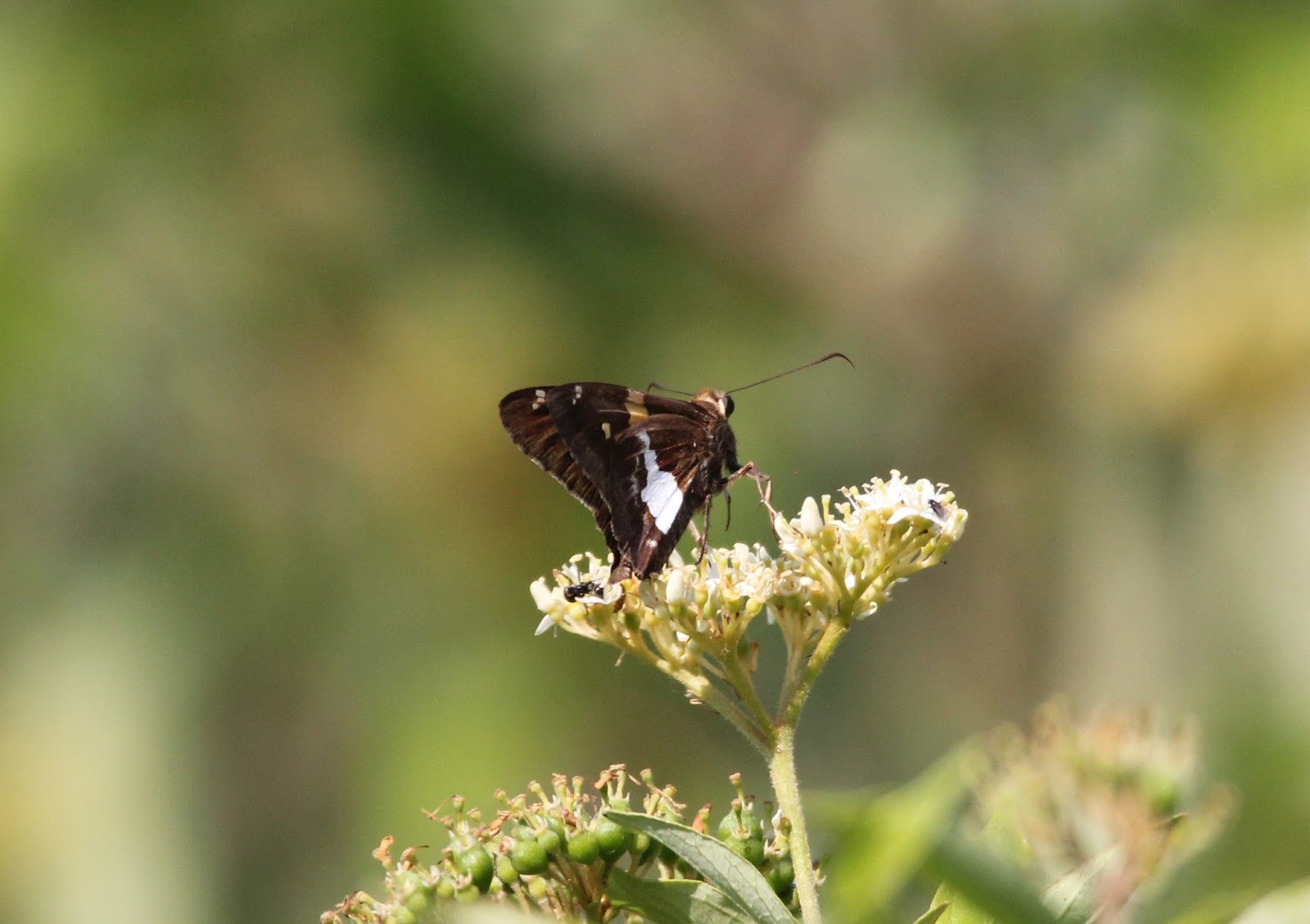
After the field, I would bike up a path along a small woodlot. I saw what I think may be a Red Admiral, but I was going down a steep hill, so I couldn't brake. When I was going to go back, another butterfly caught my eye. Silver-spotted Skipper is our largest skipper, and it could very well be the fastest in flight!


I saw one the first day, three the next, then a single on the last...all at the same location.


Cabbage White butterflies were the most common by far.


I saw two of these Red Milkweed Beetle on a Common Milkweed (Asclepias syriaca). They are a very cool bug!


The dreaded Japanese Beetle is out in full force.


I saw a couple of Virginia Ctenuchas throughout the count. They are quite pretty, and docile, allowing you to get really close.


Time for a plant! This Swamp Milkweed (Asclepias incarnate) was pretty. It was right in the area of the Silver-spotted Skippers, so I'm sure they were making use of it.


European Skippers were all over the flowers on the side of the trail. They rarely sit still though!


We got the Bugs and Botany, so here is a little bit of the Birds. The only time I got the chance to photograph a Ruby-throated Hummingbird so far this year presented itself. Can you find it?


Here's the heavily cropped version.


Fast forward a few hours, and I'm out at the local pond. The first real bug I come across (at the pond) is Common Red Soldier Beetle. This is not the last time I observe it during my count.


Green Darners and Common Whitetails are out in full force. I'm starting to believe that it is impossible to photograph a Green Darner unless it is cold outside and they are basking on a log or something. Here's my attempt at photographing the GD and CW. Can you find them?

Common Whitetail

Green Darner

I find that Pond Damsels are the easiest to take photos of (and I sure got a lot). Here's a Skimming Bluet.


I was surprised to see so many Orange Bluets. I learned later that they come out, or are at least more active, in the evening.

"Mirror, Mirror" 


At one point Skimming and Orange Bluet were in the same shot.


Eastern Forktail and Familiar Bluet win for most common species (of damselfly) seen.

Eastern Forktail

Familiar Bluets


Eastern Amberwing could be the most pretty species of dragonfly around the pond.


Unicorn Clubtail is another type of dragonfly observed. It is certainly interesting!


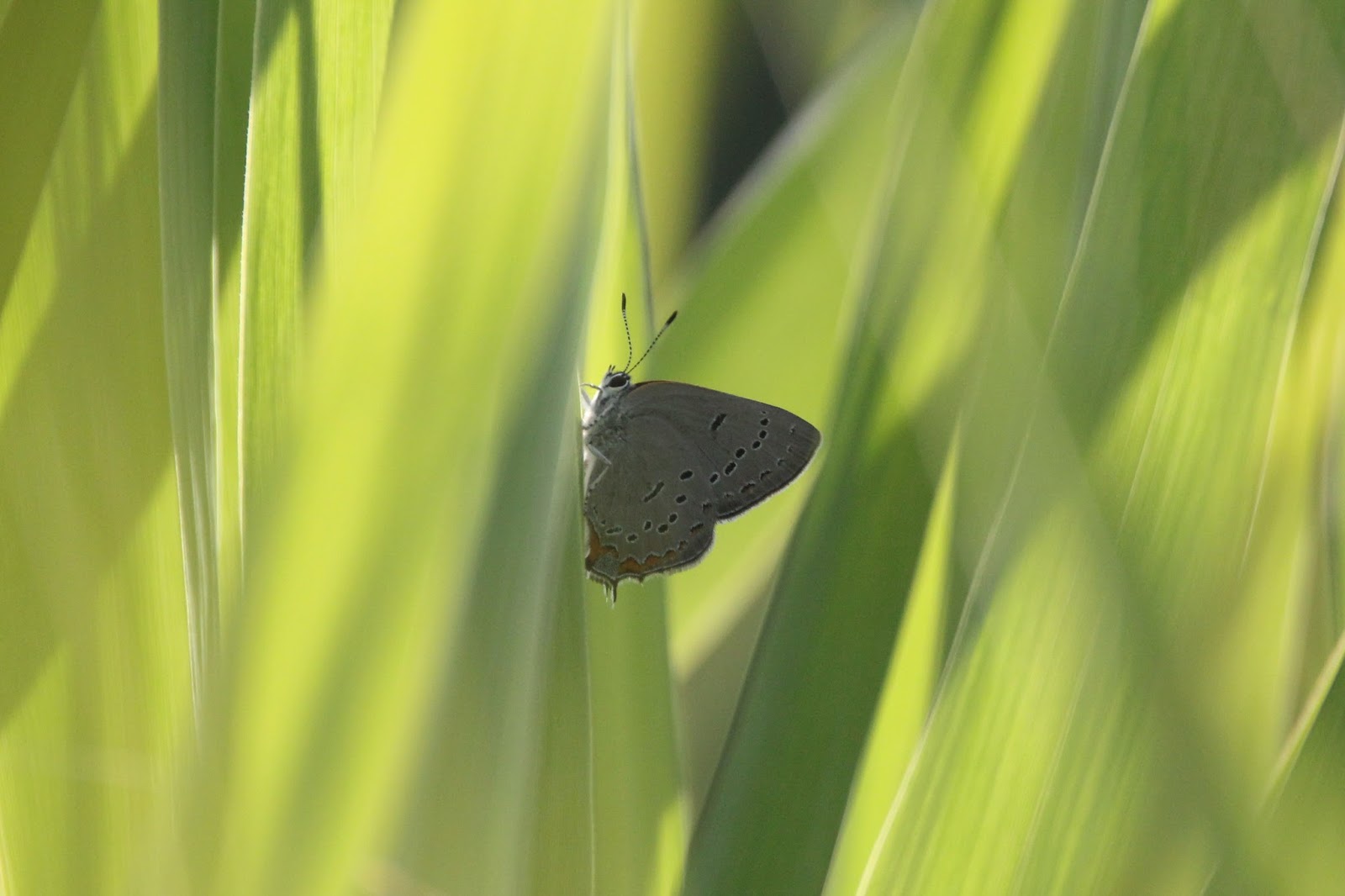
Acadian Hairstreak was also seen at the pond. Could it be the same one from last week?


Would you believe me if I told you that this is a bunch of Pavement Ants?


It wouldn't be a complete insect count without a species list! Here it is:

Upland Area Insect Count
July 4, 5, and 6, 2016

Species                                     Date Observed                Total

European Skipper                     4, 5, 6                                  18

Silver-spotted Skipper              4, 5, 6                                   3

Cabbage White                         4, 5, 6                                   X

Clouded Sulphur                      4, 6                                        2          

Acadian Hairstreak                  4                                            1 

Banded Hairstreak                   4                                            1

Red Admiral (?)                       4                                            X

Virginia Ctenucha                   4, 5, 6                                      2

Moth Sp.                                  4, 5, 6                                     X

Common Green Darner           4, 5 , 6                                    6

Unicorn Clubtail                       4                                             2

Eastern Amberwing                 4                                             3

Common Whitetail                  4, 5, 6                                      8

Tule Bluet                                4                                              1

Familiar Bluet                          4                                             22

Skimming Bluet                       4                                              3

Orange Bluet                            4                                             14

Eastern Forktail                        4, 5, 6                                     18

Common Red Soldier Beetle    4, 5, 6                                     X

Red Milkweed Beetle                6                                             2             

Japanese Beetle                         4, 5, 6                                    X

Pavement Ant                            5                                            X

Hoverfly Sp.                              4                                             1

Blowfly Sp.                                4, 5, 6                                    X

Wasp Sp.                                    4, 5, 6                                    X

Bee Sp.                                       4, 5 ,6                                    X

Lady Beetle Sp.                           6                                            3

X=Unknown Number


Go out there and find some interesting bugs of your own!