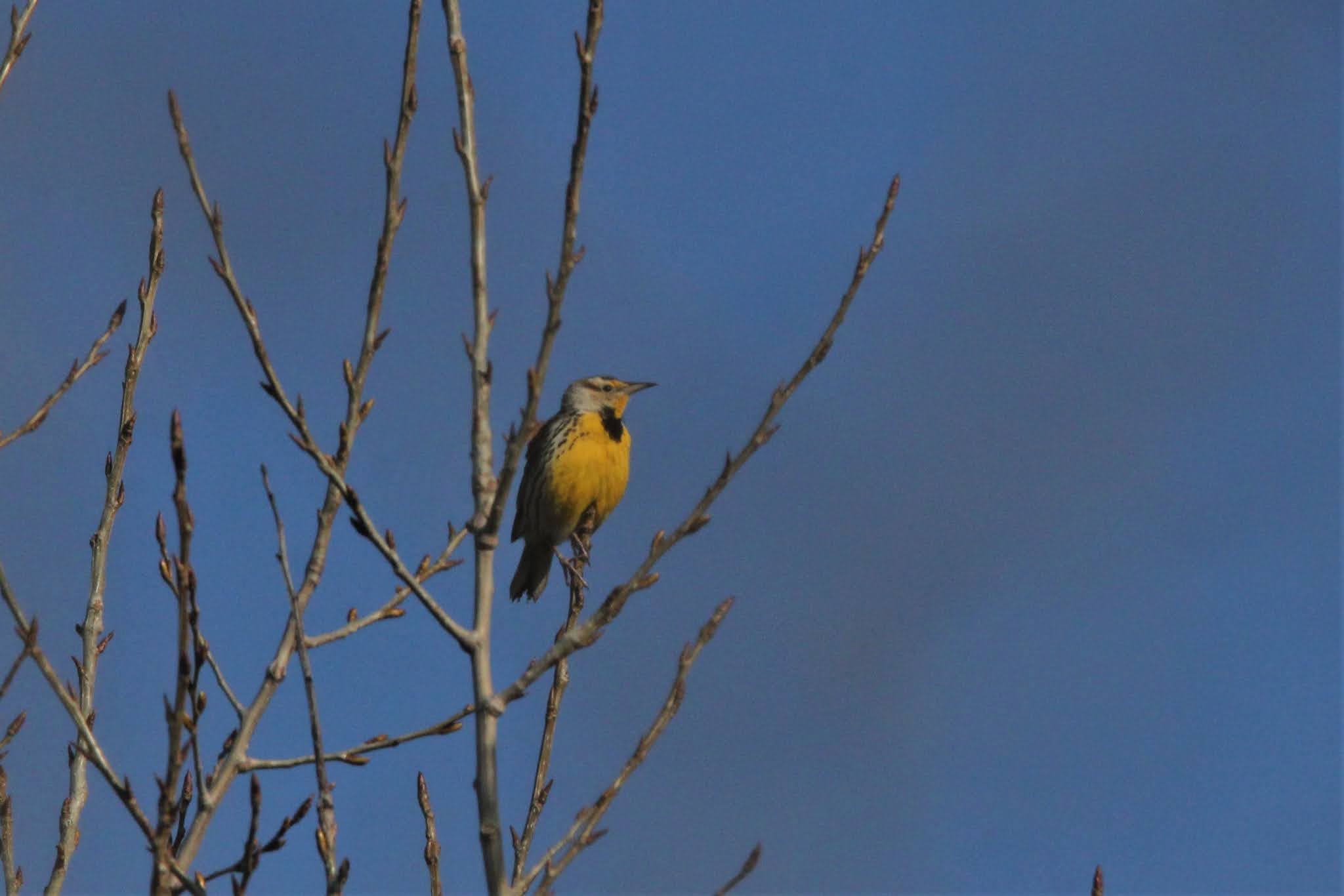
Showing posts with label birding. Show all posts

Saturday, 16 October 2021

Shorebirds of Algonquin

Been awhile, eh? 

Alright, I'll say it. Algonquin Park is notoriously bad for birding. Sure, there's some good things to be seen here and there, but you (usually) have to work very, very hard for it. I can't tell you the number of times I have walked around the Old Airfield over the past several weeks and the best bird be an American Pipit. 

However, despite how bad it is, many birders, myself included, absolutely adore birding in the park. Why? Well, when the work you put in pays off, it really pays off. 

Back in the summer I was joking about doing a little naturalist table on the "Shorebirds of Algonquin", which was quickly kyboshed when I realised that we only had like four (4) shorebird specimens. As you can imagine, Algonquin is not exactly the most "productive" place for shorebirds. Rocks? We got em. But we lack many of the sandy beaches and exposed marshes that are required for these migrants to touch down on.

There is however I very special place in the park that sometimes harbours shorebirds, you just have to maybe get rained on (after all, rain drives down the birds). That place is the magical East Side, specifically Radiant Lake and Lake Travers.

I only first set foot on the shores of Lake Travers this past summer, but have since made an effort to get back there as much as possible (which unfortunately, due to certain logistics, hasn't been super often). This is a very special lake in that is has a decent (for Algonquin) sized marsh with decent (for Algonquin) mudflats when the water is low. Many rarities have been found here over the years, and each time I go, I hope to add to that legacy (spoiler: no mind-bogglers yet).

Radiant Lake is another special lake in that it is very sandy, and very shallow. It is possible to wade pretty much right across the lake when the water is low enough. The sandy bottomed lake also translates into expansive sand bars that are sometimes exposed. 

30 species of shorebirds have been recorded in Algonquin Park, and I have seen 13 of them. Anyways, here's a few pictures of the ones I have encountered. 

On September 10, I went on a work trip to Lake Travers and Radiant Lake. Our best bird was a White-rumped Sandpiper (something like the 14th record for Algonquin). We also had Least Sandpipers, Semipalmated Sandpipers, Semipalmated Plovers, and a couple Greater Yellowlegs. 

White-rumped Sandpiper

Semipalmated Plovers

Least Sandpiper

A couple weeks later, I was on a camping trip to Lake Travers with Peter Simons, and we had a great time in the rain with a mini (emphasis on mini) shorebird fallout. We each got a few park shorebirds, such as a Lesser Yellowlegs, Pectoral Sandpiper, and Dunlin. 


Our eBird checklist is a sight to behold. At least, I think so :-) 

Annnndddd...that's it. Yup. A couple exciting instances for shorebirds is all you get! No fallouts of Hudsonian Godwits were observed (sadly). Water levels rose very quickly after that late September trip, and when I returned in early October, there were no exposed flats anywhere! A flyover Greater Yellowlegs is all I got...

I suspect my shorebird season is over in the park, but I'll still holding out for a Northern Lapwing in the airfield...

Thursday, 13 May 2021

A Blue Grosbeak in London!

 Backtracking a bit with this post...

Last Tuesday evening  (May 4) I was just settling down to get a start on some schoolwork when I got an eBird alert about Purple Finches. With the return of the finches happening now (I got an Evening Grosbeak early last week by the way, in my patch to boot!), I knew that I would need to change the eBird filter for them. So I opened up the eBird review queue to do so and my eyes just about bulged out of my head when I saw "Blue Grosbeak" sitting there! It had just been submitted five minutes prior, and hadn't even made it out into the alerts yet. It was about 6:00pm at this time, and the report was from a few hours prior. I made a couple calls, and within 20 minutes I was out at Kilally Meadows ESA in the company of a couple others looking.

To make a long story short, after a couple hours, we were unsuccessful in locating the bird. We marked this one down as a loss, and then headed back home.

The next morning, after a morning of excellent loon migration (I counted over 350), I was going through some iNaturalist sightings for Middlesex, and saw that a photo of the Blue Grosbeak had been uploaded, a spanking first year male. I'd be lying if seeing those photos didn't sour my mood a bit. My sadness was quickly replaced by excitement however when I got an alert that the bird had just been refound! I was out the door and on site within 15 minutes.

Others had arrived on site just mere minutes after it was posted, but it hadn't been seen since the original refinding earlier that morning. We all combed the area it was last seen, but came up empty. Things weren't looking too good.

A consolation prize for some was an Eastern Whip-poor-will that had been flushed by a hawk, and then perched nicely. This particular bird ended up staying on the same spot for four days! 

A couple hours went by, and the birders began to dissipate as hope was diminishing for seeing the grosbeak. As I was wandering around, Gord Payne showed up on his lunch break. I mentioned then whip-poor-will, and he wanted to see it, so I took him to the spot and pointed it out. As we were chatting afterwards, I happened to glance off in the distance and notice a songbird fly in, perch briefly on a goldenrod stalk, and then drop down to the ground. I didn't get any colour or features off of it, but it looked mildly intriguing, so we went over to investigate. As we approached where it dropped down, it flew up and perched. It was the Blue Grosbeak!!!!


I snapped a couple photos, and then it flew off and we lost it in some shrubs. We called over the other birders, and then began our search for it again. 

It took a bit, but once again, when everyone else was looking for it where it was last seen, I walked a bit further down the trail, and was pleasantly surprised to see it sitting out in the open! I called everyone over, and thankfully this time pretty much everyone there was able to see it! 

In the last 50 years or so, I believe there are only two other records of Blue Grosbeak for Middlesex County, the last being in 2007 at Pete Chapman's feeder in Hungry Hollow near Arkona. What an exciting bird for the county, and only 5 minutes from home. As of time of writing, the bird was still being seen. One has to wonder how long it will stick around!  I will admit, I am a bit annoyed, because earlier in the day on Tuesday I had actually walked right by where it was seen a few times! Our evening search was my third time at Kilally Meadows that day.

Who needs Pelee? ;-)

Saturday, 1 May 2021

May Day

The first of May is always a celebrated day for birders (or at least, it is for me!). I like to get out and start the month off right!

This morning, somehow I slept through my alarm, but nevertheless, I was out and about in the neighbourhood by shortly after 7:00. The last couple days haven't been really conducive for migrants, but on my walk over, I heard a couple House Wrens, new arrivals, so my hopes were up. 

At the Northbrook Park/Wetland storm pond, I found a Solitary Sandpiper. I had heard one here the day prior, but it was nice to get a visual.

At one point I looked over and was shocked to see this staring back at me from the dried up wetland!

A Coyote! Although I have heard them on occasion in the neighbourhood, and commonly come across their scat, I very rarely actually see them (this is actually only my second time seeing one around here). It appeared to be quite mangey, and walked with a limp, so unfortunately I fear it was not well. 

It went and laid down on some phragmites, and was napping (I hope) when I passed by it again an hour later.

As for birds, the Blue Jays were moving, and I counted well over one hundred. 


A Brown Thrasher was making the rounds as well.

There wasn't really much else in the way of migrants other than a Blue-headed Vireo, my first this year. Not a single warbler at this location! 

My next stop at the north wetland yielded the warblers, and I found Yellow, Yellow-rumped, and Palm. There were several Tree Swallows around, including this one, which was collecting nesting material off the path. There is a pair building a nest in a snag—will keep an eye on it for the breeding bird atlas. 

Speaking of breeding birds, there was a House Finch sitting on the nest I spotted a few days back, and I saw my first brood of Mallard ducklings of the spring!

There was a small movement of Broad-winged Hawks, and I saw four go over. 

Next up was to check the Uplands Trail. I flushed a Wilson's Snipe while walking through the field, probably the most interesting thing there. There was also a Pine Warbler singing.

I got distracted by the sedges. I saw my first "getting there" Graceful Sedge (Carex gracillima) of the year. The perigynia (fruits) on this species are short and plump without a "beak". 


The terminal spikelets of this species are also what we call "gynecandrous", meaning that there are female flowers above the male flowers. You can kind of see that here (although it may not be super obvious if you don't know what you're looking for!). The gynecandrous tendency of Graceful Sedge is a distinguishing feature, separating it from most of the other similar species in Carex sect. Hymenlochaenae (this is a trait only shared by C. prasina, C. davisii, and C. formosa, all of which are not commonly encountered in Ontario).

Pennsylvania Sedge (Carex pensylvanica) is a species I have portrayed on this blog before. It's colony forming habits make it a pretty distinctive and easy to identify species once you are familiar with it. 


Another species I saw was Fibrous-rooted Sedge (Carex communis). This can appear similar to Pennsylvania Sedge, although it is more clump forming and not colonial. The leaves are also wider, and the bracts (specialized leaf below the flowering part) are longer.


 A feature I don't see discussed too much is that the bract sheath has reddish margins were it meets the culm (sort of like the 'stem' in grasses and sedges). I believe that is is fairly diagnostic of Fibrous-rooted Sedge, at least in species that it looks similar to (Carex sect. Acrocystis). 

I'll finish off with this Mayapple (Podophyllum peltatum) with a "leaf necklace".

It was a great way to kick off May, and things can only look up from here!

Friday, 30 April 2021

Middlesex Biggish Year: April Update

Four months into my Middlesex Biggish Year! April is always an exiting time of year, and this past one was no exception. This past month I have added 42 species to my year list, which now stands at 154, or about 85% of the birds recorded in Middlesex this year. Nothing immediately sticks out as a "major miss", although Red-shouldered Hawk still evaded me—it might have to wait until the fall now! I also managed to see one of my outstanding targets, basically my only remaining one from the first few months of the year...Lapland Longspur! Finches still haven't really come through yet, so still holding out for some Evening Grosbeaks. 

The breakdown:

Code 1: 103 species (27 new)

Code 2: 34 species (13 new)

Code 3: 12 species (2 new)

Code 4: 3 species

Code 5: 2 species

Plenty of code 1 species were recorded this month, most of them typical April migrants with several warbler species, a few shorebirds, all of the swallows (other than Purple Martin), and some sparrows

Black-throated Green Warbler

Field Sparrow

As for the code 2 species, Lapland Longspur was a highlight, as well as a couple of the more uncommon shorebirds such as Wilson's Snipe and Least Sandpiper, as well as a Bonaparte's Gulls and a Caspian Tern. Some nice birds! 

Lapland Longspur

Code 3 additions were comprised of two species: American Bittern and Eastern Whip-poor-will. The bittern was a bit of a relief, it was in the same spot I had one in 2018 and 2020. Unlike last year however, it only seemed to stick around for a day—or its just good at hiding! The whip-poor-will was another great addition, a new Middlesex bird for me. 

Eastern Whip-poor-will

Well, that's all she wrote for April. Time for the most exciting and most anticipated month of the year— May! Should be plenty of year birds to come. I'm having a lot of fun birding around the county, and that's why I'm doing this! 

Tuesday, 19 January 2021

2020: A Neighbourhood Year in Review

As much as I love to bird in areas further afield, my neighbourhood is where I do the bulk of my birding. While this is mostly because of its convenience, the birding isn't actually half bad. At the beginning of 2020 I had pretty much zero intention of doing much birding. Sure, I would do some spring birding in my usual haunts like Rondeau and Point Pelee (which as we all know, wasn't to be!), but I wanted to focus mostly on field botany, a hobby that was quickly growing on me! 

After my birding trip to Cochrane at the start of March Break, and the start of the pandemic, I found myself stuck at home without much to do except look for birds. Having such a successful northern trip definitely helped "rekindle" my excitement for birding just enough to make me muster up the energy to go outside (which admittedly, didn't happen sometimes for days on end!). Other than a few trips a bit further afield (COVID aware of course), I pretty much spent the entirety of spring migration in my neighbourhood! I typically don't do much birding during the summer (too many plants and insects to see!), but by the time the first fall migrants started to arrive, it was time again for almost daily pilgrimages out to my neighbourhood. Nearer to the end of fall, I was spending most of my free mornings out at Fanshawe CA, but I still got out every once in a while. My grand total for for my neighborhood in 2020 was 164 species out of the 179 species I have seen all time. I know of at least a few other species seen by others that I missed. Hopefully this year I can find some of those species!

I'll walk through some highlights in chronological order.

Even before the start of the pandemic and I started to bird more, something I look forward to each spring is the arrival of the blackbirds. They arrived pretty much on time on February 24th. Soon after, I recorded my first Turkey Vulture and American Woodcock on March 7th. Also that same day, March 7th, I was elated to find my first ever Eastern Screech-Owl for my neighbourhood list, a species I had been hoping to come across for awhile. It was my first "patch bird" of the year! I found another Screech-owl later in a different woodlot.

Throughout the end of March and into early April I continued to go out to my patch with some regularity. I saw several notable species including American Wigeon (March 21), Sandhill Cranes (March 26), Eastern Phoebe (March 26, a bit early), and Blue-winged Teal (April 6). April 18th was a big day, and perhaps the turning point for my patch birding in 2020. I was super happy to find my first Lesser Scaup for my neighborhood list at one of the local ponds. That same day, I managed to turn up a Virginia Rail, which would soon turn into two Virginia Rails. These rails were fairly cooperative and reliable, and remained in this wetland into mid May.

Lesser Scaup


On April 19th, I did my first yard watch of the year. I would complete several more of these stationary counts in the early mornings in my yard over the next few weeks. I saw my first Common Loons and cormorants of the year. The next day, I did another yard watch, and came up with my first Broad-winged Hawks of the year.

Common Loon


On April 24, I got a message that there was an American Bittern in a local wetland, the same place I had found one in 2018. I went over and saw it. I saw this elusive bird several more times into the beginning of May. 

April 25th was a pretty good day for a yard watch. I saw my first Eastern Meadowlark for my patch list, which landed in a tree for a moment. It was also my first big loon day of the year, with 124 recorded.

The first of year birds kept coming throughout the end of April, with highlights being Fox Sparrow, Wood Thrush, Eastern Towhee, Blue-headed Vireo, Warbling Vireo, Black-throated Green Warbler, Yellow Warbler, Rose-breasted Grosbeak, Brown Thrasher, and my first Great Black-backed Gulls for my neighbourhood, which flew over my yard on April 28th. April 28th also marked the first day of my daily early morning (starting before sunrise) walks of the spring, which I continued for the better part of three weeks. I certainly got my exercise in with these walks, and I estimated I walked a total of 10-15km every morning!

Fox Sparrow


Finally it was May, but unseasonably cold weather was really putting a damper on the arrival of spring migrants. I had a high count of migrating loons with 299 on May 5. We got a thin trickle of birds, including Sora (May 2), Great Egret, Savannah Sparrow, Lincoln's Sparrow, Baltimore Oriole, Ovenbird, and Palm Warbler (all May 3, the first "good" day), and Solitary Sandpiper (May 6). On May 9th, the global eBird big day, we got snow! It wasn't until May 10th I got my first Blackburnian Warbler and Least Flycatcher. May 12th brought Lesser Yellowlegs.

Palm Warbler

Lincoln's Sparrow


Then, on May 14th, the weather changed, and the floodgates opened. Warblers! Thrushes! WARBLERS! I found my first  Yellow-throated Vireo and Scarlet Tanager for my neighbourhood list. The vireo in particular was quite awesome, as it completed my set of all the regularly occurring vireos in Ontario for my patch. In the evening, I found a Gambel's White-crowned Sparrow in my yard, a somewhat rare subspecies in this area of Ontario. I had made it my goal to find one that spring!


Black-throated Blue Warbler

Yellow-throated Vireo

Gambel's White-crowned Sparrow


I spent May 15th in Rondeau, the first day it was open to the public after being closed all spring. Although apparently it was a great day for birds in London, I am glad I spent it here!

I didn't seem to go out in the patch on May 16th, I assume it was because of rain. I remember hearing about the Kirtland's Warblers that had been found at Rondeau that day, but being quit bummed as I wouldn't be able to go down to see them! 

When my alarm went off on May 17th, I was hoping it was raining outside so I would have an excuse to go back to bed. I looked out my window, and found it dry. I debated about going back to bed anyways, but I reasoned that if I didn't go out, I wouldn't find anything. I was outside by 5:30am to begin my 10 minute walk to the place I started in the morning. I thought of all the rarities I could see, including Kirtland's Warbler, which was on my mind after the ones in Rondeau the day prior. When I arrived to the park, I began to regret my decision to go outside, as there were basically no birds. I had seen one warbler. As I was walking along, I heard a chip note, and saw a warbler at the top of a tree. I raised my binoculars and my jaw hit the ground. Now, I can't repeat here exactly what came out of my mouth, but bottom line, not only was it a patch bird, but my full out lifer Kirtland's Warbler. My observation lasted for no more than two minutes, and the bird wasn't very cooperative, but it was undoubtedly the highlight of my year.

Kirtland's Warbler


Oh, and I saw my first Cliff Swallows and Eastern Kingbird of the year that day too, but they are but a footnote...

That day was the last of my almost daily morning walks. I was feeling quite tired, and my other interests like bugs and plants were starting to get the best of me! I added six more species to my neighbourhood year list over the rest of May, bringing my total up to 124 species.

The summer months are often quiet, but I added a few more species here and there. My biggest highlight of the summer was a pair of Black Vultures on June 6th, a new neighborhood and Middlesex bird for me. I was out looking for dragonflies, so I didn't have a good camera lens or even my binoculars! Thankfully, I managed to get some record photos that managed to confirm the identification. 

Black Vultures


July came around, and with it some of the first southbound shorebirds. I was pretty excited to find that I had good shorebird habitat this year, however this excitement was short-lived, and with a period of heavy rain, it all flooded and was useless by early August, before the bulk of the "good" shorebirds would come through. I never had anything crazy, but Least Sandpiper and Lesser Yellowlegs were highlights.

Also during July, while out counting dragonflies, I found my first Marsh Wrens for the neighbourhood. 

At the end of August, I began once again to make near daily visits out to one of my favourite migrant traps. In short order I added Olive-sided Flycatcher, Eastern Wood-Pewee, Blue-gray Gnatcatcher, and several warblers to my year list. I added one new patch bird, Black-billed Cuckoo. Purple Finches began to move through, a sign of things to come.

Olive-sided Flycatcher


I did a couple hawk watches in early September, with my best day topping 600 Broad-winged Hawks.

By late September, many of the neotropical passerines had passed through. I found some Wilson's Snipes, a species that I hadn't seen for a couple years in the neighborhood. After being strangely absent for awhile, the Green-winged Teals finally showed up.

Wilson's Snipe


Late September gave way to early October, and with that, Winter Wrens, American Pipits, and more ducks showed up. Pine Siskins arrived, and I finally saw some Greater Yellowlegs. Later on in the month, I did a lot of hawk watching, and scored a Red-shouldered Hawk. I never could get a Golden Eagle though!

Northern Pintail and Green-winged Teal


Early November came around. A highlight in the first few days was a Vesper Sparrow, a new neighbourhood bird. Number 160 for the year was a Common Redpoll on the same day, the first of many. By mid November, we were getting crossbills, and I had both Red Crossbill and White-winged Crossbill fly over my yard. I never could connect with an Evening Grosbeak, although someone else did spot some!

My last two new birds of the year came just a few days apart, Snow Bunting (November 16) and Rough-legged Hawk (November 23). Although I did go out some more here and there over the next month, the quiet of winter had settled in.

So there you have it, a short(ish) recap of some of the highlights of my year in my neighbourhood. I certainly wrote a lot (I have been plugging away at writing this post for three days!), but there was so much more I could have included! For an area that is mostly subdivision with only a few greenspaces, I think I did pretty good! Just goes to show what can be seen once you look for it!


Wednesday, 26 December 2018

Ontario's Next 25 Birds: Part 2

A few days ago, I wrote part 1 of what I thought the next 25 birds for the Ontario checklists were to be. I will now detail my top 10 picks, and a few honourable mentions!

10. Sooty Shearwater

Common off the Atlantic coast, with records all the way up to the far reaches of Nunavut, this is a record just waiting to happen...for those willing to venture far to get it. There is actually a Short-tailed/Sooty Shearwater from Ontario up in James Bay, which makes me think, once again, that may be your place to see one. Short-tailed and Sooty are hard to separate though, so good photos would be a must.

When: October or November, maybe following a weather event?
Where: Southern James Bay, though possibly Hamilton (Van Wagners)


9. Allen's Hummingbird

Sort of an overdue hummingbird! There are numerous records all over eastern North America. Ohio has had a record, and Pennsylvania just had it's fourth this year.  This species is hard to separate from Rufous Hummingbird, and a high quality photo of the spread tail would be needed to ID it. The species will likely show up when a supposed "Rufous" is banded and the measurements turn out to be a Allen's.

When: October
Where: Somewhere with a hummingbird feeder


8. Hammond's Flycatcher

Several records from New England, Wisconsin just got one. We have Dusky Flycatcher, we have Gray Flycatcher. This just makes sense. It would require a good look and photos to ID. Just be sure to check out all late empids!

When: October or November (December?)
Where: Somewhere is southern Ontario, but maybe banded somewhere in the north...


7. Northern Lapwing

Also a tad surprising. Somewhat annual or bi-annual on the Atlantic coast. Probably some sort of weather system will push it into Ontario. Not much to say about this than make sure to check out fields with some Killdeer running around.

When: April/May and December/January
Where: Random field in southern Ontario, probably near a birding hub if a spring bird. Not sure about James Bay potential, but hey, that is always there


6. Red-necked Stint

Annual on the Atlantic coast, the closest record to Ontario is one in Indiana. This species is very likely just overlooked, although once you know what to look for, they should (maybe) stand out a bit. They have likely been up on the James Bay coastline, but coming from someone who was lucky enough to go up there, it would be very difficult to pick out a rarity due to the conditions and sheer amount of little peeps running around. This species was once on the Ontario list, but was later removed.

When: May or July/August/September
Where: Sewage lagoon in southern Ontario or James Bay


5. White-tailed Kite

We have Mississippi Kite, we have Swallow-tailed Kite, so where is our White-tailed Kite? This species is prone to some vagrancy, with records from Minnesota, Indiana, Wisconsin, and New York to name a few. Will likely be found by some hawkwatchers, or as a surprise bird flying over the heads of unsuspecting birders at the Tip of Point Pelee.

When: May
Where: One of those traditional funnels in Lake Erie

This is a juv, adult more likely?

4. Bar-tailed Godwit

Prone to some vagrancy, with records up and down the Atlantic coast, and some inland records as well. Look for a Hudsonian Godwit with white underwings! While I think this bird could be found down here in southern Ontario, our best bet may to keep scanning the Hudwit flocks up on the James Bay coast.

When: May or July/August
Where: James Bay or a sewage pond in southern Ontario


3. Hepatic Tanager

As crazy as it sounds, I believe Ontario is due for a Hepatic Tanager. There are two records for Northern Michigan, and one for Quebec and Saskatchewan. I have no clue what weather events would effect it, but many birds like to wander. Hard to say for sure how one will be found. Likely either banded (Long Point, Thunder Cape) or coming to a feeder somewhere Here are a couple lovely examples:
https://ebird.org/view/checklist/S41544847
https://ebird.org/view/checklist/S32742031

It just has that "weird factor"

When: October or November
Where: North shore of Lake Superior most likely, but somewhere on Lake Erie would make sense


2. Glaucous-winged Gull

With records from New Hampshire, Minnesota, Michigan, Newfoundland, Illinois and Wisconsin, it is only a matter of time before one is detected here. There may be an observer bias, as I know many people don't like to tackle those messy Larus subadults. Hybrids would also have to be taken into consideration. I can find four records of Glacous-winged/Herring Gull hybrids in Ontario. Nevertheless, keep and eye out at your local landfill!

When: November-April, Michigan bird was in May
Where: Anywhere in the Great Lakes region (emphasis on Niagara and Toronto region), Eastern Ontario, northern Ontario someplace (Sault Ste. Marie? Thunder Bay?) and of course, the good ol' James Bay potential


1. Clark's Grebe

My pick for the most overdue bird is Clark's Grebe. Sure, there are limited records for eastern North America, but just look at this bird. Just on the wrong side of the border. It was very likely in Ontario at some point! In addition, I can find about 10 records of Aechmophorus sp. (Western Grebe/Clark's Grebe) from Ontario, meaning they weren't identified to species. These two species can be hard to separate without good enough looks, and hybridization exists. Just west of Ontario, in Manitoba, this species becomes much more common.

When: Late February/March in southern Ontario, May to early June in northwest
Where: Lake Ontario, maybe Huron. Later in the spring, Rainy River and Kenora districts, likely in a sewage lagoon or marsh.


Some birds I had on my "shortlist" but decided to cut include Boat-tailed Grackle, Yellow-legged Gull, Western Gull, South Polar Skua, Temminck's Stint, Bronzed Cowbird, Short-tailed Hawk, Lesser Frigatebird, Arctic Loon, Pacific Golden-Plover, Acorn Woodpecker, Williamson's Sapsucker, Baikal Teal, Common Pochard, Masked Duck, Brown-headed Nuthatch, Black-whiskered Vireo, Eurasian Skylark, and Eastern Yellow Wagtail. A few may be pushing what may be reality, but hey, Slender-billed Curlew is on the Ontario list.

This is birding of course, and there is no way to accurately predict anything. Maybe I'll get some right, maybe I won't. It seems just as likely that a Terek Sandpiper or Wood Sandpiper will show up before my number one pick!

Anyways, that was my take on the whole thing. It certainly opened my eyes to what we need to be looking for!

 Note: all photos from the Wiki Commons