Showing posts with label Bloodroot. Show all posts

Sunday, 28 March 2021

Spring Came Early

 Yesterday I went out in search of Ruffed Grouse and spring plants. My first stop was Parkhill Conservation Area, in northwest Middlesex. This is a well known spot for both of the things I was seeking. Last June, I visited Parkhill CA in search of plants, and flushed a bird in the bushed I was 99% sure was a grouse, but since it would be a county bird, I obviously wanted to be sure. 

I arrived at the CA shortly after 7:30 (I checked out the reservoir first, but there wasn't any waterfowl). It was about 5 degrees out, so not super warm, but pleasant. It wasn't long before the Western Chorus Frogs and Spring Peepers started calling.

As I was walking through the woods, I found a single plant of what I believe is Spreading Sedge (Carex laxiculmis var. laxiculmis). The glaucous leaves make it var. laxiculmis. 


I continued along the top of the ravine. Plantain-leaved Sedge (C. plantaginea) was common.


The short red bracts are evident here!

Wide Leek (Allium tricoccum var. tricoccum) was another numerous species. I might cover this species in more depth in a future post.


The first of the "Hey, that's early" moments came with this Early Meadow-Rue (Thalictrum dioicum). 


Finally, I managed to hear a Ruffed Grouse drumming. New county bird! I heard it a couple times again later. I could now just focus on the plants :)

The first hepatica (Hepatica acutiloba) plant I looked at was this "four-leaved" oddity. Perhaps it was a good luck omen?


Lots of the normal looking plants as well, including some in flower.


Eventually, I decided to descend down into the ravine and head back. Seems I picked the right spot to go down, because I ended up coming across a big patch of Carey's Sedge (C. careyana)! This was one of my most wanted plants, and I was keeping a sharp eye out for it on this day. It is similar to Plantain-leaved Sedge, but the leaves have a more "unwrinkled" appearance. I didn't end up getting any good pictures of it, but the bract (basically a specialized leaf) is much longer and is green on Carey's Sedge, whereas it is short and red on Plantain-leaved. Carey's Sedge is ranked S2 in Ontario, meaning it is very limited in distribution, but it is known to occur in this area. 


You can sort of see the green bracts here...


An assortment of other spring plants, several of which I don't normally see until mid-April!

Early Blue Cohosh (Caulophyllum giganteum)

Bloodroot (Sanguinaria canadensis)

Trout lily (Erythronium sp.)

Cut-leaved Toothwort (Cardamine concatenata)

Broad-leaf Waterleaf (Hydrophyllum canadense)

Mayapple (Podophyllum peltatum)
probable Twinleaf (Jeffersonia diphylla)


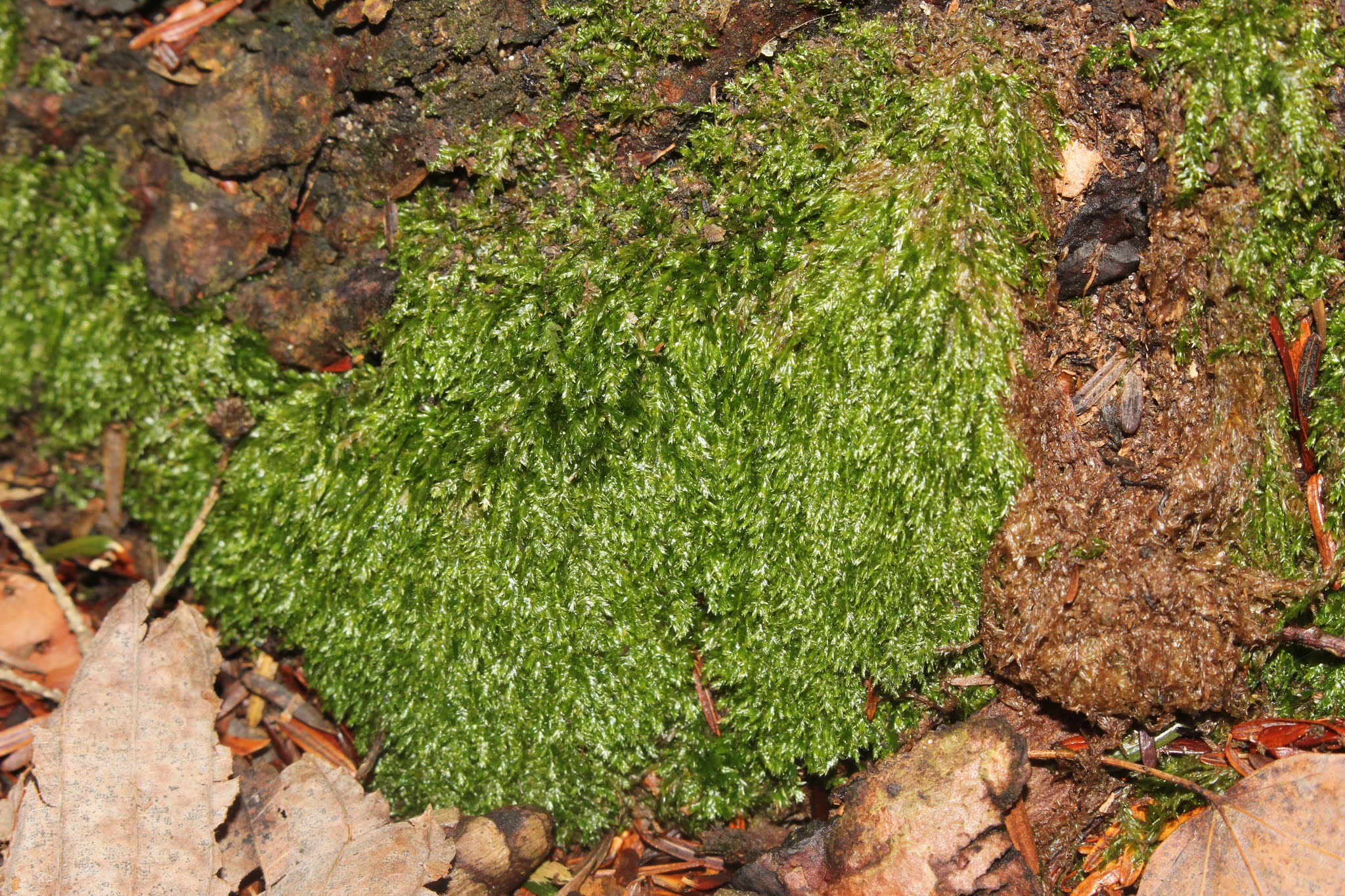
I photographed a couple mosses as well, including Bright Silkmoss (Plagiothecium laetum), a new species for me.

Bright Silkmoss

Dwarf Anomodon Moss (Anomodon minor)

I finished up at Parkhill, and the decided to stop into Coldstream CA on my way home. I had just under an hour to explore it.

There was a large naturalized population of Japanese Pachysandra (Pachysandra terminalis) along the river. This is a non-native species. I am not sure how invasive it is, but it is one to be aware of.


I added another species of toothwort to the day list, Two-leaved Toothwort (Cardamine diphylla).


False Mermaidweed (Floerkea proserpinacoides) was just one of the species found in the floodplains.


As I was on my way out, I spied this sedge, which stopped me dead in my tracks. It looked like Carey's Sedge! I am not sure if it is known to occur in this location, although I do know it is known to be found further down the Sydenham River. Although I am pretty sure it is indeed this species, I'll have to go back to confirm it once it grows a bit more.


What an enjoyable few hours! I even managed to get a few plant lifers. I'm sure I'll be back out there soon...

Saturday, 11 April 2020

Early April Plant Life

This afternoon I got out for just over an hour in one of London's natural areas. I can't venture too far for obvious reasons, so it's nice to have areas like these close to home.

Many early spring wildflowers still have yet to emerge, but I found a few things of interest.

My main reason for going out was to check out a population of False Rue Anemone (Enemion biternatum). This species is ranked S2, with between 5 and 20 occurrences in the province. I visited this population last spring and was pleased to find many individuals. This time around, the plants were yet to flower, but I found hundreds of plants, way more than last year, and I turned up plants in places I didn't note them previously. Should be nice when they flower!


Here is is in flower, from last year.


Another species of interest was Cut-leaved Toothwort (Cardamine concatenata). This is a common spring wildflower. While I didn't see any in flower, by the looks of it, that should be happening soon!


Canadian Wild Ginger (Asarum canadense) is just starting to peek up from beneath the leaf litter.


Wild Leek (Allium trichoccum), also known as "Ramps", was fairly prevalent in this natural area. The variety I saw was Wide Leek (A. t. var. trichoccum). It can be told from the much rarer Narrow-leaved Leek (A. t. var. burdickii) based on its reddish basal sheaths, leaf width (>2cm), and petiole length.


 There is an uncommon "albino" form of Wide Leek, with uncoloured basal sheaths (which is like Narrow-leaved Leek), so identification of this variety must be made with the combination of the other characteristics. This "albino" form is seen below.


Another nice early season plant is Early Blue Cohosh (Caulophyllum giganteum). Like the name suggests, it emerges in the early part of the growing season. It can be differentiated from Blue Cohosh (C. thalictroides) by its purple flower (the latter has a yellow-green flower). Additionally, Early Blue Cohosh flowers before its leaves open, whereas Blue Cohosh flowers after its leaves open. Early Blue Cohosh typically flowers a couple weeks in advance of Blue Cohosh.


A favourite of many naturalists is Bloodroot (Sanguinaria canadensis), named for the reddish sap that can be seen when the root (rhizome) is broken. 


Northern Spicebush (Lindera benzoin) is somewhat locally abundant in the area. It's just the buds now, but soon they will brighten up the forest with their brilliant yellow flowers. 


I would be remiss if I didn't throw in a couple mosses.

Rosulabryum capillare

Schistidium apocarpum

Yellow Yarn Moss (Anomodon rostratus)

Delicate Fern Moss (Thuidium delicatulum)

Silvery Bryum (Bryum argenteum)

Dwarf Anomodon Moss (Anomodon minor)

Bird-wise, I saw my first of year Yellow-rumped Warblers and Hermit Thrush. Lots of Golden-crowned Kinglets today.

It is a very strange world we live in currently. Hopefully you can get out safely and still enjoy some of what has to be offered around home!

Sunday, 21 April 2019

Early Spring Botany

While many other birders are busy with their eyes to the skies for birds, I have been spending the last few weeks crouched on the ground looking at some plants. Wildflowers have started within the last week or so to come up, including my favourite April flower, Bloodroot (Sanguinaria canadensis).


This one looked a tad odd

Trout-lilies (Erythronium spp.) have started to peak through the forest floor. It will be difficult to discern species until they flower.


Trilliums have also started to come up.


Mayapple (Podophyllum peltatum) just started to come up in the last couple days.


A few other interesting miscellaneous finds.

Eastern Leatherwood (Dicra palustris)

Running Strawberry Bush (Euonymus obovatus)

Hairy Bittercress (Cardamine hirsuta)

Marsh Marigold (Caltha palustris)

Salix spp.


Lesser Celandine (Ficaria verna)

Early Meadow-rue (Thalictrum dioicum)

I have still been going strong with mosses as well. Here are a couple of my favourites.

Redshank (Ceratodon purpureus)

Pincushion Moss (Leucobryum glaucum)

And of course, a couple other life forms to complete the post.

Notonecta undulata

Fathead Minnows


Red Admiral

Orange Legged Furrow Bee

Sylvanelater cylindriformis


I am looking forward to the month ahead. It will be difficult to find a balance between birds and other nature things ;-p