Showing posts with label Turkey Vulture. Show all posts

Wednesday, 31 March 2021

Middlesex Biggish Year: March Update

Hard to believe we are already three months into the year! The Middlesex Biggish Year continues. A bout of warm weather brought in some migrants perhaps a bit earlier than normal, although I didn't capitalize too much off this (I'll get them later anyways). In total, I added 19 new species to my year list, which now stands at 112 species, or about 82% of the birds recorded so far this year in Middlesex County. I nabbed a couple tough species, I missed a couple of my targets this month: Lapland Longspur and Red-shouldered Hawk. Certainly still time to cross paths with them! The finches that graced us last fall have yet to make a northward return. This next month will prove critical. I was hoping to get some rare waterfowl this month, but it never happened. There is still time I guess. 

The breakdown:

Code 1: 76 species (12 new)

Code 2: 21 species (4 new) 

Code 3: 10 species (3 new)

Code 4: 3 species

Code 5: 2 species

Code 1s consisted of the typical spring migrants. Killdeer, Tundra Swans, and Turkey Vulture were all, as expected, checked off in the first week of March. Gadwall and Northern Shovelers were found in the first half of the month as well, with Blue-winged Teal coming in within the last week. I saw my first Eastern Phoebe the same day as my first Eastern Meadowlark. American Woodcocks showed up about halfway into the month. An early Common Loon was seen on Fanshawe Lake, with a Double-crested Cormorant appearing that day as well.

I guess I didn't take many pics this month,
so here is a record shot of my FOY vulture


Code 2s were some of the expected but harder to find migrants. These included Horned Grebe and Lesser Scaup on some of the larger bodies of water, as well as a Peregrine Falcon, which was chasing down some Northern Pintails. A singing Tufted Titmouse, still uncommon in Middlesex, was nice to get out of the way early.

Code 3s included two of the North Middlesex specialties: Ruffed Grouse and Common Raven. I also saw two different Snow Geese this month, a nice bird and not always a guarantee to be seen every year.

Snow Goose


Well, that's the month of March for you! It has been fun so far, and I anticipate that it will continue to be that way. Onward to one of my favourite months!

Monday, 24 April 2017

I'm Feeling a Little Blue (I Missed the Little Blue)

I'll be straight to the point...I dipped on the Little Blue Herons that have been hanging around Corner's Corner in Elgin County. It was disappointing, but that's the chances you take with birding!


I did see my FOY (first of year) Winter Wren, which was nice. In typical Winter Wren fashion, I didn't get a picture, so here is one that I got last April in Point Pelee.


With the dozens of Wood Duck boxes (there could very well have been over a hundred on the property), it came as no surprise at least some Wood Ducks were around. 


I was happy to be able to add to my Turkey Vulture picture collection.


Other birds seen include;

Canada Goose

Red-winged Blackbird

Northern Flicker

Wildflowers were also on my radar. 

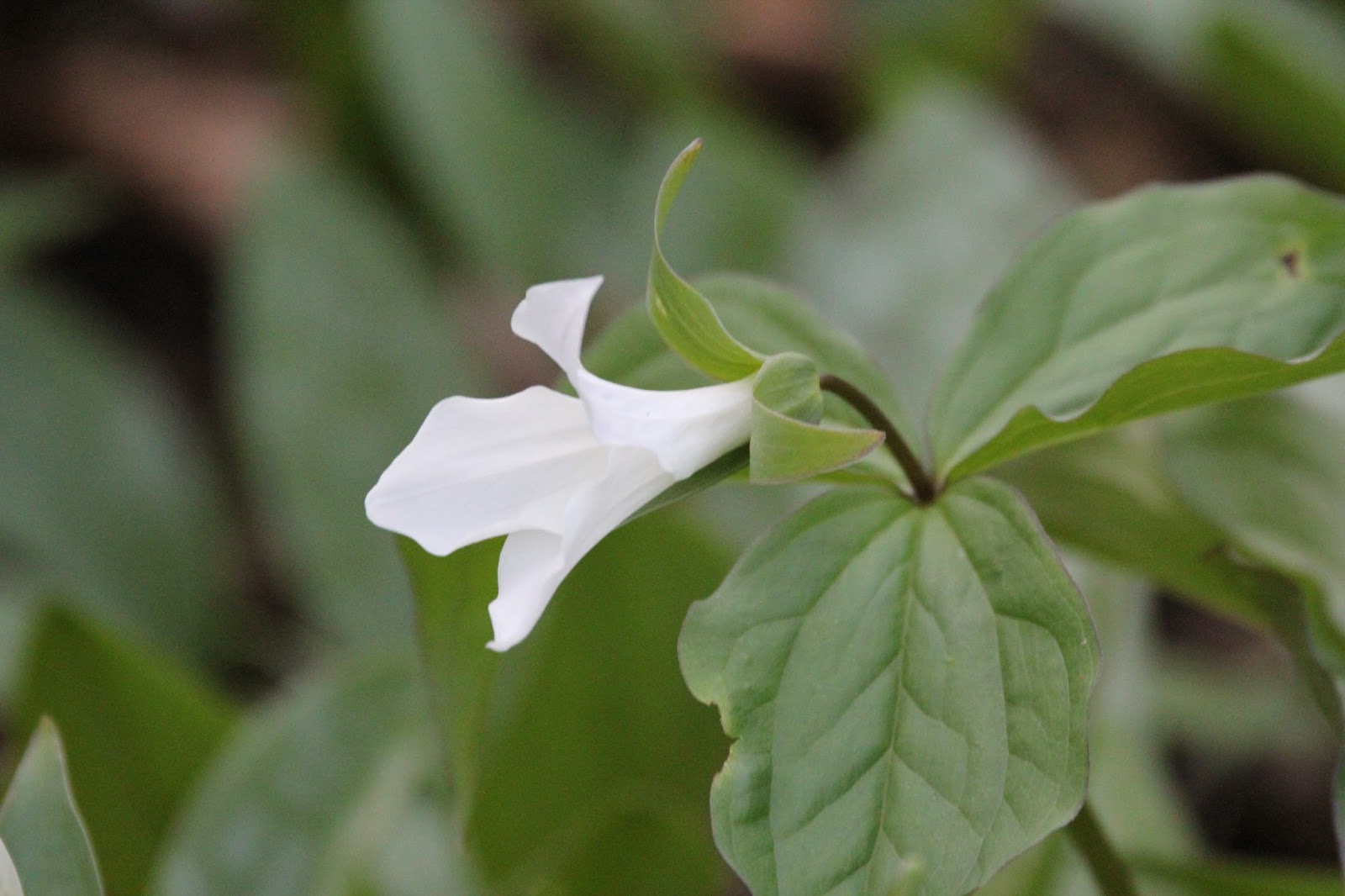
White Trillium

Yellow Dog's-tooth Violet

Marsh Marigold

Other than the dip, it was a pretty good trip. I discovered a new place and met some new people (along with some people I haven't seen in weeks). 

Spring Migration is Upon Us!!!!!!

Saturday, 25 February 2017

Spring Migration is a Go!

With the recent warm weather we've been having, it's no surprise that there has been a recent influx of migrants returning and resident species starting their mating rituals.

American Robins have started their "cheery-up" song

My first Red-winged Blackbird of the year was seen on the 18th down at the local park. I didn't see any for a of couple days, but then on the 21st, there was a group of 10 that flew by. In the following days, I found about 8 or so singing males.


While this species isn't unexpected at this time of year, the numbers in which they are being reported is quite unusual. Here is the eBird map for the month of February (red is within the last 30 days).


Grackles are also starting to come back, and on the 24th I saw at least 19 at Virginia Park.


They usually aren't around in large numbers until mid-March. Again, here's the eBird map for February.


Killdeer are also starting to appear.


There are numerous records of Killdeer in February, but as with the Red-winged Blackbirds, the numbers in which they are being found are exceptional.


American Woodcocks are also returning. In fact, they've already started displaying.

Turkey Vultures are migrating in small numbers, and I'm sure we'll start seeing them regularly in the next couple of weeks.


Perhaps one of the best early records so far this year was a Greater Yellowlegs near Long Point in Norfolk county.

www.njaudubon.org

In fact, it's a PROVINCIAL record early by about a week.


So far, 2017 looks like it's going to be one hectic year!

Thursday, 29 December 2016

Big December Day

Yesterday in an effort to brighten up the last few days of December, I did a "Big Day" in Hamilton and along the Niagara river. I set a goal of 50 species, and I ended with 52. We started with looking at the Burlington Bay area, where 19 Greater Black-backed Gulls were found.


Next was the canal under the lift bridge that crosses the Halton/Hamilton county line. Hundreds of Long-tailed Ducks inhabited the area.

From Front to Back: Adult Male, First-winter Male, Adult Female

A few scoters and mergansers were with them.

White-winged Scoter

Then came the real prize...a female King Eider.


Windermere Basin yielded some puddle ducks such as American Wigeon and Northern Shovelers. This was also the only place where I found a few Ruddy Ducks among the Buffleheads.


We searched for Black Vultures at Queenston Heights next. Nothing at first but this Red-tail.


But then I noticed some dark blobs on the church...a kilometer and a half away!


I took pictures, but the blobs appeared to be Turkey Vultures, which also winter in the area. But I figured that where there are Turkeys there could be Blacks hidden among them. I ran back to the car to get my scope, and set up. It took 10, maybe 15 minutes before I saw three smaller-than-TV black birds flying at least another 500 meters behind the church. They then sharply dropped beneath the tree line but in the split second before disappearing, I saw the silvery wing tips of the Black Vulture...at two kilometers! We soon re-found at least one on the church.


The Queenston sand docks revealed this funny Long-tailed Duck. She swam quite far down river in this position.


At the whirlpool I found a Thayer's Gull, but no Black-headed! Four Canvasbacks as well.


I got my first real taste of gull-watching (gulling?) above the falls. Thousands of gulls were perched and flying around.


This barge known as "The Old Scow" broke loose from the tug boat up stream while dredging the sand banks almost a century ago on August 6, 1918.  There were two men on board when it got marooned on the rocks just up stream from the Horseshoe falls.  It took the US Army to help with the rescue, and 17 hours later the two men once again stood on solid ground.


We met a group of birders who were just leaving. They told us that there were a few Little Gulls flying around. Little Gulls are quite rare in the ABA area (code 3), but can be reliably found in Ontario. You just need to know where to look.

If Little Gulls didn't have a dark underwing, it would be nearly impossible to pick them out.  I had to be quick to get this shot.  He was hard to keep track of.


It was an awesome day, and I'm four species closer to 250. Eight more to go!

Sunday, 9 October 2016

Point Pelee on Saturday

Yesterday I took a trip to the Pelee area to see what was around. With hurricane Matthew heading up the Atlantic shore, I figured that some things may show up in the area (I was right...I frigatebird was spotted near the Pinery. I might go if it is found again).

As expected, there were a number of Blue Jays moving through. I estimated at least 100 were seen along the north dike, and around 240 at the Sanctuary Pond. I also noted 8 Northern Rough-winged Swallows there was well.


A couple immature Bald Eagles hung out around the VC.


There was an impressive number of Turkey Vultures moving around as well. They prefer NE winds to help them migrate, but the winds were NW, so birders got to enjoy the sight of over 200 vultures swirling around in a massive kettle.


The tip was fairly quiet, but I still managed to see more species than what I saw on my big day back in May (I saw 29 on May 7th and 34 on October 8th). Raptor Migration is still in full swing with a number of Red-tailed Hawks, Sharpies, Coopers, Northern Harriers moving around. A high flying Peregrine (?) Falcon is my first one of the year.


A 'Gashawk' flew by as well :)


I was a tad surprised by the number of warblers I saw at the tip. I was expecting one or two species, but I ended up with five. Obviously Yellow-rumped was the most numerous (7), but I ended up with Palm (4), a stunning male Black-throated Blue (1), Magnolia (1), and Blackburnian (1).

Butter-butt

Maggie

Black-throated Blue

Dark-eyed Juncos are starting to arrive, and I saw about two dozen around the tip. White-throated Sparrows are starting to show up too.


There were dozens of Monarchs at the tip. I even saw a few flying far out on the lake while looking through the scope at some gulls.


Dragonflies were numerous, and I saw both Red and Black Saddlebags, Meadowhawks, and Common Green Darners.

Black Saddlebags

I saw four species of gulls, most of them out over the lake. I wasn't able to find a Little Gull hidden among the Bonies.

juvie Herring

There was a group of three Common Loons being attacked by the gulls far out in the lake. It was interesting watching the birds dive under the water as the gulls flew at them. I think that the loons were bringing up some food that the gulls wanted, so they took it from them. I also saw two species of grebe...Horned and the uncommon Red-necked.

yes, there is a loon out there

New England Aster was the most common wildflower. Cabbage Whites and Sulphurs love them.


After lunch, it was off to DeLaurier. A number of Sparrows and a couple Palm Warblers frequented the grassy areas. A Prairie Falcon was seen earlier, but I had no luck finding it.


They closed off the observation tower on the trail, but at least I heard my first and only Gray Catbird of the trip. Blue jays were moving through in large numbers.


So were Golden-crowned Kinglets.


The Marsh Boardwalk was next.

Green Frog

There wasn't much around to photograph, but I added a few new species for the day list such as Wood Duck, Belted Kingfisher, and Swamp Sparrow.


More Palm Warblers were around as well.


I wanted to try to see the Snowy Egret at Big Creek, so I said good bye to the park and that's where I went. It wasn't there, but I saw 21 Great Egrets, my third species of grebe for the day, and a (domestic) Muscovy Duck!


The middle one had me fooled!

Pied-billed Grebe


Hillman Marsh was the last stop. I didn't get there until quarter after seven, so it was becoming dark, but I could still make out a few birds. The shorebird cell is quite nice at dusk.


Canada Geese and ducks such as Mallards and Scaup were coming in for the night.


Shorebirds included Greater Yellowlegs, Killdeer, and a peep of some sort. It was dark by this point, so I made the shorebird ID by ear.

No owls yet, but in another month a couple species will come to roost.

It was a great day, I ended up with 55 species, and I can't wait to go back!