Showing posts with label biggish year. Show all posts

Sunday, 2 January 2022

Middlesex Biggish Year—What Happened???

As some readers may recall, in January 2021 I decided to go for a laid back "biggish" year in Middlesex County. I wasn't going for any records, but wanted to see how well I could do if I actually put in some effort. For the first six months of the year I was really cooking...but then, I just faded out of Middlesex birding existence. 

For all intents and purposes, I still think I did a biggish something, just that something was a "Biggish Half-Year". I got a job in Algonquin Park starting in July, and with incredible luck (and perhaps a little bit of hard work), I have managed to keep employment here throughout the remainder of 2021, and into the new year. As such, no new Middlesex year birds, save for Marsh Wren and Baird's Sandpiper when I visited home over Labour Day weekend. 

My grand total for the year was 228 species, 226 of which I saw by June, which certainly exceeded my expectations. Remember those codes from way back when? Here is the breakdown. 

Code 1: 129 species

Code 2: 61 species

Code 3: 24 species (1 new)

Code 4: 9 species (1 new)

Code 5: 4 species

Which adds up to 227, so I missed adding something in there, but it probably isn't crucial, so meh, close enough. Its a "biggish" year, I don't need to put in THAT much effort figuring it out. 

Basically I saw all the code 1 species (yay me), all but two of the code 2 species, all but 10 of the code 3s and then didn't see a bunch of the others, as expected.

There were many highlights from the year, some of which I will detail below:

It was a great start of the year with winter finches. Quite funny actually, crossbills had pretty much all left by the end of November, and then bam, on January 1st I found over 40 White-winged Crossbills. Pine Grosbeak ended up being the only winter finch to evade me. 
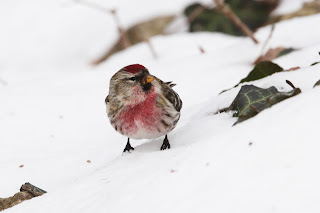
Common Redpoll

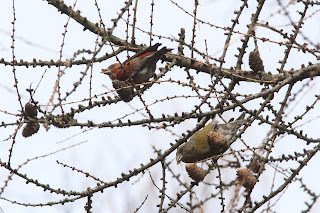
Red Crossbill

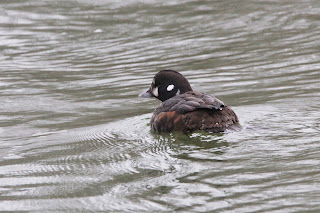
First big rarity of the year was a Harlequin Duck that we had to do some sleuthing to find out the most likely location that is was being seen at. Seems I picked the right spot, and managed to refind it!


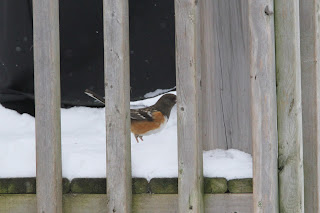
First (and I think only) OBRC bird of the year was a Spotted Towhee coming to a feeder in North London. My first lifer of the year as well. 


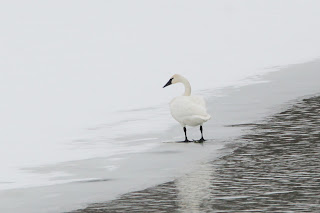
A Trumpeter Swan down along the river was another great pick up. I only encountered one other pair during the year.

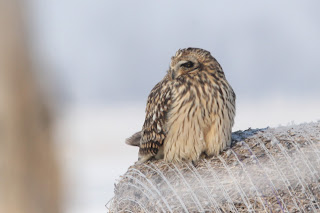
Short-eared Owls, always a highlight. This photo is actually from Lambton County, but I could see them from Middlesex...

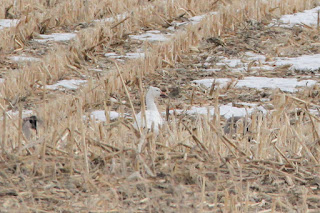
I saw two Snow Geese in 2021, and this is one of them. It was not at the original reported location in Strathroy when I went, but I found it on a hunch in a nearby field. 


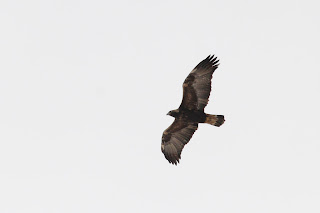
Golden Eagles didn't give me nearly as much trouble in 2021 as they did in 2020. This is one from Newbury, where they overwinter.

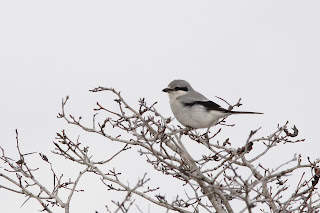
Some Northern Shrike action is always appreciated. 


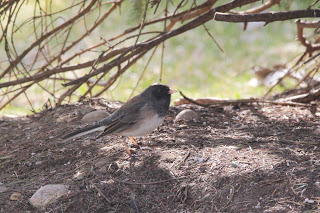
Arguably the "rarest" bird I found this year, a "Cassiar" Dark-eyed Junco from North London in March. I just didn't seem to luck out with any good rarities this spring.


Common Ravens are a formally rare species in Middlesex, but we now have a few breeding pairs. This pair occupied the site in 2020, and then again in 2021. 


I found several Vesper Sparrows throughout the course of the spring. A species I had honestly only encountered a handful of times before.


A good sized flock of 30+ Lapland Longspurs in April was a highlight. 


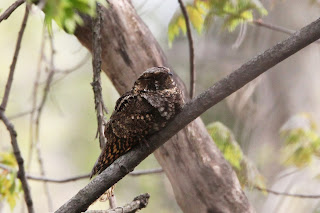
This is one of two Eastern Whip-poor-wills that I saw this year. 


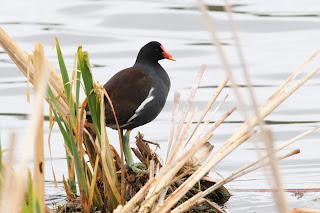
A Common Gallinule took up residence at the Strathroy Sewage Lagoons for a couple of weeks, proving that I had not needed to abandon my schoolwork and drive over there as fast as possible. 


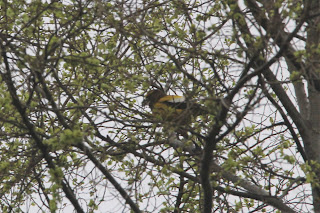
Evening Grosbeak!!! Very few were reported this year in the county, after the previous fall's major flight. I was lucky enough to come across a grand total of three.


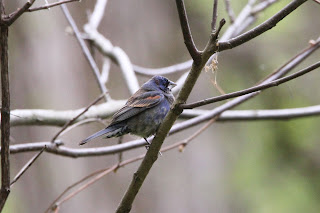
A rarity that was enjoyed by many was a Blue Grosbeak in Kilally Meadows in North London back in May. It was extremely elusive, and despite me birding there every day for most of May, I only saw it twice. Easily could have been "my" bird, as I had walked right by where it was found several times that same day! 

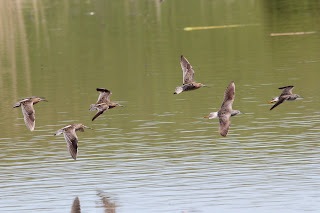
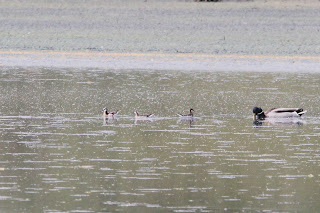
We enjoyed a variety of shorebirds in Middlesex this spring, including dowitchers, Ruddy Turnstone, White-rumped Sandpiper, and two phalaropes. My only Black-bellied Plover of the entire year anywhere in Ontario was a single bird that flew in at dusk at the Dingman Wetland in mid May.

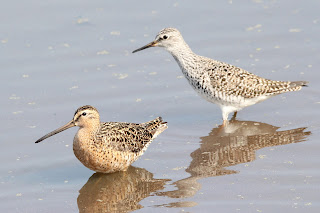
Short-billed Dowitcher

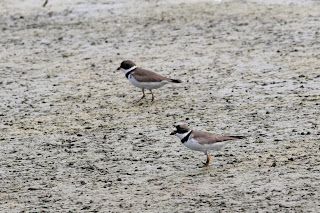
Semipalmated Plover...there was a surplus of these in May

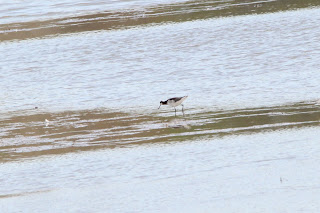
Wilson's Phalarope

Short-billed Dowitcher and Lesser Yellowlegs

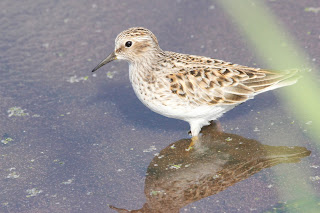
Least Sandpiper

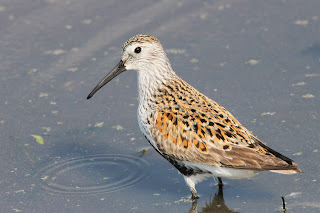
Dunlin

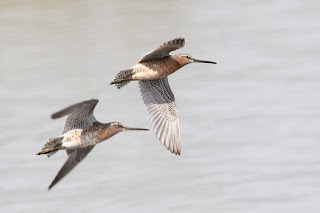
Short-billed Dowitcher

Wilson's and Red-necked Phalarope

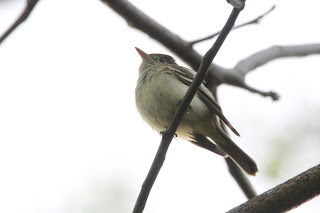
What I would consider my best find of May was an Acadian Flycatcher at Kilally Meadows, my spring birding patch. I saw a number of nice birds here this spring, including Golden-winged Warbler, Red-headed Woodpecker, and a couple of Yellow-bellied Flycatchers.


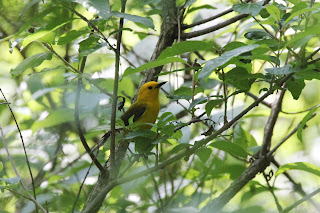
My last year bird before leaving in July was this Prothonotary Warbler that was only around for a day in South London. I had spent some time in Skunk's Misery at the end of May trying to find some, encountering Cerulean Warbler and Acadian Flycatcher along the way, but no luck.


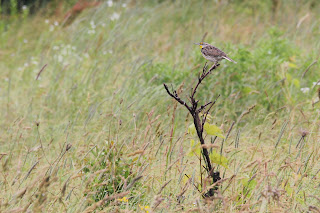
A big highlight of the year was a Western Meadowlark near Glencoe. I first saw it on May 8th, but my photos from late June turned out much better...


Not pictured are many other nice species such as Dickcissel, Northern Mockingbird, Forster's Tern, American Bittern and Upland Sandpiper.

Now for some honourable misses...

Orange-crowned Warbler - this is a tricky species in the spring (although usually I see at least one), so I wasn't really worried since they are a dime a dozen in the fall...but then I just never came back in the fall.

Gray-cheeked Thrush - I don't really have a good excuse for this one. I am very surprised I didn't see any in May (though as I recall, Catharus thrushes were actually fairly difficult to come by). I think this is just one I was also counting on as being fairly easy in the fall, at least as a nocturnal migrant flight call.

Red-shouldered Hawk - this one is all about patience with a healthy dose of pure luck. I did do a few hawkwatches in the spring during a time they were supposed to migrate through, but no dice. Middlesex isn't a great place for hawkwatching, and I find that my yard seems to be as good a place as anywhere (both my Middlesex observations of this species come from there). There was a wintering one early in the year I didn't connect with, and of course, no fall for me!

Red-necked Grebe - not a huge miss actually, as I believe there was only one seen all year! I birded Fanshawe CA pretty heavily in April, but I couldn't find one. 

Cattle Egret - just adding this to say that I searched unsuccessfully for two different birds during my visits home in November

Now, other than those, I don't think that I really "missed" anything. Sure, there were lots of other rare shorebirds (Hudsonian Godwit), some geese (Ross's Geese, Greater White-fronted Geese), a Sedge Wren, and a saw-whet owl, but I wasn't around for those! It stings a bit, but nothing I can do.

So in conclusion, I am quite happy with my six month effort, and even happier that I wasn't able to complete the remaining four months of the year as initially planned. I probably would have surpassed 240, maybe even 250 species, had I been around for the entirety of 2021, but oh well. I had more fun finding a Black-legged Kittiwake on Lake Opeongo in the cold than waiting for a Gray-cheeked Thrush to call while sitting on my back deck in the cold.

Well. That's all folks. 
Wednesday, 30 June 2021

Middlesex Biggish Year: June Update

 June has just come to an end, and as such we have come to the approximate halfway point of my "Middlesex Biggish Year". I ended up seeing two new species for my year list, putting me at 226, which I think is pretty swell! This beats my total from last year, and becomes the second or third highest year list total in Middlesex history (recorded, anyways), and we're only 6 months in! The one bird I was kind of hoping to find this month was Marsh Wren, and I actually went out to the sewage lagoons on a few occasions to try and find the ones that were sporadically reported, but no luck. I will have to cross my fingers for the fall!

The breakdown:

Code 1: 129 species

Code 2: 60 species

Code 3: 23 species (1 new)

Code 4: 9 species (1 new)

Code 5: 4 species

On June 11th, I saw one of my most sought after breeding species for the year, a Prothonotary Warbler in southeast London. We thought that the habitat looked pretty good, but the next day, it was gone. Who knows how long it had been there before it was reported. 

My other new addition for the month was a code 4. On June 1st, the day right after I had wrote I was giving birding a break for a bit, I got an alert for a Common Tern in south London. I skedaddled right over there, and found that it was actually a Forster's Tern, which was soon joined by a second while I was there. Despite being a bit more expected, it was a new Middlesex species for me, so I was happy anyways! I'm up to three tern species this year in Middlesex, which is pretty nuts. Still time to make it four...or five. 


I'll more than likely not be in Middlesex much over the next couple of months, so I will take this up again in September! The only thing I can think of maybe missing (barring rarities) would be Baird's Sandpiper, just because of how unpredictable they are in the county to begin with. I guess time will tell! 

Monday, 31 May 2021

Middlesex Biggish Year: May Update

At what point does a "biggish year" become a "big year"?

May has just come to a close on my "Middlesex Biggish Year", and behind us we leave one of the busiest months of the year bird wise. And busy it was. In an absolute whirlwind of a month I saw SEVENTY (that's seven - zero) year birds. Maybe not a super crazy number on a provincial scale, but for Middlesex, and considering I had already seen over 80% of the birds reported in Middlesex at the end of April, I think it is quite exceptional. My year list now stands at 224 (over 90% of birds recorded in the county so far this year), which just so happens to be what I finished with at the end of last year. I have had a few misses this past month, including migrants such as Orange-crowned Warbler and Gray-cheeked Thrush, as well as some good rarities like Connecticut Warbler (not too torn up about that one, would rather self find my lifer anyways!), Kentucky Warbler (shows up the first morning in a week I don't go to Kilally), and Prairie Warbler. Never did get out to try for Whimbrel (would be a long shot, but doable), maybe next year. 

I should make a quick note about the weather: it sucked. Or rather, it sucked for birders. There were a few "good" days here and there, but nothing compared to what we had last year with "fallouts" of birds. The weather was conducive for migration the first few days of May, then we hit a patch of north winds with not much happening, followed by summer like temperatures with virtually no rain for a couple of weeks. Finally in the past few days we have had winds switch back to north, with temps down to the single digits. The clear nights coupled with south winds meant that birds got going...and just kept going. Although we had a pretty good diversity of birds this spring, we really had to work hard, and the case for many species was fewer individuals than normal (for example, I saw less than 20 individuals of Swainson's Thrush in the whole of May...what the heck??). 

The breakdown: 

Code 1: 129 (26 new)

Code 2: 60 (26 new)

Code 3: 22 (10 new)

Code 4: 8 (5 new)

Code 5: 4 (2 new)

A bunch of loose ends tied up with code 1s this month. In fact, 129 species marks every single one of the code 1s there are to see! It only gets harder from here. Flycatchers, warblers, vireos, gnatcatcher, a few thrushes...you know, the usual stuff.

Bay-breasted Warbler

Big increase in my code 2 list as well, leaving only three remaining (Marsh Wren, Gray-cheeked Thrush, and Orange-crowned Warbler). Quite a few shorebirds added here, as well as some of the more uncommon flycatchers, warblers, vireos etc. I worked pretty hard to get Yellow-bellied Flycatcher and Olive-sided Flycatcher, and it eventually paid off—I saw Yellow-bellied twice in the last week of May, and saw an Olive-sided yesterday in Skunks Misery! 

Yellow-bellied Flycatcher

Code 3s consist of mostly annual rarities, as well as scarce breeders. Up to 22/34, which I don't think is too shabby. A few good shorebirds such as Black-bellied Plover, Short-billed Dowitcher and White-rumped Sandpiper, as well as some rarer migrants like Common Gallinule and Golden-winged Warbler. The scarce breeders were made up of Acadian Flycatcher (seen both on migration and territory), Clay-colored Sparrow (which I actually saw as a migrant in my neighbourhood, a new patch bird!), and Cerulean Warbler. 

Common Gallinule

Acadian Flycatcher

Clay-colored Sparrow

What a crazy month for code 4s! More good shorebirds in the form of Ruddy Turnstone, Wilson's Phalarope and Red-necked Phalarope. Black Tern and Evening Grosbeak made up the other ones.

Evening Grosbeak

Phalaropes

One of my code 5s for the month was the Blue Grosbeak in Kilally Meadows. You can read more about that here. I also had a Western Meadowlark in early May.

So what's next going forward? Well, I think I will scale way back on my birding until the fall. Still a few birds to keep an eye out for over the late spring and summer months, so I guess we will have to wait and see what happens! For now, I think it is time to pay attention to insects and plants :) I have had an amazing time so far this year, and look forward to picking it up again! I guess I can actually sleep in now...

Friday, 30 April 2021

Middlesex Biggish Year: April Update

Four months into my Middlesex Biggish Year! April is always an exiting time of year, and this past one was no exception. This past month I have added 42 species to my year list, which now stands at 154, or about 85% of the birds recorded in Middlesex this year. Nothing immediately sticks out as a "major miss", although Red-shouldered Hawk still evaded me—it might have to wait until the fall now! I also managed to see one of my outstanding targets, basically my only remaining one from the first few months of the year...Lapland Longspur! Finches still haven't really come through yet, so still holding out for some Evening Grosbeaks. 

The breakdown:

Code 1: 103 species (27 new)

Code 2: 34 species (13 new)

Code 3: 12 species (2 new)

Code 4: 3 species

Code 5: 2 species

Plenty of code 1 species were recorded this month, most of them typical April migrants with several warbler species, a few shorebirds, all of the swallows (other than Purple Martin), and some sparrows

Black-throated Green Warbler

Field Sparrow

As for the code 2 species, Lapland Longspur was a highlight, as well as a couple of the more uncommon shorebirds such as Wilson's Snipe and Least Sandpiper, as well as a Bonaparte's Gulls and a Caspian Tern. Some nice birds! 

Lapland Longspur

Code 3 additions were comprised of two species: American Bittern and Eastern Whip-poor-will. The bittern was a bit of a relief, it was in the same spot I had one in 2018 and 2020. Unlike last year however, it only seemed to stick around for a day—or its just good at hiding! The whip-poor-will was another great addition, a new Middlesex bird for me. 

Eastern Whip-poor-will

Well, that's all she wrote for April. Time for the most exciting and most anticipated month of the year— May! Should be plenty of year birds to come. I'm having a lot of fun birding around the county, and that's why I'm doing this! 

Wednesday, 31 March 2021

Middlesex Biggish Year: March Update

Hard to believe we are already three months into the year! The Middlesex Biggish Year continues. A bout of warm weather brought in some migrants perhaps a bit earlier than normal, although I didn't capitalize too much off this (I'll get them later anyways). In total, I added 19 new species to my year list, which now stands at 112 species, or about 82% of the birds recorded so far this year in Middlesex County. I nabbed a couple tough species, I missed a couple of my targets this month: Lapland Longspur and Red-shouldered Hawk. Certainly still time to cross paths with them! The finches that graced us last fall have yet to make a northward return. This next month will prove critical. I was hoping to get some rare waterfowl this month, but it never happened. There is still time I guess. 

The breakdown:

Code 1: 76 species (12 new)

Code 2: 21 species (4 new) 

Code 3: 10 species (3 new)

Code 4: 3 species

Code 5: 2 species

Code 1s consisted of the typical spring migrants. Killdeer, Tundra Swans, and Turkey Vulture were all, as expected, checked off in the first week of March. Gadwall and Northern Shovelers were found in the first half of the month as well, with Blue-winged Teal coming in within the last week. I saw my first Eastern Phoebe the same day as my first Eastern Meadowlark. American Woodcocks showed up about halfway into the month. An early Common Loon was seen on Fanshawe Lake, with a Double-crested Cormorant appearing that day as well.

I guess I didn't take many pics this month,
so here is a record shot of my FOY vulture


Code 2s were some of the expected but harder to find migrants. These included Horned Grebe and Lesser Scaup on some of the larger bodies of water, as well as a Peregrine Falcon, which was chasing down some Northern Pintails. A singing Tufted Titmouse, still uncommon in Middlesex, was nice to get out of the way early.

Code 3s included two of the North Middlesex specialties: Ruffed Grouse and Common Raven. I also saw two different Snow Geese this month, a nice bird and not always a guarantee to be seen every year.

Snow Goose


Well, that's the month of March for you! It has been fun so far, and I anticipate that it will continue to be that way. Onward to one of my favourite months!

Sunday, 28 February 2021

Middlesex Biggish Year: February Update

Another month has come and gone! I find February to typically be the most boring month birding wise, but this past one had been fairly good. The cold snap this month brought in plenty of ducks, but certainly halted the arrival of several typical late February migrants.  After month #2 of my "Middlesex Biggish Year" my year list stands at a respectable 93 species after accumulating 11 new species, roughly 75% of the species reported in the county so far in 2021. My biggest misses this past month were White-winged Scoter (which I probably would have gotten if I hadn't missed the call by 20 minutes) and Western Meadowlark (which I did end up seeing, but it was a couple hundred meters on the wrong side of the county line!).

The breakdown: 

Code 1: 64 species (4 new)

Code 2: 17 species (3 new)

Code 3: 7 species (3 new)

Code 4: 3 species

Code 5: 2 species (1 new)

Up until this weekend (Feb. 27/28), the only code 1 I had added to my list was American Coot. Several have been reported on the Thames this year, and I finally caught up with a couple on the 24th. On the 27th, I had the first Red-winged Blackbirds and Brown-headed Cowbirds of the year, and then on the 28th I got my first Common Grackles. 

The freezing of the great lakes brought in three new code 2 birds. Redhead, Greater Scaup, and Ruddy Duck all appeared in decent numbers throughout the month along the Thames.

Ruddy Duck


It was nice to get three code 3 birds out of the way, even though I will probably see some more of at least two of them later this year. The first was a Trumpeter Swan, which is not always a lock for a Middlesex year list. The others were a Long-tailed Duck and a few Canvasback.

Long-tailed Duck

I didn't get any new code 4s, but I did see a code 5; the second Middlesex record of Spotted Towhee! I first saw this bird on Valentine's Day, and have since then been back a few times to enjoy this rarity. I imagine that it will be around for awhile yet. I already "ticked" it last month, but the Harlequin Duck had still been around as well, and I have seen it on a couple different occasions. 

I think I am off to a pretty good start. I'm excited to see what else will show up! 

Sunday, 31 January 2021

Middlesex Biggish Year: January Update

We have survived the first month of 2021! It was quite an exceptional month for birding, with many highlights. After month #1 in my "Middlesex Biggish Year", I have amassed 82 species, almost 80% of the species reported from the county so far this year. This past month, my only "critical misses" were Pine Grosbeak and Barred Owl, and to a lesser degree, Red-shouldered Hawk and Lapland Longspur.

The breakdown:

Code 1: 60 species

Code 2: 14 species

Code 3: 4 species

Code 4: 3 species

Code 5: 1 species

Although code 1 species are pretty much guaranteed, there were several that I saw that are usually quite rare in the winter. These species include Wood Duck, Green-winged Teal, Yellow-bellied Sapsucker, Hermit Thrush, Chipping Sparrow, and Common Yellowthroat. These winter abnormalities are always fun to come across.

Hermit Thrush

Yellow-bellied Sapsucker

Green-winged Teal


Code 2 species were well represented, and I managed to see pretty much all the expected January ones. Highlights included Cackling Geese, three species of owls (Snowy, screech, and Great Horned), all the gulls, and a wintering Fox Sparrow.

Fox Sparrow

Although numbers were low for the code 3 species, that is to be expected for January. Golden Eagle and Short-eared Owl, two uncommon overwintering species, were ticked off, as was Common Redpoll, a common species this winter. An unusual winter Red-breasted Merganser on the Thames River was also found.

Red-breasted Merganser


Code 4 species were made up entirely of irruptive finches. Although I had scored White-winged Crossbill early on January 1st, it wasn't until a couple weeks in I finally found a Hoary Redpoll, as well as some Red Crossbills, the first of that species to be seen in the county for over a month. The mega flight of finches is certainly being kind to us...only three more species of finches to go!

Red Crossbills


A singular code 5 was seen, a Harlequin Duck first seen on January 9th, and refound on the 12th. I believe this may be the 5th record of the species for Middlesex County, and the first in a few years. An excellent bird to start off the year!

One month down, eleven to go. Although the next month will probably be pretty slow going, it will soon pick up! I can't wait to see what else is waiting to be found.