Showing posts with label Marbled Godwit. Show all posts

Friday, 13 September 2019

James Bay 2019: Part Two

This past summer, I spent four weeks on the coast of Southern James Bay surveying shorebirds with the James Bay Shorebird Project (website). From July 31 to August 14, I was at Little Piskwamish Point, then for the remainder of the month until August 27 I was at Longridge Point.

James Bay 2019:
Part One
Part Two

July 31, 2019

The chopper was leaving Akimiski Island around 8am, so we were set to be at the Moosonee airport around 10:30. After one last breakfast at the Northern Store, we packed our stuff into the MNR truck, and went to the airport. The chopper arrived soon after.

Obligatory helicopter selfie...


After our safety briefing, we got into the chopper and prepared for liftoff.


Then we were off!


Little Piskwamish is located about 45 kilometers north of Moosonee, so the chopper ride was around 20 minutes. We flew over the expansive taiga forest. The Hudson Bay Lowlands make up one of the most intact true untouched wildernesses in North America, and perhaps the world.


Soon, we neared Little Piskwamish, my home for the next two weeks.


After unloading, we said goodbye to the chopper and the outgoing crew members. We were left alone, and would not be seeing the chopper until at least August 11th, when we were to have our aerial survey.

We unpacked, got acquainted with Amie MacDonald, our camp lead, and started to process that we were back on the coast.

After another safety briefing (this time on how not to be eaten by bears), I wasted no time in catching up with some odonates. Variable Darner was my first catch, and a lifer ode to boot! Variable Darners proved to be the most numerous darner.


After lunch, we headed out to the flats for an orientation. Tyler had been at Piskwamish last year, but this was mine, and most certainly Kevin's, who had never been to the region before, first time at the site. After hearing the stories of the tens of thousands of birds that congregate at Piskwamish, I was eager to see them for myself.

But...there were no birds. It was quite ironic actually.

We attributed the lack of birds to the high tide. Finally, we saw a couple birds further south, so we got closer. Soon, I was once again surrounded by Hudsonian Godwits, White-rumped Sandpipers, Semipalmated Sandpipers, and even a few Red Knots (one of which had a flag, which I successfully got...I think it was my first ever knot flag!). The highlight was a Red-necked Phalarope which essentially dropped out of the sky and landed right in front of me, becoming the first phalarope for Piskwamish of the season.

It was very windy, which seemed to push the darners out over the flats. Some would grab a deerfly (which were nicknamed "Bulldog flies" because of their fierce looking jaws), and then land on the ground. Over the course of the month, not to brag or anything, but I became quite skilled at hand-catching them (as I did that day) ;-)

Subarctic Darner

Zigzag Darner

I even managed to catch a Somatochlora emerald dragonfly, a Delicate Emerald (lifer).


With my new found appreciation of botany, there are some unique plants which are found on the coast. Here are a few seen on the first day.

Sea Plantain (Plantago maritima)

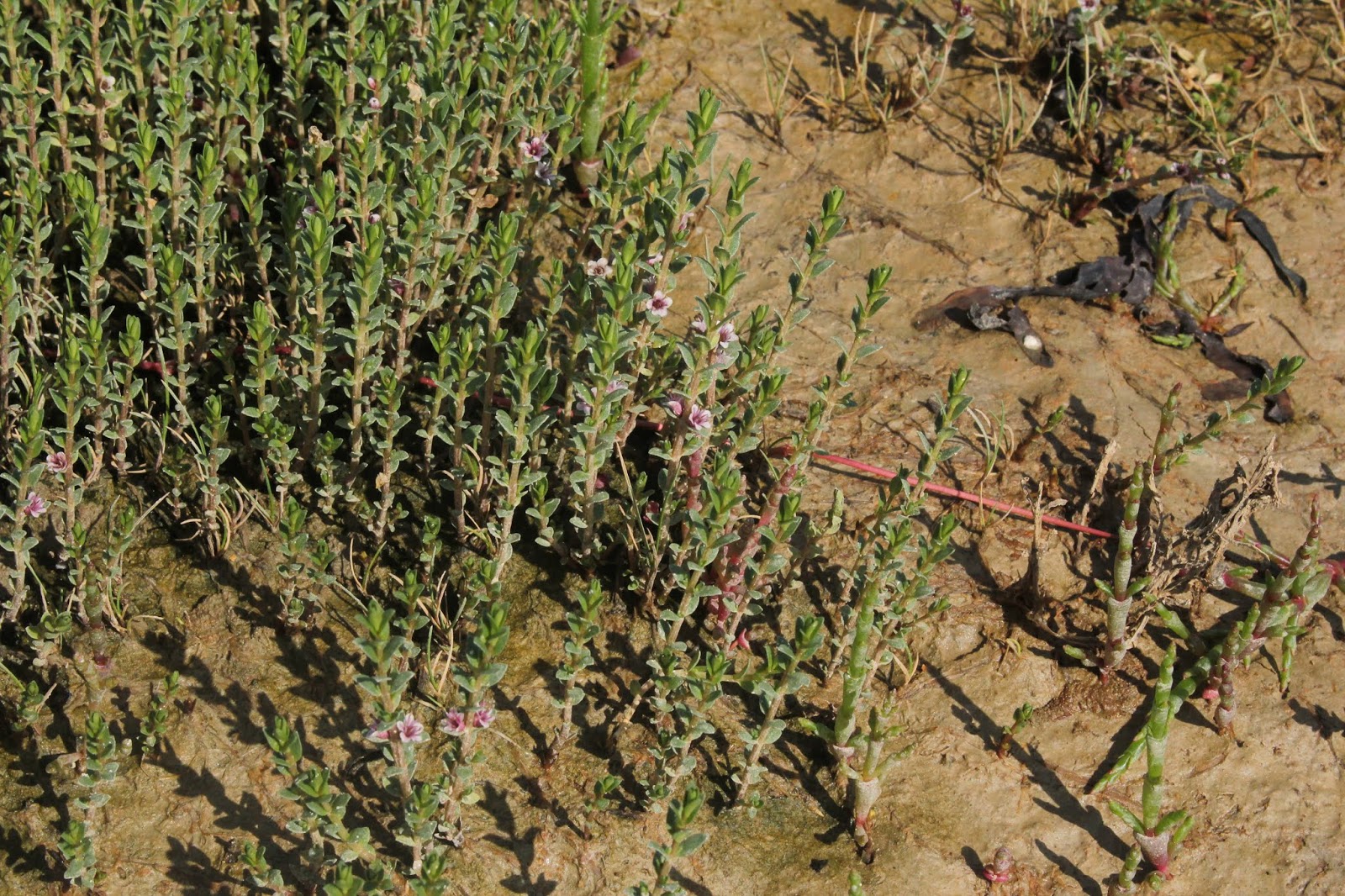
Sea Milkwort (Lysimachia maritima)

Marsh Fleawort (Tephroseris palustris)

Later that evening, I went down to the creek where we get our drinking water, and found another lifer ode, Taiga Bluet.


I caught a Lake Darner on the way back. Lake Darners were the second most abundant species of darner on the coast.


It was a splendid first day, and I was really looking forward to the next month!

August 1-3(ish) 2019

Days sort of got jumbled together, so I won't always have the most exciting stories for each day (though August 21, 2019 is forever burned into my mind), but I'll try to summarize what happened.

We did our first set of surveys on August 1. Amie and Kevin took the North Survey route, and Tyler and I took the "Near South" survey route. I remember "lots" (~6000) White-rumped Sandpipers and a few thousand Semipalmated Sandpipers as being the most numerous birds. Highlights were a couple family groups of Marbled Godwits, which breed in small numbers on the coast. Here are two juveniles.


We had a Marbled Godwit, who became to be known as "Dad", who for over two weeks relentlessly defended his young, which where near adult size by that point! He would regularly divebomb us, and other birds (ravens, cranes, and even a Bald Eagle). We always knew where we where when we heard him! (somewhere about 2.5 km south of camp, as I recall)

Later on in the survey, a bunch of shorebirds went up and the yellowlegs started making a racket. I looked over to see what was the matter, and couldn't believe it! I started screaming "GOSHAWK!!!" At Tyler, but unfortunately he wasn't able to get on it. We had a pair of adult Northern Goshawks at Piskwamish, and saw them almost daily. It was certainly a treat! There were a few times where they passed by us mere meters away.

A couple more plants, this time sedges.

Golden Sedge (Carex aurea)

Common Cotton Grass (Eriophorum angustifolium)

On August 2nd, Tyler and I did the "Far South" survey route, which was about a 2.5 hour walk just to get to the start point. The weather was not too nice (windy, rainy, cold), but we persevered.

As Tyler promised, I finally got to see some numbers...

The most numerous shorebird was White-rumped Sandpiper, numbering around 12,000. There were thousands of other shorebirds as well, including Semipalmated Sandpipers, Hudsonian Godwits, and Red Knots. Highlights were a Wilson's Phalarope, another first for the season at Piskwamish, and a Short-billed Dowitcher. An even bigger highlight was a flock of American White Pelicans which fly by low to the water at the end of the survey. Pelicans are a somewhat recent addition to the breeding birds of James Bay. They nest up near Akimski Island, and come down to the Moose River to feed.

On August 3rd, Tyler and I made the walk to "The Barge", an old rusted dock portion that has washed up, which is slightly over halfway between Piskwamish and Longridge. Ross Wood from Longridge was walking down to meet us, as were were going to have an exchange of goods. Newspapers for us (to dry boots!) and carrots for them!

The walk, which was somewhere around 13km, was quite enjoyable. It was a little more difficult than it would probably normally be, since our legs and feet were not quite used to the terrain yet (I battled numerous blisters and other walking-related injuries this year). Along the way, we saw the only Black Bears I saw during my time at Piskwamish, a mother and cubs, and a large male.

After the meetup and exchange of goods and intel, we began our walk back. Many Ruddy Turnstones were seen, the most we saw during the two weeks. We did the "North" survey route on our way back, which was highlighted by several Short-billed Dowitchers and a Wilson's Phalarope.

A wonderful start to the month!

Wednesday, 4 January 2017

The Rarities of 2016

2016 was an amazing year for rarities (check out my post on a 2016 Ontario Big Year for a list of rare birds). I didn't get to see all of them (Common Ringed Plover and Crested Caracara being the most painful not to see), but I caught up with a few of them.

The first rarity I was successful in seeing was a Greater White-fronted Goose in London.


This is typically more a "western goose", however large numbers showed throughout 2016. This individual was somewhat tame, and many birders got close enough to take decent photos. The bird that showed up in London appeared to be a "Greenland" type.

Nearly a month later a Gyrfalcon showed up in Warwick, Lambton.


The bird stayed for at least a month, and offered great views. This Gyrfalcon was a gray morph, and appeared to be male. Great bird for Southern Ontario!

A week after the Gyr, an Eurasian Wigeon showed up in Lambton as well. I didn't get a picture, nor did I get a good look at the bird, but it was a Euro Wigeon nonetheless, so it was a great find.

The next rare bird I was able to lay my eyes on were Loggerhead Shrikes.


While a regular breeder in Ontario, they are only about a dozen pairs in the province. Carden Alvar boasts over half of these pairs, and this is where I found the Shrikes.

Piping Plovers aren't really "rarities" in Ontario, but finding a successful nesting pair sure is!


Darlington Provincial Park hosted two successful broods in 2016, the first in over 80 years! I'm not alone in hoping for their return this year.

An Eurasian Collared-Dove the next week was a great bird in Guelph.


The Eurasian Collared-Dove is making it's way northward, and I'm sure it won't be long before they regularly breed  in the province.

Marbled Godwit was next almost a month later in Hamilton.


Marbled Godwits are hard to come across in Ontario, with only a few records, if any, each year.

I saw a Red Knot the same evening as the Marbled Godwit in Hamilton.


The light was fading fast, but I managed to find the bird and get a some record shots. Red Knots migrate in the thousands through Ontario way up north along Hudson and James bay, but we usually only find around a dozen down here in southern Ontario.

Two months later I catch up with another rarity...Cattle Egret in Blenheim.


Like the Greater White-fronted Goose, 2016 was a great year for Cattle Egrets in the province as well, and there could have been as many as two dozen, maybe even more.

November was highlighted by a Western Sandpiper at the Blenheim Sewage Lagoons. This bird sure made people confused. Originally identified as a Semipalmated Sandpiper, It wasn't until a couple weeks into it's visit that the possibility of it being a Western really got going. After a few days of debate and examining pictures, we reached the conclusion of it being a WESA. I would have attempted for a photo if I knew it was a WESA, but I figured that I've seen lots of Semis, so I don't need any photos. I'm kicking myself now!

A Red-headed Woodpecker was a great local rarity that I found (with the assistance of some companions) on the London CBC4Kids.


RHWO are hard to come across during the breeding season, and even harder to find in the Winter. The bird this past December was a juvenile.

A female King Eider in Hamilton was a great bird.


King Eiders are regular but usually hard to find. So far this winter has been a good one for this duck. I'm sure it's just a matter of time before an adult male is found.

Black Vultures are a Niagara specialty.


Black Vultures are becoming increasingly more common in Ontario, especially along the shores of Lake Ontario and Lake Erie. They can be separated from Turkey Vultures by the silvery spot on the tips of their wings.

My last rarity of 2016 was a Little Gull.


I've been searching for Little Gulls since I first learned about this species in July, 2015 (not all that far back, but I started birding in March, 2015). 2016 wasn't the best year for this rare gull species, but those who do a little birding in Niagara  are usually successful. They can be separated from a Bonaparte's Gull by their dark underwing.

Well their you have it. All the rare birds I saw in 2016. Hopefully 2017 will be even better, and I'm already off to a great start!


Monday, 29 August 2016

RBG and Some Shorebirds

Yesterday I decided to see what the Royal Botanical Gardens had in store, so I headed there for the day. There are some good birding opportunities within the properties, and I had the most luck at the Arboretum. I also checked out Hendrie Park, The Rock Garden, and the RBG center.


One could find a lot of Cabbage Whites, Monarchs, Black Swallowtails, bees, and Ruby-throated Hummingbirds in with the flowers.

The woodland trail at the back of Hendrie park provided my first Vireos and Warblers of fall migration. Eastern Wood-pewees could be heard.


After Hendrie Park, it was off to the Arbor-thingy for lunch. Chickadees and Cardinals were looking for handouts.


The Marshwalk Trail is quite hilly, but worth it. This Eastern Comma is the first one I have seen this year.


Although the observation tower may be small, the number of birds is big. Great Egrets and Caspian Terns are all over the place.


I managed to find an adult and two immature Black-crowned Night-herons.


A Bald Eagle, Osprey, Coopers Hawk, and Red-tailed Hawk were the raptors seen.


Three Great Blue Herons flew in. Mute swans were swimming and flying around.


On the way back, I spotted a Northern Flicker and a pair of Red-bellied Woodpeckers.


Next stop was the Rock Garden, which used to be a quarry. I didn't take any photos at this location.

After the Rock Garden, I went to the shore of Lake Ontario to look for some shorebirds. No luck with the Red-necked Phalaropes at the Tollgate pond, but I did find an immature Sanderling.


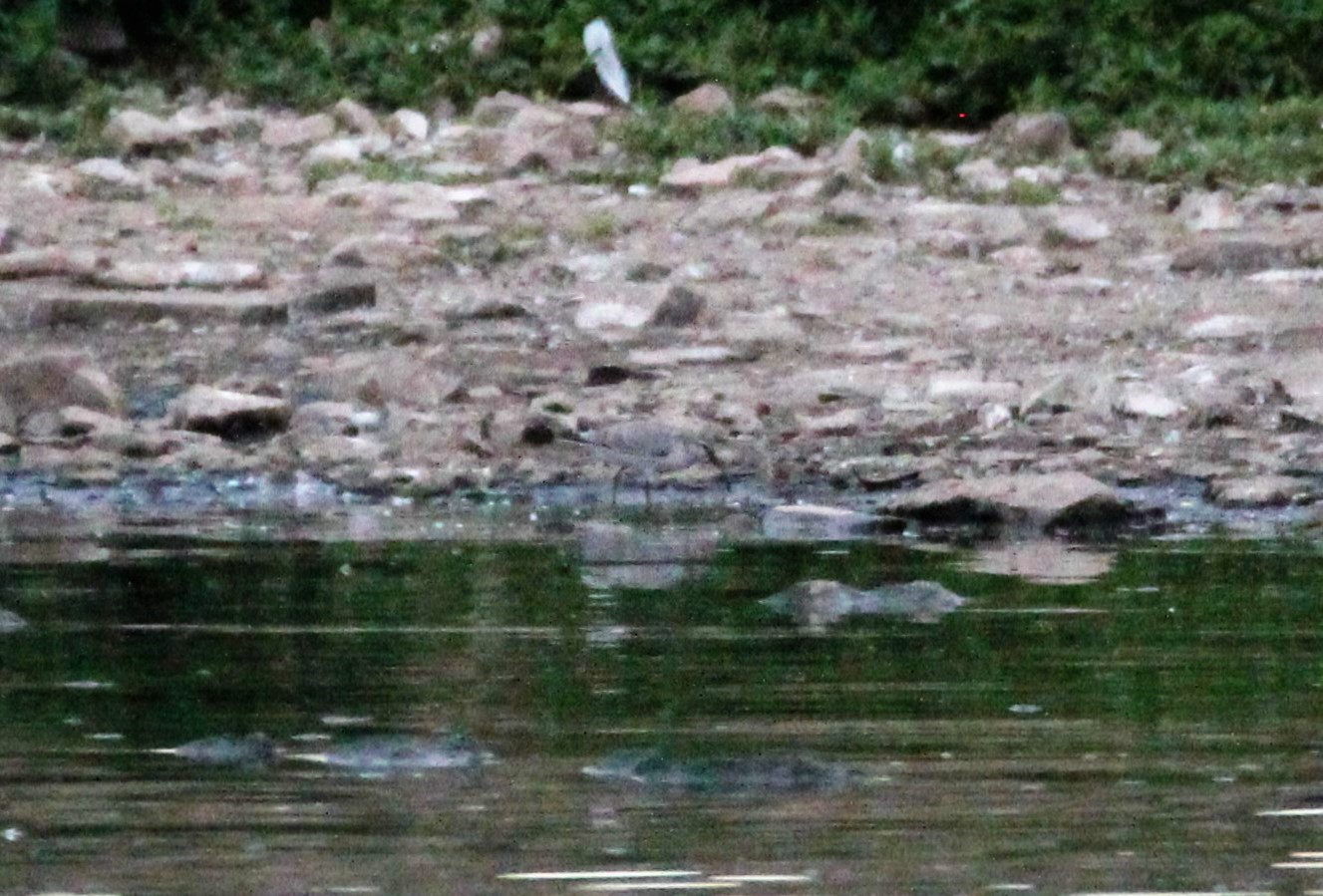
The best bird at Windermere Basin was the Juvenile Marbled Godwit. It was way in the back, and I barely saw it on 60x magnification, let alone get a good picture. this is what birders call  a "record shot", or what non birders call a "horrible photo".


Other birds I saw while at Windermere included Stilt Sandpiper, Lesser Yellowlegs, Baird's Sandpiper, Black-bellied Plover (FOY), Caspian Tern, Double-crested Cormorants, and a Night-heron. Also seen were about 15 peeps (small shorebirds) that I did not bother with. Apparently a Buff-breasted Sandpiper came in when I was there, but I didn't see it.

The last stop of the night was back at the Hamilton Harbour, where I managed to find the Red Knot.

Can you find the Red Knot? Hint: It's a Juvenile

Today I was back Hamilton way, and I wanted to try for the Red-necked Phalaropes again, so I stopped by the Tollgate ponds, but they were no where to be seen. I did however find a Whimbrel (FOY) and a couple Lesser Scaups.

Another one of those record shots


Windermere Basin was next, and I managed to find the actual viewing area! The shorebirds were not all that different from yesterday, but I did find a few new ones such as Short-billed Dowitcher, Semi-palmated Plover, and Dunlin. The Marbled Godwit didn't make an appearance.

Green Heron

Well, my fun little weekend on the shore of Lake Ontario is at an end, but fall migration is just starting to pick-up. Stay tuned for more on shorebirds and other migrants!

Yesterday's eBird checklists:
RBG Hendrie Park
RBG Marshwalk Trail
Tollgate Ponds
Windermere Basin
Hamilton Harbour

Today's eBird checklists:
Tollgate Ponds
Windermere Basin


Did you find the Red Knot?