Showing posts with label odonates. Show all posts

Sunday, 4 July 2021

Algonquin Park Ode Count 2021

On Friday, we made the trek to Algonquin Park for the annual odonate count. This year, I was assigned Area C, which includes the Big Pines Trail, Spruce Bog Boardwalk, Beaverpond Trail, and surrounding area. Due to regulations regarding social distancing, counters were not really able to mingle, so I had the entire area virtually to myself. 

Our first stop was Big Pines Trail. This was one of the two spots I was asked to focus most of my time on. I spotted a few odes along the way, but the main attraction was a large open bog/meadow, and I spent a good hour at least tromping around through it. 

I found a couple clubtails of note pretty quickly. Beaverpond Clubtail is a somewhat local but widespread ode in Algonquin Park. It has a pretty restricted range in Ontario, making it a specialty ode. I believe the species was first discovered in Ontario in Algonquin. As is typical with female clubtails, you need to check genital plates to confirm identity.


The other species of note was Harpoon Clubtail. This was my only one of the day.


The deerflies (Chrysops spp) were absolutely horrendous. I didn't wear any gloves at Big Pines, but later at Spruce Bog I found a pair of rubber gloves to put on, which certainly helped! The next morning when I woke up I found that one of my eyes was actually swollen shut as a result of the fly bites!

Chrysops montanus

My main target in the bog was Ocellated Emerald, but I was unable to find any. Nevertheless, I still found a few interesting odes. I flushed a female Common Green Darner at one point, which is a scarce species in Algonquin during the summer, a new park ode for me. From what I gather, Bat Lake is one of the only reliable spots to see this species, and sure enough, a couple were seen there on count day. As well, one was seen at the pond at the logging museum. 

Record shot

There were a few baskettails around of three species. The only one I was able to net and photograph was Spiny Baskettail, but there were several Prince Baskettails flying around, as well as some Common Baskettails, which are easy to pick out as they have extensive dark hindwing patches in this part of Ontario. 


Spiny Baskettail females have long appendages

A new butterfly for me was Two-spotted Skipper. I saw a few on this day.


After failing to find any Somatochlora emeralds in the bog and donating a quart of blood to the insects, I made my way back to "dry land". Of course, as soon as I did that, I spotted one of these elusive emeralds. I managed to capture it (thank goodness, no one wants to miss a swing on a Somatochlora), and it proved to  me a Williamson's Emerald. This is on the early side for the species, and proved to be a decent one for the count. 


Next up was the Spruce Bog boardwalk. All of the good areas I was to check were off trail, so it required some bushwhacking. One of the first odes I caught was another Beaverpond Clubtail.


I also caught a fritillary, which proved to be an Atlantis Fritillary. I believe I saw a Silver-bordered or two as well.


I came across a couple Dragonhunters, which are quite the beasts. I wasn't really expecting to see any, so it was a pleasant surprise. 


Finally I spotted a Somatochlora emerald, which proved to be a Ski-tipped Emerald when I netted it. I saw three in total. 


The "ski tip"

There were a couple of darners flying around, which I netted.

Canada Darner

Springtime Darner

I was on the lookout for Subarctic Bluet, but it appeared to be too late in the season for them. I did however find a Taiga Bluet, which is getting late. Another new park species for me.


An attractive species of orchid found in the bog is Rose Pogonia (Pogonia ophioglossoides).


I moved to a different section of the bog. I spotted an emerald, but it was too high up to try and catch. I have suspicions it was a Delicate Emerald though. I also spied this Virgin Tiger Moth, which was a new one for me.


I worked along the little creek that ran through, and picked up another Ski-tipped Emerald, as well as a Sphagnum Sprite. I spotted a large dark dragonfly at one point, and netted it. I was absolutely flabbergasted when I pulled out a Harlequin Darner! 


Ever since I had first read about this species five years ago in my Algonquin Park odonate field guide, it was one of my most sought after odes. The only trouble is that it is an early flying species, and for the most part is done by the beginning of July. As such, it is not every odonate count that it is recorded (I don't have an exact number, but I think it might be around only 20% of counts it is observed). Since it is an early flier, I have not had the opportunity to go and try to see one. There are spots in southwestern Ontario where they occur, but I really wanted to find my first one in Algonquin Park, since that's sort of where it all began. My highlight of the day for sure. 

I left Spruce Bog very happy, and made my last major stop of the day at the Beaver Pond Trail. I had only ever been to this trail once before in September a few years ago, but it is a pretty neat place.

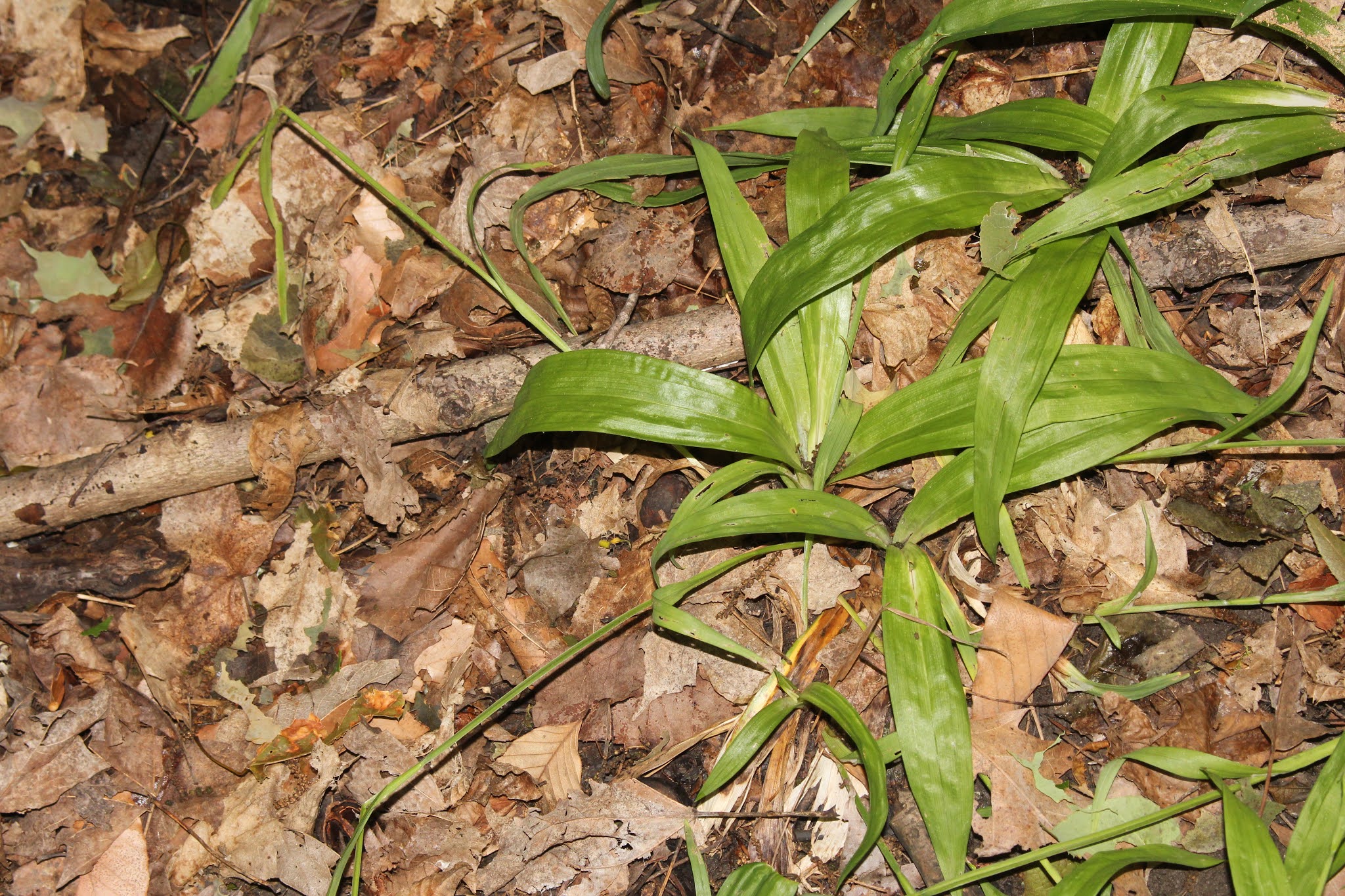
Before I even got down to the pond, I spotted this orchid. It is the flavida form of Western Spotted Coralroot (Corallorhiza maculata var. occidentalis). I haven't seen very many coralroots myself, so it was quite neat. 


Another interesting plant was White-edged Sedge (Carex debilis var. rudgei). This was my first time seeing it, although I undoubtedly have overlooked it in the past. 


I didn't take a single picture of an odonate at this spot, but I added Elegant Spreadwing to the day's list. I'm basically positive I also had a Swamp Spreadwing, which is uncommon in Algonquin, but I wasn't able to confirm it. Oh well, at least I already have it for my park list! In lieu of ode pictures here is a consolation sedge. 

Bronze Sedge (Carex foenea)

I made a quick stop at Costello Creek before heading to the Opeongo Docks for the compilation. I added a couple Eastern Forktails to my day list, but not much else. 

After the compilation (70 species tallied), we had to begin the drive back home to London. I made a quick stop at Pewee Lake just before leaving the park. I was hoping for Swamp Spreadwing (I had some here last year), but no luck. I did see a few Vesper Bluets, which was new for the day. 

I spotted a new sedge for me, Northeastern Sedge (Carex cryptolepis), which can be similar to Yellow-green Sedge (C. flava), but is smaller and doesn't have dark edged pistillate scales. 


Another one that was interesting was Blue Ridge Sedge (C. lucorum), which is undoubtedly underreported. It is very similar to Pennsylvania Sedge (C. pensylvanica), but has longer beaked perigynia. I have also heard that Blue Ridge Sedge has rougher (scabrous) culms than Pennsylvania Sedge, but that may not be entirely reliable. 


These plants were infected by a smut fungus, potentially Anthracoidea caricis.

You can also see the long beaked perigynia! 

Great day in the park doing what I love! 

Saturday, 19 June 2021

Sydenham Saturday

Today I was down in the Alvinston area for an odonate (dragonfly and damselfly) survey on the Sydenham River Nature Reserve (SRNR) for Ontario Nature arranged by Blake Mann. This reserve is one of my favourite sites in the area, and its a shame I am unable to visit it more often! For the past couple of years, I have partaken in a breeding bird survey on SRNR, and each year we have spotted some cool odes along the way. 

I got up early to head down and do some birding before starting the survey. My first stop was the Strathroy Sewage Lagoons. There was not much of note here in my loop of the south lagoon. I did count over 90 Wood Ducks, several broods, which is always great to see. Another interesting find was a pair of Northern Shovelers. It is likely nothing will come out of it, but you never know. On Tuesday I had a pair of Green-winged Teals here, but they were nowhere to be found this morning. 

Digiscope

I decided to get some point counts done in my Lambton atlas square (17TMH34), and succeeded in completing twelve over the course of a couple hours. Point counts happy pretty fast, so no photos! I recorded over 50 species of birds from these counts. One of my best stops was in the field near the corner of Calvert Drive and Kerwood Drive. Here I had a couple singing Dickcissels on territory (one had been present for about a week now, and a second one seems to have joined it), a pair of Upland Sandpipers, and perhaps most exciting, a family group of Common Ravens which flew over just as I started the point count. Pretty eventful five minutes! 

I eventually got to the SRNR around quarter to ten. The area I was to cover was the Buttonwood Drive side, which is on the east side of the river. This is typically not the most "ode-y" side, but I was more than happy to do it—someone has to! 

I began by walking the field to the south of the parking area, skirting the forest edge. It was not nearly as eventful as I had imagined it to be, and for the longest time, I only came across a few Common Whitetails, a pair of Twelve-spotted Skimmers, and of course several Midland Clubtails. It wasn't until I got down to the river I added Powdered and Blue-tipped Dancer, as well as several Stream Bluets and more Midland Clubtails, to my list. 


I was a bit surprised to see some Banded Hairstreaks, my first this year. There were tons of Hackberry Emperors, as well as a few Tawny Emperors, as well. 


Quite a few of these Haploa moths as well. I think they are LeConte's Haploa moths.


While walking at the far end of the field, I was somewhat surprised to hear a Hooded Warbler, the first time I have encountered one at SRNR. Other breeding birds here included Mourning Warbler, Yellow-throated Vireo, Red-headed Woodpecker, Wood Thrush, Scarlet Tanager, and Blue-grey Gnatcatcher. A couple weeks ago I had a Cerulean Warbler here as well. 

I decided it was time to cut into the forest and head towards the river. As I did so, I came across a fairly fresh Black-shouldered Spinyleg, my first for this property. 


I bushwhacked to the river through seemingly endless patches of stinging nettle, a reoccurring theme for the day. As much as I like SRNR, the one thing I am not a fan of is all of the stinging nettle! Although you can't get "zapped" through jeans, today I was wearing my quick-dry field pants, which apparently offer no protection! I found minimal success with side-stepping through the patches, being careful to flatten the plants down before your legs made contact. 

There was less than expected by the river, just a bunch of Ebony Jewelwings and American Rubyspots. I did have a single female Swift River Cruiser and a Fragile Forktail, but that was it for new species. I continued quite a ways upriver, before crossing over and going to the other side. I walked downriver for a bit, and ended up almost to the other entrance for the reserve. Not much to report on ode wise! A long walk in the hot and humid conditions with an abundance of stinging nettle—fun times! (I actually did quite enjoy myself, doing this beats sitting around at home)

I found myself turning my attention to plants quite a bit on the quiet stretches, although I didn't stop to take very many photos. This is the first time I have seen Broad-leaved Waterleaf (Hydrophyllum canadense) in flower. 


Michigan Lily (Lilium michiganense) is always a fun one to come across.


I saw a number of sedges as well. Since this is such a rich forest, I was hoping to come across some rare species, but it was not to be. Nevertheless, I still came across some high quality species. The diversity of sedges you can find in any given area is something that really appeals to me.

Hitchcock's Sedge (Carex hitchcockiana)

Sprengel's Sedge (C. sprengellii)

White Bear Sedge (C. albursina)

Nerveless Woodland Sedge (C. leptonervia)

Inflated Narrow-leaved Sedge (C. grisea)

Eastern Rough Sedge (C. scabrata)

Drooping Sedge (C. prasina)

Smooth-sheathed Sedge (C. laevivaginata)

Fringed Sedge (C. crinita)

The walk back to the car was largely uneventful. I was quite happy to get back and out of the stinging nettle! 

I had planned to go to Reid CA near Wallaceburg afterwards to look for Oak Hairstreaks, but the sky was threatening rain, so I opted to head back home. Perhaps some other day I will go look for this rare butterfly. 

Overall, a very productive day, even if odonate diversity was lower than I had imagined it would be. I expect to get the results of the survey soon, and will update this post once they come out! 

Thursday, 11 March 2021

Dragonflies and Damselflies of Middlesex County

I recently wrote an article on the dragonflies and damselflies (odonates) of Middlesex County for The Cardinal, the publication put out by Nature London (formally the Mcllwraith Field Naturalists). I thought I would share it here as well. The bonus if you get to see more photos than what was in print! Enjoy! 

------


While many are familiar with the birds, plants, and butterflies of Middlesex County, seemingly very few are aware of the diversity of damselflies and dragonflies, known as odonates, or simply odes, that can be found in the county. In fact, as of time of writing, 98 species of these insects have been found within Middlesex. Not much is known about odes in the county, and new discoveries happen all the time. I will walk through the checklist taxonomically, and discuss a few of these awesome odonates.

First up, we have the damselflies (Zygoptera). Four species of broad-winged damsels (Calopterygidae), all of the ones that knowingly occur in Ontario, can be found in the county. Ebony Jewelwings, with their striking all black wings, are quite common along streams and rivers. These can start to be observed at the end of May. River Jewelwings are similar in appearance, but are apparently much more uncommon. We have two species of rubyspots as well, American Rubyspot, which is fairly common, and Smoky Rubyspot, very rare and local, restricted to the Thames River in the extreme southwest of the county. 

American Rubyspot

Next we have the spread-winged damsels (Lestes), represented by eight species. Slender Spreadwing is one of our most numerous spreadwings, followed by Emerald Spreadwing. Amber-winged Spreadwing is much more local, with one of the best spots to see it in Middlesex being the Sifton Bog. Later in the season, you may come across the Spotted Spreadwing, which is also one of our latest flying odonates. 

Slender Spreadwing
  

The dancers (Argia) are always a favourite, and six species can be readily seen around almost any flowing watercourse, with some of the best spots being the Thames River, the Ausable River, and Medway Creek. Our most common species is the Powdered Dancer, which can number in the hundreds at the right time of year. Violet and Blue-fronted Dancers can often be found mixed in as well. Rarer and more local species include Blue-ringed, Blue-tipped, and Dusky Dancers, all of which are provincially uncommon. 

Violet Dancer

Bluets (Coenagrion and Enallagma) are often something that casual ode enthusiasts dismiss, as to identify them, you often need to catch and examine the genitalia of the males. It may come to a surprise to some that 16 species of these damselflies have been recorded in the county. Many are quite common, such as Familiar, Marsh, Stream, Skimming, and Orange Bluets. Others, such as Tule, Double-striped, Azure, and Rainbow are much more uncommon. The best places to see bluets are often around ponds, and the many stormwater management ponds in the London area are a great place to start!

Stream Bluet

Rainbow Bluet


The forktails (Ischnura) and sprites (Nehalennia) are our smallest damselflies, the sprites especially. Three species of forktails have been recorded, with Eastern Forktails being the most common, followed by Fragile Forktails. Citrine Forktail, an uncommon to rare vagrant to Ontario, has been recorded once, but is very likely to be found again. We have two species of sprites. Sedge Sprites are quite common, but Sphagnum Sprites are much more local, restricted to sphagnum bogs, such as at the Sifton Bog.

Next, the dragonflies (Anisoptera). The darners (Aeshnidae) are often a crowd pleaser, with ten species having been reported from the county. The season starts off strong with the return of Common Green Darners in late April to early May, and these migrants can be seen throughout the summer into the early fall, which is when they head south. Springtime Darners and Swamp Darners start to appear near the end of May, with Springtime finishing up for the season by the end of June. Another early flier is the Spatterdock Darner, a provincially rare species first found in 2019 at the Sifton Bog. This is a striking insect with its bright blue eyes. Later in the summer, the Aesha darners start to appear, and may gather in feeding “swarms” in the evening. Shadow Darner is the most common. Occasionally, a Lance-tipped may be mixed in. A rarer species is the Black-tipped Darner, which can be found in the Sifton Bog. Along streams and rivers, watch for Fawn Darners working the edges looking for their next meal.

Fawn Darner

 
Common Green Darner


One of our most unique groups of dragonflies are the clubtails (Gomphidae), and 13 species have been seen in the county. These dragons are by no means common, and are always a treat when they are come across. Stormwater management ponds can be good places to look for Unicorn and Pronghorn Clubtails, both of which are provincially uncommon. Along rivers, keep an eye out for Black-shouldered Spinylegs and Midland Clubtails. Rusty Snaketails have only been seen once, but should be looked for along the Sydenham River, where they were first discovered in 2019. Later in the summer, you may come across an Arrow or Zebra Clubtail, members of the highly sought after Stylurus genus. There was a flurry of excitement in June 2020 when the provincially rare Rapids Clubtails were discovered for the first time along the Ausable River, representing the first record of this previously thought extirpated species in the county since 1989. Green-faced Clubtails, another provincially rare species, were also found for the first time in Middlesex County. 

Rapids Clubtail

Spiketails (Cordulegastridae) and river cruisers (Macromiidae) are a pair of unique dragonflies, two species of which have been found in the county. Delta-spotted Spiketails are apparently uncommon and local, with Komoka Provincial Park being a good spot to see one. Swift River Cruisers can be seen along most of the major rivers in Middlesex, with its large yellow spot on the tip of its abdomen making for easy identification. 

Swift River Cruiser

Emeralds (Corduliidae) are represented by five species. The most numerous is Common Baskettail. Prince Baskettails can be found in smaller numbers. Beaverpond Baskettails are rarely encountered, and may just be vagrants, but should be looked for. The only member of the rare genus Somatochlora we have is Mocha Emerald, a provincially rare species found mostly in the southwestern part of the county, but has also been seen along the Ausable River. Racket-tailed Emerald has been seen once at the Sifton Bog, and an eye should be kept out for more! 

Our largest group of dragonflies is the skimmers (Libelluidae), of which 25 species have been recorded. Many are very common, such as Common Whitetails, Widow Skimmers, Eastern Pondhawks, Blue Dashers, Twelve-spotted Skimmers, Eastern Amberwings, Black Saddlebags, and Dot-tailed Whitefaces. Halloween and Calico Pennants, Slaty Skimmers, Chalk-fronted Corporals, and Carolina Saddlebags are more uncommon. Painted Skimmer, a rare vagrant, can occasionally be seen. Ponds are great places to see all of these species. Six species of meadowhawks have been seen as well, with Ruby, White-faced, and Autumn Meadowhawks being the most common. Band-winged, Cherry-faced, and Saffron-winged Meadowhawks are much more local. Two species of gliders, Wandering and Spot-winged Gliders, can also be found, but numbers of this highly migratory species vary year to year. 

Black Saddlebags

Wandering Glider

White-faced Meadowhawk


Of course, there are many holes in the Middlesex County list. There are several species that may occur in the county that have not yet been found, which I have listed. Many occur in neighbouring counties, some along the same rivers. Habitat and flight periods are from The Dragonflies and Damselflies of Algonquin Provincial Park and the Surrounding Area by Colin D. Jones, Andrea Kingsley, Peter Burke, and Matt Holder, as well as Dragonflies and Damselflies of the East by Dennis Paulson. Provincially uncommon to rare species are indicated by an asterisk: Vernal Bluet (ponds and rivers, May-July), *Lilypad Forktail (ponds and slow streams with water lilies, June-September), *Comet Darner (ponds, June-August), *Cyrano Darner (wooded wetlands, June-July), *Harlequin Darner (conifer swamps and bogs, May-July), Variable Darner (ponds, June-September), Mottled Darner (ponds and bogs with abundant emergent vegetation, June-October) , *Flag-tailed Spinyleg (rivers, July-August) *Riverine Clubtail (slow moving creeks and rivers, July-August), *Elusive Clubtail (rivers, June-October), *Arrowhead Spiketail (wooded streams and seepages, May-July), Twin-spotted Spiketail (fast flowing rivers and wooded streams, June-August), Stream Cruiser (rivers, May-September), *Royal River Cruiser (wooded streams and rivers, July-September), Spiny Baskettail (ponds and slow streams, May-August), Williamson’s Emerald (quiet forest streams, June-September), *Clamp-tipped Emerald (forest streams with rapids and pools, July-September), Brush-tipped Emerald (streams through wetland habitat, June-August), and *Variegated Meadowhawk (highly migratory, breeds in ponds and slow streams, April-November).

Elusive Clubtail

Watching dragonflies and damselflies is a very enjoyable, and addicting, pastime. Much like birding, you never know what you may find! Hopefully your eyes have been opened to the amazing world of odonates right on your doorstep!