Showing posts with label botany. Show all posts

Sunday, 13 June 2021

Return to Rondeau

It had been way too long since my last visit to Rondeau, so that is where I decided to head yesterday.

Although birding was my main intention, I didn't really take any photos of birds, so you'll have to live with some plants and insects :)

First things first, I went to Keith McLean CA, along the Rondeau causeway. Always worth a stop I find. There had been a Yellow-headed Blackbird seen there the day prior, but no sign of it when I went. Plenty of Marsh Wrens however, as well as some more unusual birds for the time of year, like Blue-winged Teal, Ruddy Duck, and Semipalmated Sandpiper. In the group of gulls sitting in the field, I found a single adult Lesser Black-backed Gull. 

It was time to head into Rondeau. My first stop was the South Point Trail. Not too much bird song, other than the usual suspects, but a pair of Blue-grey Gnatcatchers and a Least Flycatcher (a species I often don't encounter in the summer, oddly enough) was nice. I went out to the beach at the light beacon, and found a new species of sedge for me, Sand Sedge or Mulhenberg's Sedge (Carex muehlenbergii). Much more robust and impressive than I imagined it being!


There were some loafing gulls further down the beach, so I decided to keep going. Nothing special among them however, only Bonaparte's, Ring-billed, and Herrings. I continued until I hit the washout, then headed back along the trail.

There were a few Painted Skimmers along the way.

I encountered this grass as well, which I have tentatively called Schribner's Grass (Dichanthelium oligosanthes var. scribnerianum).


I had originally keyed it out to Common's Grass (Dichanthelium commonsianum) using Michigan Flora, but have since revised my identification (this genus is hard!). While we're on the topic, the genus Dichanthelium is a real mess. It used to be the genus Panicum, however Panicum was then split into several more genera (while some species retained the genus name). Even within Dichanthelium, things are confusing. It seems every species name is a synonym for something else! Not to mention the numerous varieties. With some authorities, such as in the checklist of plants for Ontario's Carolinian zone, D. commonsianum is included under D. ovale ssp. pseudopubescens

Next, I decided to go to the Tulip Tree Trail. Largely had the place to myself, which was nice. Almost immediately, I heard an Acadian Flycatcher, soon followed by two more. This was my main target for the day, as it was a species I had never seen in Rondeau before. A couple other goodies rounded out the bird list here, including a Wood Thrush carrying food, a Prothonotary Warbler, and a singing Black-throated Green Warbler. Maybe it is just a very late migrant, but I guess it isn't out of reason for a Black-throated Green to attempt to breed here. 

Another Dichanthelium for you, this one a bit more straightforward: Broad-leaved Panic Grass (Dichanthelium latifolium).

I then intended to go to the Marsh Trail, but on the way passed Spicebush Trail. Last minute I decided to turn in and give it a go, because why not? Glad I did!

Nothing really of note bird wise, but as I was walking along I noticed this sedge (Carex).

I recognized it immediately as something in Section Griseae, and felt as though it was something I hadn't seen before. I had a sneaking suspicion it was Eastern Narrow-leaved Sedge (Carex amphibola), which is somewhat similar to the common Inflated Narrow-leaved Sedge (Carex grisea). I consulted a key, and found that my initial thought seemed to be correct, it appeared to in fact be Eastern Narrow-leaved Sedge, a rare species in Ontario, ranking S2 (between 5-20 known occurrences, I believe). Despite its rarity in Ontario, it is actually considered to be the most common species in its section further south of us. The perigynia of this species is triangular in cross section, and seems to be relatively a bit narrower and longer than in Inflated Narrow-leaved Sedge. 

Compare to Inflated Narrow-leaved Sedge. I took this photo back in late May in London. The perigynia aren't completely mature here, but they are mature enough to see the difference. 

I saw another member of the section Griseae along the same trail. Hitchcock's Sedge (Carex hitchcockiana) is a fairly distinct species, with hairy lower stems. 


My last stop in the park was the first little bit of the Marsh Trail. Not really much of note.

Flowering Rush (Butomus umbellatus)

Silverweed (Argentina anserina)

Swamp Rose Mallow (Hibiscus moscheutos)

Hairy Beardtongue (Penstemon hirsutus)

Greater Straw Sedge (Carex normalis)

My eBird checklist for the day: https://ebird.org/checklist/S90074662

I went to Shrewsbury after and drove around looking for the Eurasian Collared-Dove, but no luck. Only saw a few Mourning Doves!

I went to Stefina Line east of Blenheim, and saw the reported Dickcissels just before heading back home. Always a nice one to see!

I took some backroads home, but didn't see too much. I had debated about going to check a field that gets Dickcissels each year, but opted to just go home. One was found there this morning! Oh well. 

Gotta love this time of year!

Thursday, 15 April 2021

Mid-April Along the Ausable

On Tuesday I went up for a hike on the Ausable River Valley Trail near Sylvan, off Elm Tree Drive. This trail takes you into some of the best Carolinian habitat that Middlesex has to offer. It is still rather early for most of the notable stuff, but I wanted to take advantage of the good weather.

On my way in, I made a quick stop and checked in on the nesting Common Ravens. Both were present at the nest site. They also nested here last year, which I believe was the first nesting record for Middlesex County.

After I parked the car, I was greeted with the songs of Vesper Sparrows. Before this year, I don't think I had ever (knowingly) heard this species sing, weirdly enough. I tracked down a couple individuals, and photographed one.

I made my way into the forest, flushing a pair of Wood Ducks from a flooded section of the trail along the way. One of the first plants of note I saw was this American Gromwell (Lithospermum latifolium). This is very uncommon species in Ontario, although is to be expected in the right habitats. 

I was a bit surprised to see Yellow Downy Violet (Viola pubescens). Lots of things are early this year! 


American Bladdernut (Staphylea trifolia) was occasionally seen, especially closer to the river. 


Black Maple (Acer nigrum) with the distinctive pubescent leaves was common.


 Pennsylvania Sedge (Carex pensylvanica) is a common colony forming sedge in forests. It can be separated from other members of its taxonomic section, Acrocystis, by its round perigynia (when present, in this photo they still aren't developed), narrow leaves, and the presence of rhizomes, which are modified stems which run underground, which give this species its colonial forming tendency. 

When I spotted this sedge, I had Acrocytis on the mind, so I tried to key it out to that, which didn't really end up working. That is because as it turned out, it wasn't in that section at all! It was actually Peduncled Sedge (Carex pedunculata), another common species. This particular plant wasn't very lax in appearance, as this species typically is, and its peduncles (stalks with the flowers) were very short, to the point I didn't even notice them in the field.


I continued on my merry way, and ended up coming across a cool cedar seepage area. I was getting limited on time by this point, so I'll have to go back to explore it further (it'd probably be best later in the growing season anyways). Ebony Sedge (Carex eburnea) was somewhat common, my first time seeing this species in Middlesex County.

Plantain-leaved Sedge (Carex plantaginea) was also pretty common. I will never tire of seeing this species.

I kept a sharp eye out, and as I expected, I was able to locate some Carey's Sedge (Carex careyana). Now that I have a search image, it is getting pretty easy to pick out. I am not sure if it is known from this exact location, but it is definitely known from the area. 


Pretty Sedge (Carex woodii) was also seen. Another species that now that I have a search image for, I am picking out all over the place.


Hairy Sedge (Carex hirtifolia) was also seen. This particular plant was further along than most of the others, which were still just vegetative. 


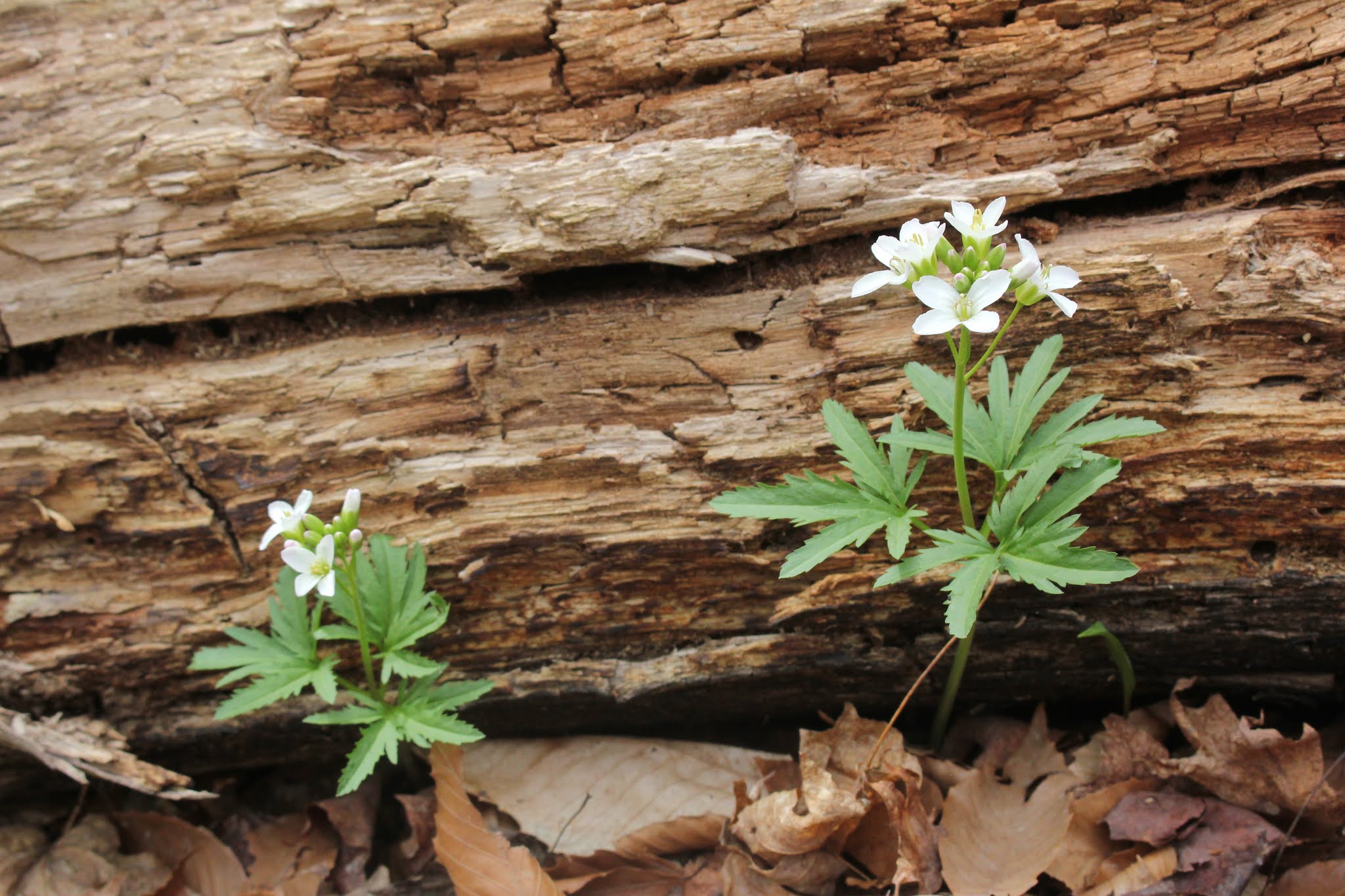
As for interesting wildflowers, this Purple Cress (Cardamine douglassii) was just starting to bloom.


Red Columbine (Aquilegia canadensis) was also coming up, although no sign of any flowers yet.


On my way back home, I stopped along Fossil Road for a few minutes. Not too much of note, other than super early Seneca Snakeroot (Polygala senega). Usually, I don't think this species pops up until May. I did a double take when I spotted it!


And I'll throw this one in, Labrador Violet (Viola labradorica) from yesterday a site here in London. The fourth species of violet I have seen this week! 

Sunday, 11 April 2021

Weekend Activities

Yesterday, after an excellent morning of watching migrant birds (highlighted by over 500 Northern Flickers), I went down to Ipperwash in search of Olympia Marbles. My friend Isabel was with me, as it would be a new butterfly for the both of us.

Not five minutes after pulling into the MNR parking lot (probably the bumpiest parking lot in Lambton County? Maybe Southwestern Ontario?), we found our target. There ended up being several individuals, which was a treat to see. 

There were a few Common Green Darners flying around as well, my first of the year, and probably my earliest ever. I managed to catch one. So far my 2021 swing to catch ratio is about 4:1, hopefully that improves as I dust off my skills...

A few plants of interest in the dunes. 

Bearberry (Arctotaphylos uva-ursi)

Lyreleaf Rockcress (Arabidopsis lyrata)

Rock Sandwort (Sabulina michauxii)

I also found this lichen. Pretty sure it is Sand-loving Iceland Lichen (Cetraria arenaria).


We went to the dunes and swales afterwards for a quick walk. We found another Olympia Marble, as well as come Cabbage Whites. I was hoping to finally get a Brown Creeper for Lambton, but nope...where are they?? I took photos of a couple plants of interest. I will have to come back for some more dedicated botanizing.

Wintergreen (Gaultheria procumbens)

Parasol Sedge (Carex umbellata)

Afterwards, I parted ways with Isabel and started on my way home. I planned to stop into the Parkhill CA on the way for a bit to look for plants, so that is what I did.

As soon as I got out of the car I heard a Ruffed Grouse drumming, and later heard a second. Nice to know they are here!

I made my way down into the ravine. The plants have really come along since I was there two weeks ago. Several species of native wildflowers were seen.

Yellow Trout-lily (Erythronium americanum)

Large White Trillium (Trillium grandiflorum)

Twinleaf (Jeffersonia diphylla)

Cut-leaved Toothwort (Cardamine concatenata)

Dutchman's Breeches (Dicentra cucullaria)

Sharp-lobed Hepatica (Hepatica acutiloba) was one of the more abundant flowers. What a showstopper, it comes in a variety of colours.


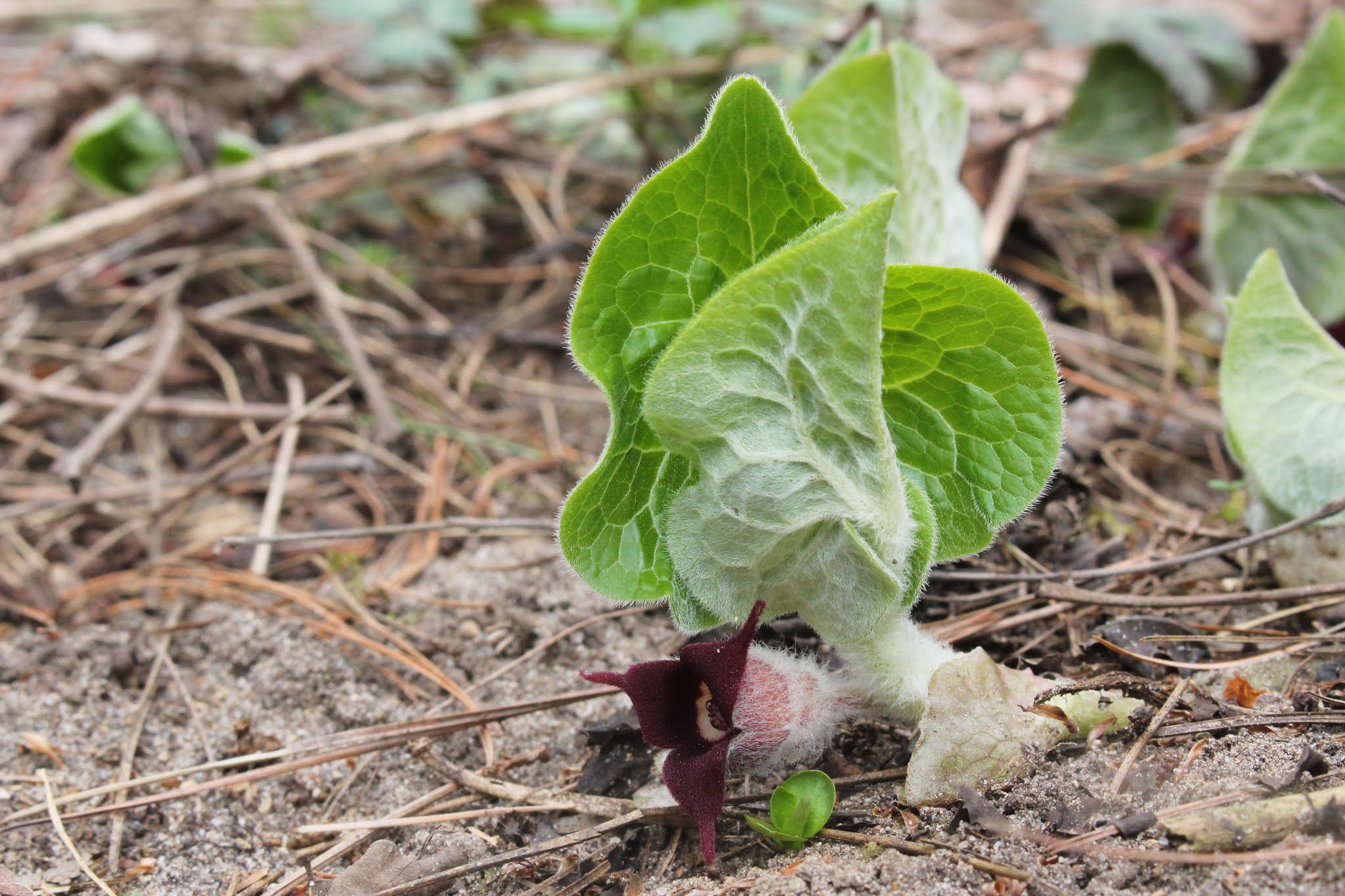
Canadian Wild Ginger (Asarum canadense) was beginning to bloom. The flowers lie on the ground, and this is because it is pollinated by ants.

There were quite a few sedges (Carex spp.) seen, and a few were identifiable to species. One of these was Long-stalked Sedge (Carex pedunculata). The long "stalks" (peduncles) were obvious on the plants which were further along. Another good way to identify this sedge is that the leave apices (tips) come to a sudden point, whereas in other species, the leaf comes to a sharp point more gradually. 

Pretty Sedge (Carex woodii) lives up to its common name. This is a species that I have really overlooked in the past. While I have seen this species once before (I recently realized I misidentified a sedge from a couple years back that was this species), this is the first time I have really appreciated and studied it in the field. This isn't a super abundant species, but can be common in the right habitats. 


Of course, Carey's Sedge (Carex careyana) was a highlight. This is a pretty rare sedge that I saw for the first time a couple weeks ago at this location. It is much further along now.

It could be confused with Plantain-leaved Sedge (Carex plantaginea), which also has wide leaves, and is the same taxonomic section, Carex sect. Careyanae. While the leaves are pretty distinct once you get a feel for them (typically a little less wide, and are noticeably unwrinked), if you can see the culms (the "stem" with the flowers), there is an easy way to tell them apart: the bracts. In Carey's Sedge, the bracts (a specialized leaf) subtending (below) the pistillate spike (female flowers) is green (although sometimes there can be a hint of red at the base) and leafy, and in Plantain-leaved Sedge, this bract is red and basically non-existent—there isn't really a leafy bit. Below is a comparison showing this, Carey's Sedge on the left, and Plantain-leaved Sedge on the right.


I am looking forward to keeping tabs on this population as the plants begin to mature! 

I also finally, after scouring the ravine for over an hour, stumbled across some Harbinger-of-spring (Erigenia bulbosa), my first time seeing this uncommon to rare in Ontario species (I have gone out about four times this spring looking!). Unfortunately, it was past flowering, and there were only like four plants. I was pleased, but admittedly a bit disappointed to have missed it in flower. I must have walked right by these plants when I was here a couple weeks ago. 


I ended up taking the long way back to the car. Pretty uneventful, but I got a nice view of Mud Creek.

Today, I had a tip on where to look for another population of Harbinger-of-spring in the Coldstream CA, so that is where I went. I hoped it would be in flower.

It took a bit of scouring, but finally I spotted some. This is a pretty small species, and is quite easily overlooked. Had I not stopped to look at a Carey's Sedge plant (more on that later), I probably would have missed them!

Luckily for me, there were still lots of flowers present, although the plants were past their peak.


I found some more Pretty Sedge as well. Must be indicative of good habitat.

With all the recent warm weather (it got up to at least 18 degrees today, and around 25 degrees yesterday), plants are way ahead of schedule. The forest floor looked like it was at least late April, maybe even early May. I am certainly not complaining, it was a long winter! 

Wood Anemone (Anemonoides quinquefolia)

Mayapple (Podophyllum peltatum)

Red Trillium (Trillium erectum)

Twinleaf

Dutchman's Breeches

White Trout-lily (Erythronium albidum)

Common Blue Violet (Viola soria)

I left Coldstream quite happy :)


On my way home, I quickly checked on a population of False Rue-anemone (Enemion biternatum), another rare species in Ontario. In more or less full bloom, as expected this year I guess! This is one of my favourite early spring species.

Things might come to a bit of a standstill with this week's weather forecast, but it won't be long now—great things are ahead!