Tuesday, 22 June 2021

Early June Insects

Early June is always a great time of year to go out and look for bugs. I have gotten out on a few occasions to try and nail down some of my target species for this time of year. I have compiled some of the more notable sightings into this post.

Back on June 5th I went to Lambton Shores in search of some of the neat insects that call that place home. I didn't see too much of interest when I visited The Pinery, other than a Cyrano Darner and an Eastern Pine Elfin butterfly on a dock. Its not an insect, but these Northern Sunfish were just off the same dock! 


I visited the MNR parking lot and the Ipperwash Dunes and Swales in search of my main target species, Dusted Skipper. This is a very range restricted butterfly, and I believe that Lambton Shores may be the only place it is found in Ontario. It took a bit, but eventually I found some. 


I also ended up seeing another lifer butterfly in the form of a Common Roadside Skipper.


Several species of dragonflies were around as well.

Racket-tailed Emerald

Slaty Skimmer

Belted Whiteface

Lancet Clubtail

Beaverpond Baskettail

A couple of neat flies were seen too.

Bumble Bee Mimic Robber Fly

Golden-backed Snipe Fly

I next visited Fossil Road on the Ausable River, since it was more or less on my way home. I always enjoy stopping here, as it seems you never know what you will see!

I was mostly focusing on dragonflies, and came up with two species of clubtails, Midland and the rare Rapids Clubtail. I saw a couple Rapids about 4 kilometers up river last year.

Midland Clubtail

Rapids Clubtail


I also saw a Common Sootywing, a somewhat uncommon butterfly species.


A couple days later on June 7th I was back out to the Ausable River in search of a rare species of clubtail, Green-faced Clubtail. I worked the section of river near Rock Glen CA. It took a bit, but I finally managed to find a few Green-faced Clubtails, a new species for me!


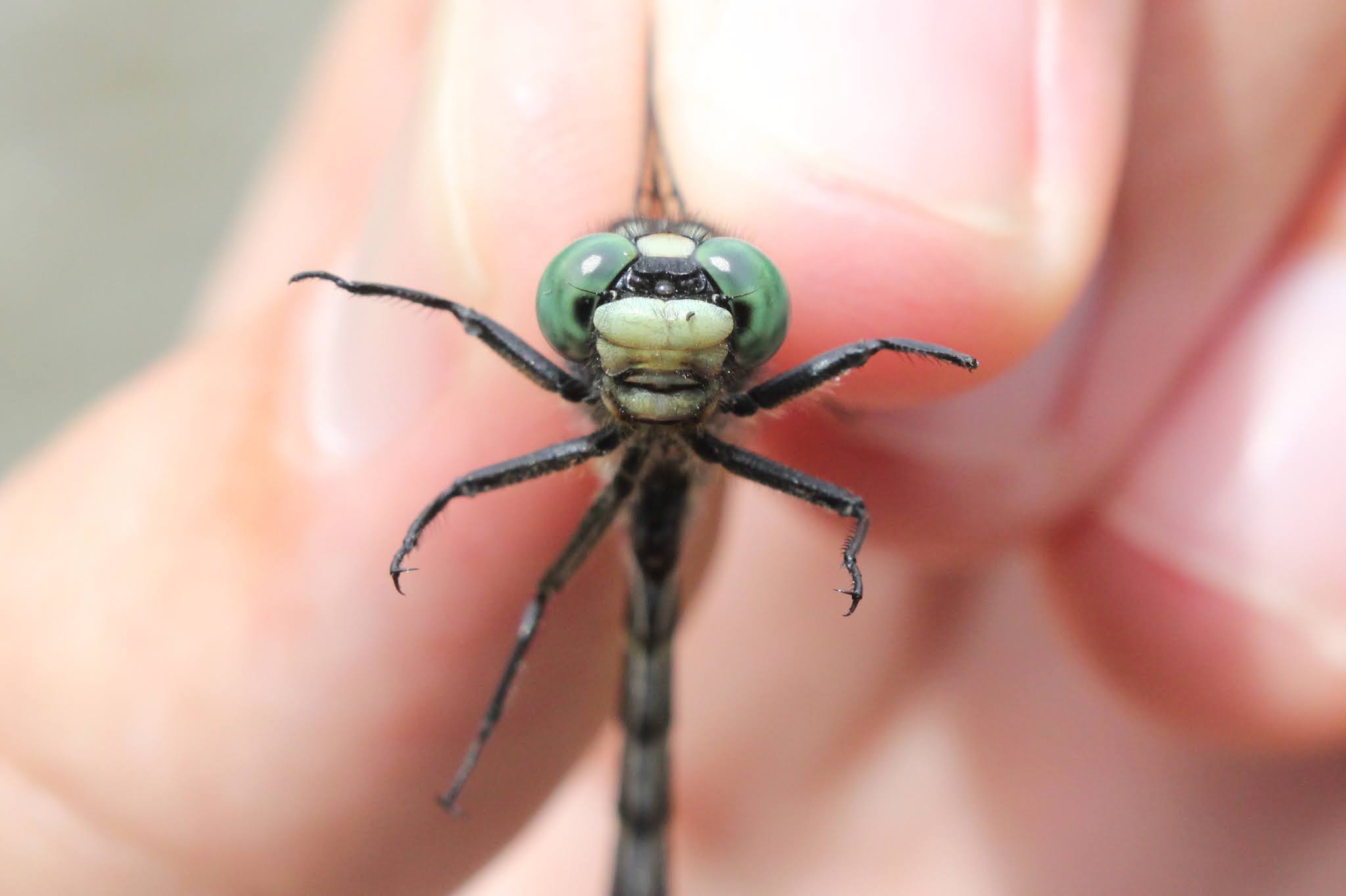

There were a few males patrolling the river, and I caught a female later on.


One of my most notable sightings wasn't even of a live dragonfly. I spotted a dead Twin-spotted Spiketail caught up on some grass! This may be the first record of this species for the Ausable River, and perhaps Lambton County. On the 5th I had seen a spiketail sp. briefly while I was on Fossil Road, which is in Middlesex. If it was the same species, it would have constituted a new county record for Middlesex. Due to this individual's proximity to Middlesex, I can only assume they are present there too. 


After I was done at Rock Glen, I made another stop along Fossil Road. Completely different than just a couple days prior in that there were no clubtails flying around! I did however find an Eastern Red Damsel, a new one for my Middlesex list.


On June 10th I decided to check out some areas close to home for odonates. I figured it was about time for a visit to the Sifton Bog, so that was my first destination of the day. 

I was quite pleased to see that there were several Spatterdock Darners, which I first found here in 2019 (first Middlesex county record) out over the pond, indicative of a breeding population here. None came close enough for a swing with my net, other than this one when I only had my camera in my hand! At least I got a nice photo :)


There were many Painted Skimmers as well, including a couple pairs in copula and an oviposting female, also indicative of a breeding population. The only Painted Skimmer I had seen prior to this was also at Sifton Bog in 2019. Absolutely gorgeous dragonflies. 


My first "in hand" Carolina Saddlebags were seen as well. Another breeding species here.


There were a few damselflies of interest as well.

Azure Bluet

Boreal Bluet

Amber-winged Spreadwing

Boreal Bluet was a new Middlesex species for me.

I made a visit to Komoka Provincial Park next. Here I was in search of another potentially new species for my county ode list, Delta-spotted Spiketail. After a long and grueling hike, I eventually spotted one, but was only able to get off a quick photo. 


There were also quite a few of these cicadas around as well, Say's Cicada (Okanagana rimosa).


I made one last stop at a storm pond in North London, where I found an unexpected county lifer ode, Lancet Clubtail.


It was an enjoyable few days of tracking down insects! Not much else to do these days :-P

Saturday, 19 June 2021

Sydenham Saturday

Today I was down in the Alvinston area for an odonate (dragonfly and damselfly) survey on the Sydenham River Nature Reserve (SRNR) for Ontario Nature arranged by Blake Mann. This reserve is one of my favourite sites in the area, and its a shame I am unable to visit it more often! For the past couple of years, I have partaken in a breeding bird survey on SRNR, and each year we have spotted some cool odes along the way. 

I got up early to head down and do some birding before starting the survey. My first stop was the Strathroy Sewage Lagoons. There was not much of note here in my loop of the south lagoon. I did count over 90 Wood Ducks, several broods, which is always great to see. Another interesting find was a pair of Northern Shovelers. It is likely nothing will come out of it, but you never know. On Tuesday I had a pair of Green-winged Teals here, but they were nowhere to be found this morning. 

Digiscope

I decided to get some point counts done in my Lambton atlas square (17TMH34), and succeeded in completing twelve over the course of a couple hours. Point counts happy pretty fast, so no photos! I recorded over 50 species of birds from these counts. One of my best stops was in the field near the corner of Calvert Drive and Kerwood Drive. Here I had a couple singing Dickcissels on territory (one had been present for about a week now, and a second one seems to have joined it), a pair of Upland Sandpipers, and perhaps most exciting, a family group of Common Ravens which flew over just as I started the point count. Pretty eventful five minutes! 

I eventually got to the SRNR around quarter to ten. The area I was to cover was the Buttonwood Drive side, which is on the east side of the river. This is typically not the most "ode-y" side, but I was more than happy to do it—someone has to! 

I began by walking the field to the south of the parking area, skirting the forest edge. It was not nearly as eventful as I had imagined it to be, and for the longest time, I only came across a few Common Whitetails, a pair of Twelve-spotted Skimmers, and of course several Midland Clubtails. It wasn't until I got down to the river I added Powdered and Blue-tipped Dancer, as well as several Stream Bluets and more Midland Clubtails, to my list. 


I was a bit surprised to see some Banded Hairstreaks, my first this year. There were tons of Hackberry Emperors, as well as a few Tawny Emperors, as well. 


Quite a few of these Haploa moths as well. I think they are LeConte's Haploa moths.


While walking at the far end of the field, I was somewhat surprised to hear a Hooded Warbler, the first time I have encountered one at SRNR. Other breeding birds here included Mourning Warbler, Yellow-throated Vireo, Red-headed Woodpecker, Wood Thrush, Scarlet Tanager, and Blue-grey Gnatcatcher. A couple weeks ago I had a Cerulean Warbler here as well. 

I decided it was time to cut into the forest and head towards the river. As I did so, I came across a fairly fresh Black-shouldered Spinyleg, my first for this property. 


I bushwhacked to the river through seemingly endless patches of stinging nettle, a reoccurring theme for the day. As much as I like SRNR, the one thing I am not a fan of is all of the stinging nettle! Although you can't get "zapped" through jeans, today I was wearing my quick-dry field pants, which apparently offer no protection! I found minimal success with side-stepping through the patches, being careful to flatten the plants down before your legs made contact. 

There was less than expected by the river, just a bunch of Ebony Jewelwings and American Rubyspots. I did have a single female Swift River Cruiser and a Fragile Forktail, but that was it for new species. I continued quite a ways upriver, before crossing over and going to the other side. I walked downriver for a bit, and ended up almost to the other entrance for the reserve. Not much to report on ode wise! A long walk in the hot and humid conditions with an abundance of stinging nettle—fun times! (I actually did quite enjoy myself, doing this beats sitting around at home)

I found myself turning my attention to plants quite a bit on the quiet stretches, although I didn't stop to take very many photos. This is the first time I have seen Broad-leaved Waterleaf (Hydrophyllum canadense) in flower. 


Michigan Lily (Lilium michiganense) is always a fun one to come across.


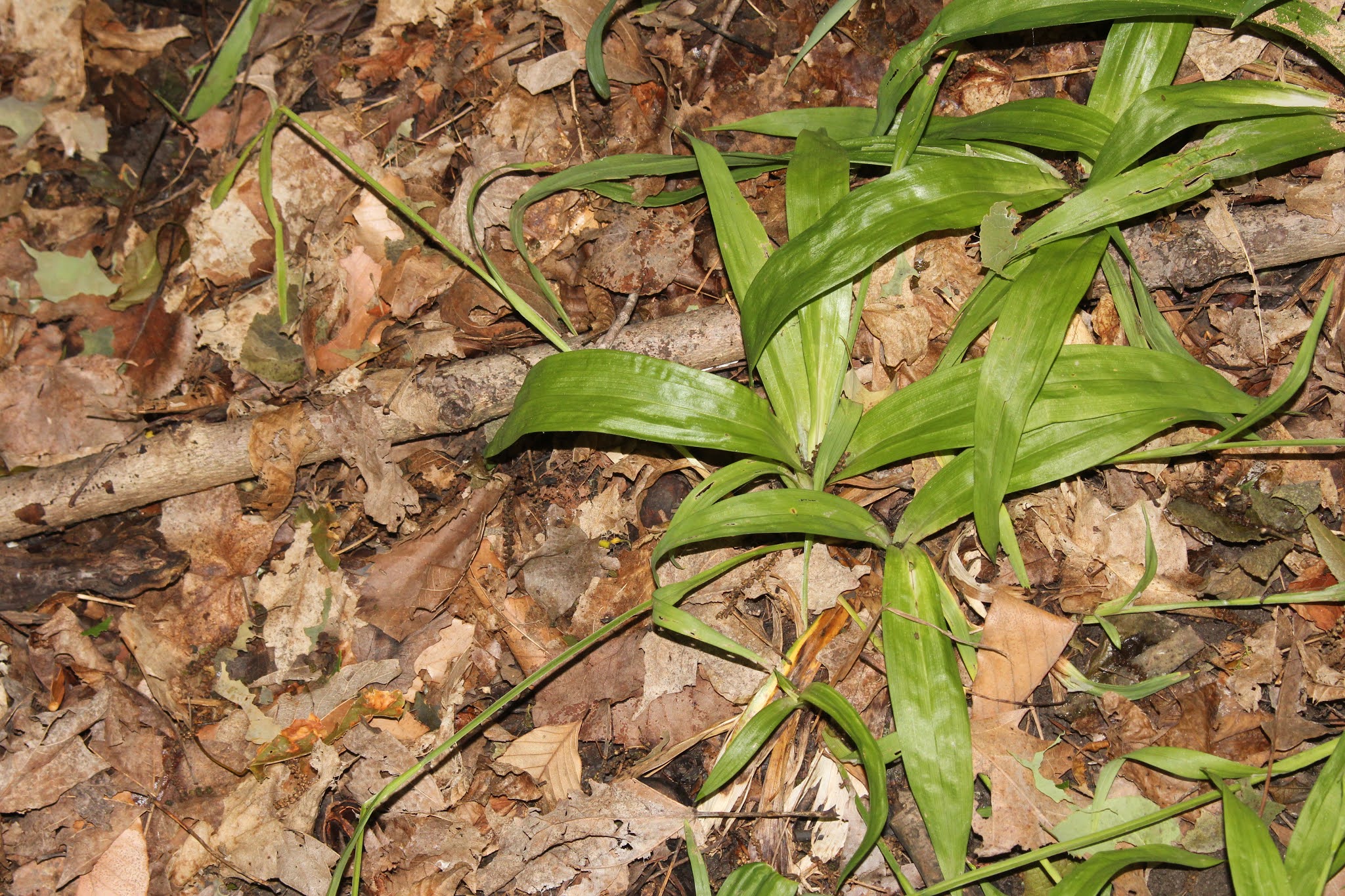
I saw a number of sedges as well. Since this is such a rich forest, I was hoping to come across some rare species, but it was not to be. Nevertheless, I still came across some high quality species. The diversity of sedges you can find in any given area is something that really appeals to me.

Hitchcock's Sedge (Carex hitchcockiana)

Sprengel's Sedge (C. sprengellii)

White Bear Sedge (C. albursina)

Nerveless Woodland Sedge (C. leptonervia)

Inflated Narrow-leaved Sedge (C. grisea)

Eastern Rough Sedge (C. scabrata)

Drooping Sedge (C. prasina)

Smooth-sheathed Sedge (C. laevivaginata)

Fringed Sedge (C. crinita)

The walk back to the car was largely uneventful. I was quite happy to get back and out of the stinging nettle! 

I had planned to go to Reid CA near Wallaceburg afterwards to look for Oak Hairstreaks, but the sky was threatening rain, so I opted to head back home. Perhaps some other day I will go look for this rare butterfly. 

Overall, a very productive day, even if odonate diversity was lower than I had imagined it would be. I expect to get the results of the survey soon, and will update this post once they come out! 

Sunday, 13 June 2021

Return to Rondeau

It had been way too long since my last visit to Rondeau, so that is where I decided to head yesterday.

Although birding was my main intention, I didn't really take any photos of birds, so you'll have to live with some plants and insects :)

First things first, I went to Keith McLean CA, along the Rondeau causeway. Always worth a stop I find. There had been a Yellow-headed Blackbird seen there the day prior, but no sign of it when I went. Plenty of Marsh Wrens however, as well as some more unusual birds for the time of year, like Blue-winged Teal, Ruddy Duck, and Semipalmated Sandpiper. In the group of gulls sitting in the field, I found a single adult Lesser Black-backed Gull. 

It was time to head into Rondeau. My first stop was the South Point Trail. Not too much bird song, other than the usual suspects, but a pair of Blue-grey Gnatcatchers and a Least Flycatcher (a species I often don't encounter in the summer, oddly enough) was nice. I went out to the beach at the light beacon, and found a new species of sedge for me, Sand Sedge or Mulhenberg's Sedge (Carex muehlenbergii). Much more robust and impressive than I imagined it being!


There were some loafing gulls further down the beach, so I decided to keep going. Nothing special among them however, only Bonaparte's, Ring-billed, and Herrings. I continued until I hit the washout, then headed back along the trail.

There were a few Painted Skimmers along the way.

I encountered this grass as well, which I have tentatively called Schribner's Grass (Dichanthelium oligosanthes var. scribnerianum).


I had originally keyed it out to Common's Grass (Dichanthelium commonsianum) using Michigan Flora, but have since revised my identification (this genus is hard!). While we're on the topic, the genus Dichanthelium is a real mess. It used to be the genus Panicum, however Panicum was then split into several more genera (while some species retained the genus name). Even within Dichanthelium, things are confusing. It seems every species name is a synonym for something else! Not to mention the numerous varieties. With some authorities, such as in the checklist of plants for Ontario's Carolinian zone, D. commonsianum is included under D. ovale ssp. pseudopubescens. 

Next, I decided to go to the Tulip Tree Trail. Largely had the place to myself, which was nice. Almost immediately, I heard an Acadian Flycatcher, soon followed by two more. This was my main target for the day, as it was a species I had never seen in Rondeau before. A couple other goodies rounded out the bird list here, including a Wood Thrush carrying food, a Prothonotary Warbler, and a singing Black-throated Green Warbler. Maybe it is just a very late migrant, but I guess it isn't out of reason for a Black-throated Green to attempt to breed here. 

Another Dichanthelium for you, this one a bit more straightforward: Broad-leaved Panic Grass (Dichanthelium latifolium).

I then intended to go to the Marsh Trail, but on the way passed Spicebush Trail. Last minute I decided to turn in and give it a go, because why not? Glad I did!

Nothing really of note bird wise, but as I was walking along I noticed this sedge (Carex).

I recognized it immediately as something in Section Griseae, and felt as though it was something I hadn't seen before. I had a sneaking suspicion it was Eastern Narrow-leaved Sedge (Carex amphibola), which is somewhat similar to the common Inflated Narrow-leaved Sedge (Carex grisea). I consulted a key, and found that my initial thought seemed to be correct, it appeared to in fact be Eastern Narrow-leaved Sedge, a rare species in Ontario, ranking S2 (between 5-20 known occurrences, I believe). Despite its rarity in Ontario, it is actually considered to be the most common species in its section further south of us. The perigynia of this species is triangular in cross section, and seems to be relatively a bit narrower and longer than in Inflated Narrow-leaved Sedge. 

Compare to Inflated Narrow-leaved Sedge. I took this photo back in late May in London. The perigynia aren't completely mature here, but they are mature enough to see the difference. 

I saw another member of the section Griseae along the same trail. Hitchcock's Sedge (Carex hitchcockiana) is a fairly distinct species, with hairy lower stems. 


My last stop in the park was the first little bit of the Marsh Trail. Not really much of note.

Flowering Rush (Butomus umbellatus)

Silverweed (Argentina anserina)

Swamp Rose Mallow (Hibiscus moscheutos)

Hairy Beardtongue (Penstemon hirsutus)

Greater Straw Sedge (Carex normalis)

My eBird checklist for the day: https://ebird.org/checklist/S90074662

I went to Shrewsbury after and drove around looking for the Eurasian Collared-Dove, but no luck. Only saw a few Mourning Doves!

I went to Stefina Line east of Blenheim, and saw the reported Dickcissels just before heading back home. Always a nice one to see!

I took some backroads home, but didn't see too much. I had debated about going to check a field that gets Dickcissels each year, but opted to just go home. One was found there this morning! Oh well. 

Gotta love this time of year!

Monday, 31 May 2021

Middlesex Biggish Year: May Update

At what point does a "biggish year" become a "big year"?

May has just come to a close on my "Middlesex Biggish Year", and behind us we leave one of the busiest months of the year bird wise. And busy it was. In an absolute whirlwind of a month I saw SEVENTY (that's seven - zero) year birds. Maybe not a super crazy number on a provincial scale, but for Middlesex, and considering I had already seen over 80% of the birds reported in Middlesex at the end of April, I think it is quite exceptional. My year list now stands at 224 (over 90% of birds recorded in the county so far this year), which just so happens to be what I finished with at the end of last year. I have had a few misses this past month, including migrants such as Orange-crowned Warbler and Gray-cheeked Thrush, as well as some good rarities like Connecticut Warbler (not too torn up about that one, would rather self find my lifer anyways!), Kentucky Warbler (shows up the first morning in a week I don't go to Kilally), and Prairie Warbler. Never did get out to try for Whimbrel (would be a long shot, but doable), maybe next year. 

I should make a quick note about the weather: it sucked. Or rather, it sucked for birders. There were a few "good" days here and there, but nothing compared to what we had last year with "fallouts" of birds. The weather was conducive for migration the first few days of May, then we hit a patch of north winds with not much happening, followed by summer like temperatures with virtually no rain for a couple of weeks. Finally in the past few days we have had winds switch back to north, with temps down to the single digits. The clear nights coupled with south winds meant that birds got going...and just kept going. Although we had a pretty good diversity of birds this spring, we really had to work hard, and the case for many species was fewer individuals than normal (for example, I saw less than 20 individuals of Swainson's Thrush in the whole of May...what the heck??). 

The breakdown: 

Code 1: 129 (26 new)

Code 2: 60 (26 new)

Code 3: 22 (10 new)

Code 4: 8 (5 new)

Code 5: 4 (2 new)

A bunch of loose ends tied up with code 1s this month. In fact, 129 species marks every single one of the code 1s there are to see! It only gets harder from here. Flycatchers, warblers, vireos, gnatcatcher, a few thrushes...you know, the usual stuff.

Bay-breasted Warbler

Big increase in my code 2 list as well, leaving only three remaining (Marsh Wren, Gray-cheeked Thrush, and Orange-crowned Warbler). Quite a few shorebirds added here, as well as some of the more uncommon flycatchers, warblers, vireos etc. I worked pretty hard to get Yellow-bellied Flycatcher and Olive-sided Flycatcher, and it eventually paid off—I saw Yellow-bellied twice in the last week of May, and saw an Olive-sided yesterday in Skunks Misery! 

Yellow-bellied Flycatcher

Code 3s consist of mostly annual rarities, as well as scarce breeders. Up to 22/34, which I don't think is too shabby. A few good shorebirds such as Black-bellied Plover, Short-billed Dowitcher and White-rumped Sandpiper, as well as some rarer migrants like Common Gallinule and Golden-winged Warbler. The scarce breeders were made up of Acadian Flycatcher (seen both on migration and territory), Clay-colored Sparrow (which I actually saw as a migrant in my neighbourhood, a new patch bird!), and Cerulean Warbler. 

Common Gallinule

Acadian Flycatcher

Clay-colored Sparrow

What a crazy month for code 4s! More good shorebirds in the form of Ruddy Turnstone, Wilson's Phalarope and Red-necked Phalarope. Black Tern and Evening Grosbeak made up the other ones.

Evening Grosbeak

Phalaropes

One of my code 5s for the month was the Blue Grosbeak in Kilally Meadows. You can read more about that here. I also had a Western Meadowlark in early May.

So what's next going forward? Well, I think I will scale way back on my birding until the fall. Still a few birds to keep an eye out for over the late spring and summer months, so I guess we will have to wait and see what happens! For now, I think it is time to pay attention to insects and plants :) I have had an amazing time so far this year, and look forward to picking it up again! I guess I can actually sleep in now...