Sunday, 19 April 2020

Some Local Stuff

For obvious reasons, I haven't gone too far. But I have gotten out a couple times just around the neighborhood. There is still a noticeable lack of migrants, but hopefully things will pick up!

Last Sunday, it was quite nice, so I went out for a brief walk. I was pleased to find Virginia Spring Beauty (Claytonia virginica), a native spring wildflower, new for my neighborhood plant list (425 species and growing!).


I was also very happy to stumble across a fox den, with five kits.


With a shrew (Sorex sp)
A couple days later, I went out and found some more plants.

Goblet Moss (Physcomitrium pyriforme)

Yellow Trout Lily (Erythronium americanum)

Family Bryceae (tentatively thinking Ptyschostomum)

Bonfire Moss (Funaria hygrometrica)

Yesterday, I went out hoping for some new birds. It was pretty quiet, but I did come across a few things. One highlight was a Lesser Scaup, a new bird for my neighborhood list (#171).


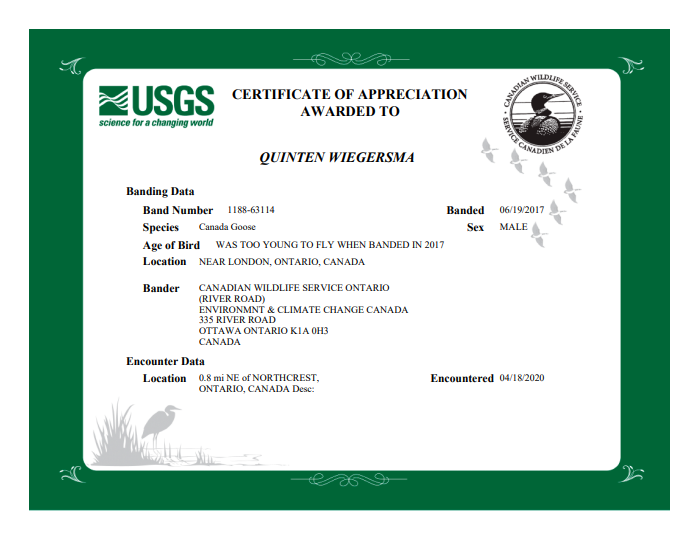
I came across a banded Canada Goose. I managed to get the band number and reported it.


There was a goose on a nest as well. The beavers have once again done a good job at damming up the place. There used to be a grassy field where this bird was nesting!


My efforts of a Virginia Rail finally paid off (I tried in five different spots today!). This is my second record for the neighborhood, and the first visual. I wasn't toting around my big lens today, so he came in quite close!


Stay safe out there, hopefully there are local areas for you to explore!

Saturday, 11 April 2020

Early April Plant Life

This afternoon I got out for just over an hour in one of London's natural areas. I can't venture too far for obvious reasons, so it's nice to have areas like these close to home.

Many early spring wildflowers still have yet to emerge, but I found a few things of interest.

My main reason for going out was to check out a population of False Rue Anemone (Enemion biternatum). This species is ranked S2, with between 5 and 20 occurrences in the province. I visited this population last spring and was pleased to find many individuals. This time around, the plants were yet to flower, but I found hundreds of plants, way more than last year, and I turned up plants in places I didn't note them previously. Should be nice when they flower!


Here is is in flower, from last year.


Another species of interest was Cut-leaved Toothwort (Cardamine concatenata). This is a common spring wildflower. While I didn't see any in flower, by the looks of it, that should be happening soon!


Canadian Wild Ginger (Asarum canadense) is just starting to peek up from beneath the leaf litter.


Wild Leek (Allium trichoccum), also known as "Ramps", was fairly prevalent in this natural area. The variety I saw was Wide Leek (A. t. var. trichoccum). It can be told from the much rarer Narrow-leaved Leek (A. t. var. burdickii) based on its reddish basal sheaths, leaf width (>2cm), and petiole length.


 There is an uncommon "albino" form of Wide Leek, with uncoloured basal sheaths (which is like Narrow-leaved Leek), so identification of this variety must be made with the combination of the other characteristics. This "albino" form is seen below.


Another nice early season plant is Early Blue Cohosh (Caulophyllum giganteum). Like the name suggests, it emerges in the early part of the growing season. It can be differentiated from Blue Cohosh (C. thalictroides) by its purple flower (the latter has a yellow-green flower). Additionally, Early Blue Cohosh flowers before its leaves open, whereas Blue Cohosh flowers after its leaves open. Early Blue Cohosh typically flowers a couple weeks in advance of Blue Cohosh.


A favourite of many naturalists is Bloodroot (Sanguinaria canadensis), named for the reddish sap that can be seen when the root (rhizome) is broken. 


Northern Spicebush (Lindera benzoin) is somewhat locally abundant in the area. It's just the buds now, but soon they will brighten up the forest with their brilliant yellow flowers. 


I would be remiss if I didn't throw in a couple mosses.
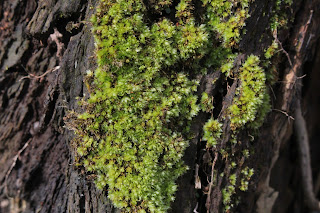
Rosulabryum capillare

Schistidium apocarpum

Yellow Yarn Moss (Anomodon rostratus)

Delicate Fern Moss (Thuidium delicatulum)

Silvery Bryum (Bryum argenteum)

Dwarf Anomodon Moss (Anomodon minor)

Bird-wise, I saw my first of year Yellow-rumped Warblers and Hermit Thrush. Lots of Golden-crowned Kinglets today.

It is a very strange world we live in currently. Hopefully you can get out safely and still enjoy some of what has to be offered around home!

Wednesday, 1 April 2020

April Fowl's Day 2020

On Monday James Holdsworth found a stunning male Common Teal, the Eurasian (nominate) subspecies of Green-winged Teal (Anas crecca crecca) in Lambton Shores, near Port Franks. While many authorities consider our usual American Green-winged Teal (A. c. carolinensis) and Common Teal to be two different species, here in North America, they are currently considered one. Perhaps one day they will split it!

I missed seeing the Common Teal that showed up at Hillman Marsh a couple years ago, so since this bird wasn't too far, and it was a nice day for a drive, I decided to go for it. Distancing myself from others wouldn't be an issue, since it was in a field on the side of the road!

Upon arriving, I could see the fields were flooded a lot more than what they were last week when I checked out the area (after seeing Middlesex's first nesting record of Common Raven close by). Lots of American Wigeon and Wood Ducks, along with many Bonaparte's Gulls were present. I saw my first Tree Swallows and Blue-winged Teal of the year, and heard my first Eastern Meadowlark. I only saw a few Green-winged Teal, all Americans, so I hopped back in the car and went a bit further up the road. On the other side of the creek, was a larger group of ducks, the majority of them Green-winged Teal.


I scoped out the flock, and on my third pass, I picked out the target bird. I was soon joined by "MB" who also got to see the bird.


Photos are pretty bad, but they show the characteristic bold white horizontal stripe on the side, and the lack of the vertical white bar (American Green-wingeds lack this bold horizontal stripe, and possess a vertical bar). In person, the bird also appeared a bit paler.


A successful little outing, and it was nice to see some more migrant birds coming through.

Sunday, 22 March 2020

Elgin Excursions

Since getting back from my trip up north, I have made a couple jaunts down to Elgin county.

Last Thursday, I went to Port Stanley in hopes of finding the reported Black Vultures, as I have never seen one actually in Ontario. I have seen the ones in Niagara on the American side from Canada, but I took them off my Ontario list awhile back since it'd be easy enough just to see them in the province.

When I arrived, the fog was quite low, and it was looking grim, but on my second pass through the town, I found a gathering of vultures sitting in a tree, and with them was the target bird.


Today, I had Eurasian Wigeon on the mind, so I decided to check out the Aylmer Sewage Lagoons. No dice on a Eurasian though...will have to keep looking!

When I first arrived, there was no waterfowl visible. Thankfully, it seemed that they were all just hunkered down in the furthest cell. They were disturbed by my presence but soon settled down again.


Oh yeah, saw this Coyote.


There was a good assortment of waterfowl to sort through. Nothing rare, but plenty of Common Mergansers, Ring-necked Ducks, Lesser Scaup, Bufflehead, and Redhead. There were lesser numbers of American Wigeon, Gadwall, Hooded Merganser, Ruddy Duck, Canvasback, and Northern Shoveler, to name a few.

Common Merganser

American Wigeon

Redhead

Gadwall

Lesser Scaup

There were a few Great Blue Herons.


A few Ring-billed Gulls were flying around, so they seem to be migrating back. A few Bonaparte's Gulls as well.


From what I have heard, the Tundra Swans moved through quite quickly. There were a few stragglers.


Some Horned Larks landed closeby. This one was in a plumage I don't see too often.


Best birds were a couple of Trumpeter Swans. This is a species that is still quite uncommon in the southwest of the province away from the GTA (though those birds are a whole other matter). They are probably overlooked though.


Onward with Spring...

Bonus: I found a nice Eastern Screech-Owl in my neighborhood a couple weeks ago. Here is a photo.