For the remainder of my time at the Little Piskwamish field camp, I will list some of the highlights.
August 4, 2019
I saw some cool plants.
 |
| Red Bulrush (Blysmus rufus) |
 |
| Green Bog Orchid (Platanthera huronensis) |
Fireweed (Chamaenerion angustifolium) is a favourite of mine.

Also saw this Boreal Chorus Frog.

August 6, 2019
I went to go read some knot flags with Amie on this day in the Far South. Since it was a late tide (the latest tide of my time at Piskwamish), we ended up coming back into camp late (we got back around 9pm). The biggest highlight on this day, however, was on the walk back. I had stopped to take a picture of a plant, and then all of a sudden I heard it. A faint tick-tick-ticktick. It was my lifer Yellow Rail! Yellow Rails were oddly scarce at Piskwamish this year, and it was the only one I encountered all month.
August 7, 2019
I did a wee bit of botanizing in the marsh on this day. I also found my first Black Meadowhawk of the season.
 |
| Mud Sedge (Carex limosa) |
 |
| Purple Rattlesnakeroot (Nabalus racemosus) |
 |
| Chaffy Sedge (Carex paleacea) |
 |
| Black Meadowhawk |
In the evening I made a call home to my family on the satellite phone since it was my grandfather's birthday. This time I remembered to extend the antenna all the way!
I spent a little bit of time in the evening photographing the camp. It is very pretty.
 |
| One of the sleeping cabins (mine) on left |
 |
| Pathway from camp to marsh |
 |
| Kitchen cabin (exterior) |
 |
| Kitchen cabin (interior) |
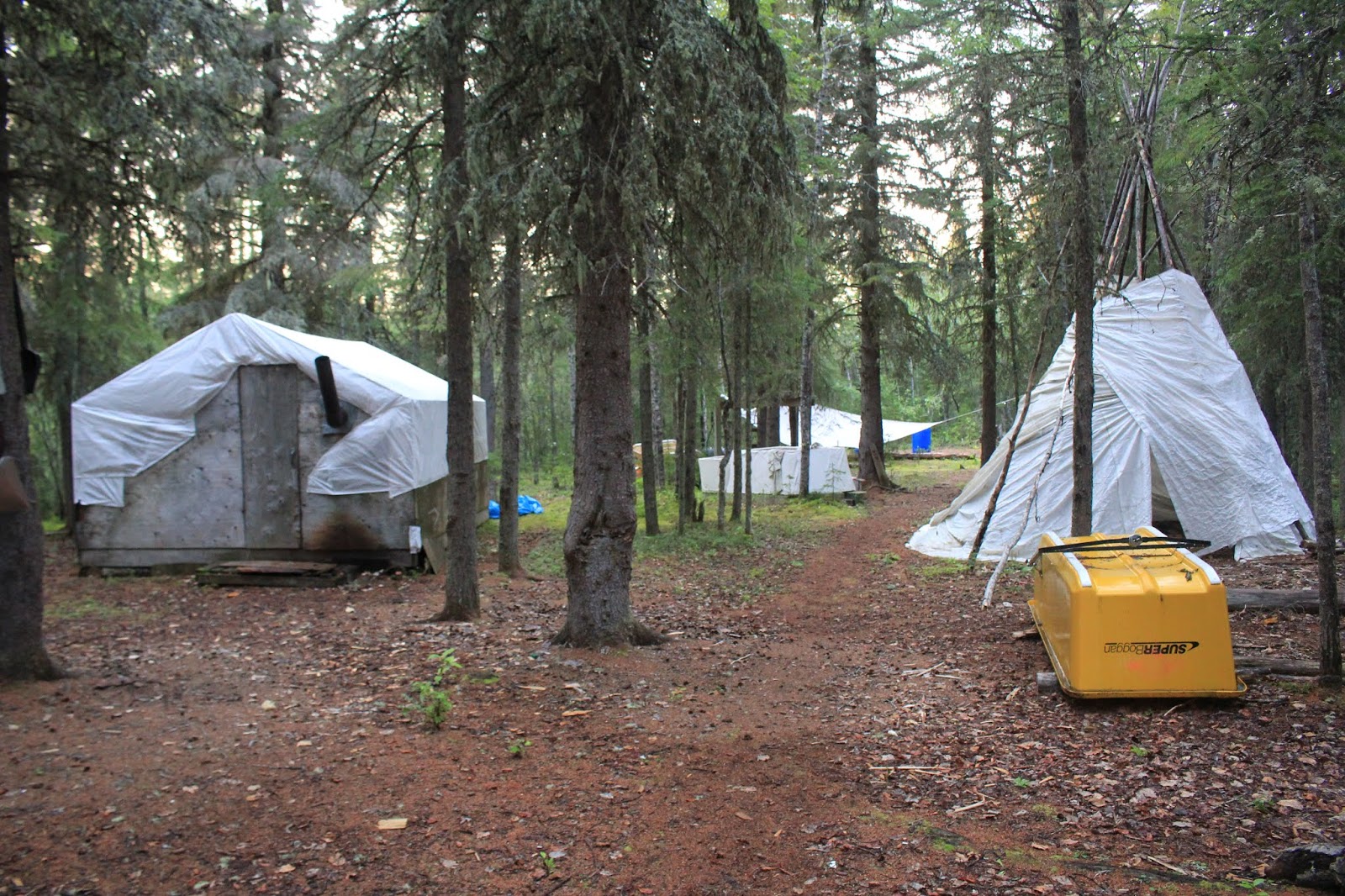
 |
| Rain barrel and water collection tarp (for camp chores) |
August 8, 2019
A day for the odes! I finally found where all the "good" darners were hanging out, so I spent a couple hours chasing them around. I had been searching for Sedge Darner, but hadn't gotten lucky yet!
 |
| Lake Darner |
 |
| Subarctic Darner |
 |
| Four-spotted Skimmer |
August 10, 2019
Tyler and I ventured north on the north survey route this day. Just before we started, I had to go back to camp to rebandage my foot since it was killing me. In my time away, Tyler had a Pacific Loon fly by. Can't win them all! This was something like the third southern James Bay record (surprisingly).
We went up to Big Piskwamish, which has a lovely little marsh in behind it. It had some neat plants in it.
 |
| Tilesius Wormwood (Artemisia tilesii) |
 |
| American Slough Grass (Beckmannia syzigachne) |
There were a few odes in the marsh behind, highlights being Emerald Spreadwing and Delicate Emerald.
 |
| Emerald Spreadwing |
 |
| Delicate Emerald |
Just as we were about to leave, I was walking along the ridge, and a Sedge Darner essentially flew into my net! Success! It was one of only a couple I would see the entire month.
 |
| Sedge Darner |
That night, Tyler and I set up a moth sheet. Saw a couple cool things.
 |
| Boomerang Dart |
 |
| Finned-willow Prominent |
August 11, 2019
Aerial survey day! The four of us split up and went to our respective spots to count birds as the helicopter, carrying a couple biologists, flew over. My spot was about 6 or so kilometers south of camp. When I was about 3 kilometers away, I get the radio call from Tyler. They had just had a Blue Jay in camp! Blue Jays are quite rare in Southern James Bay. Interestingly, Longridge had at a Blue Jay about 10 days prior. I decided I was just too far to turn around to go see it, and make it to my spot on time. Needless to say I was bummed. I never thought I'd be so mad to miss a Blue Jay.
The aerial survey itself was neat. Though a tad anticlimactic. The chopper circled around Amie to the south of me about 5 times, then buzzed over me in a matter of a couple seconds. My birds went up and down in 5 seconds, and the sun was in my eyes. There were only about 6500 shorebirds too, which made it a bit boring...haha. A highlight for me were two American White Pelicans that were flushed up by the chopper.
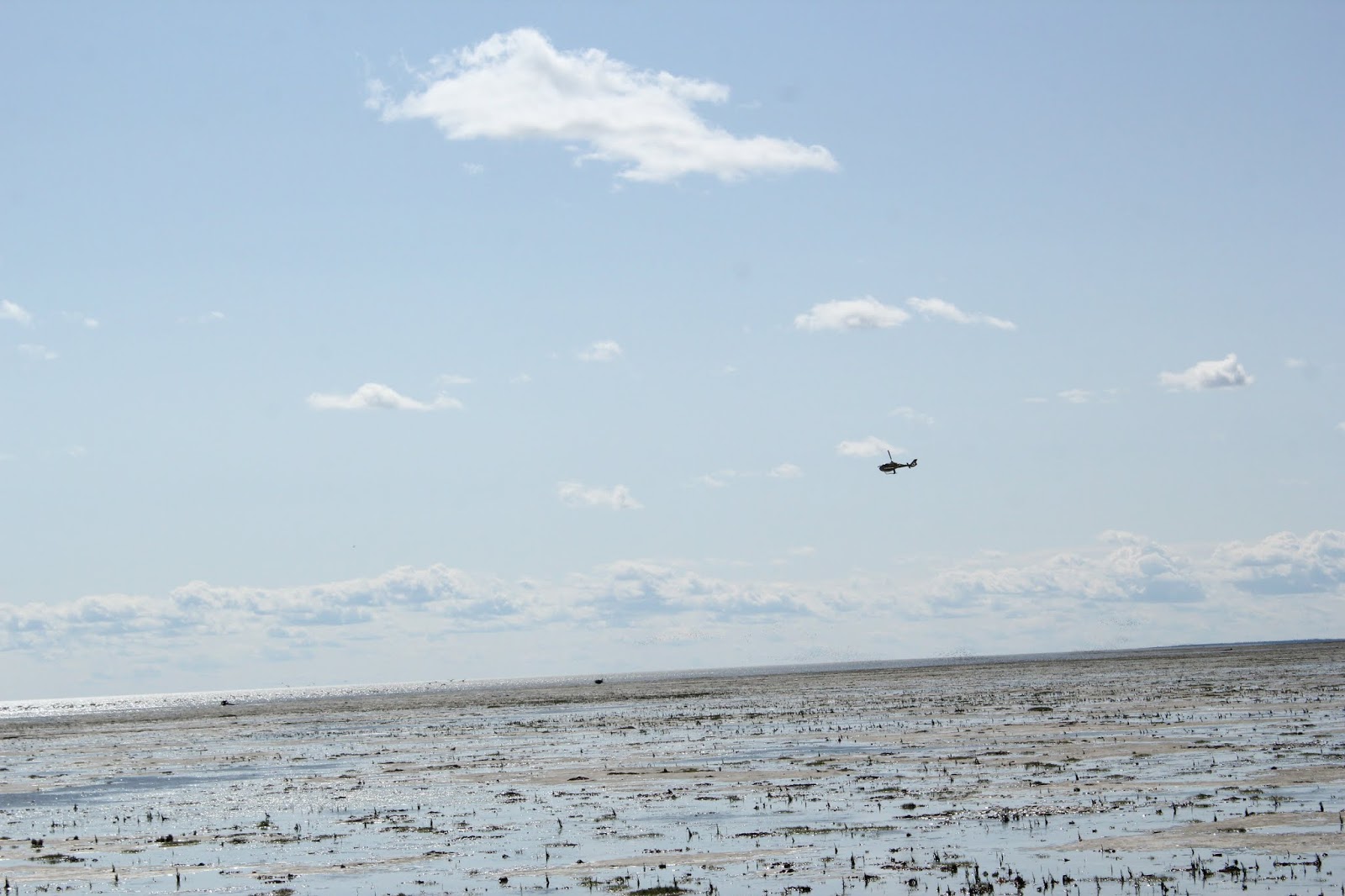
Later that day, Tyler and I made the trek to the winter road, about a kilometer inland from camp. The winter road is drivable in the winter and stretches from Moosonee up to Attawapiskat. It was quite the adventure to get back there, but now I can say I've been!
 |
| Winter road (note road sign) |
August 12, 2019
My last day at Piskwamish.
Early in the morning, I went out to the platform (a wooden structure in the marsh that we put our bags on to keep dry during crew change), to look what birds were moving along the ridge. Then I heard it. a freaking Blue Jay! I ran into camp, making sure it wasn't Tyler messing with me. It wasn't! The jay eventually flew into camp. I wasn't able to get any photos, but saw it fairly well. On a side note, a Northern Goshawk flew in response to the Blue Jay playback.
Of course, in the most James Bay like fashion possible, the weather was crap. It rained and the wind blowed (it was cold) for about 3 hours non stop as Tyler and I trekked 10 kilometers to the south. Our survey notes were very messy, and our fingers were frozen. The only way we could write was by wrapping out entire hand around the pencil. Optics became virtually useless, so it was a good thing I was able to identify everything by call!
As we reached the end of the route, the sun came out. It looked like it was going to be a nice day. We went on a little detour back into the marsh to see what we would find. And we found something. Tyler spotted a raptor a couple kilometers away sitting on a log. It was at a distance we could sort of make out patterns, but we couldn't say anything for certain. It was sitting pretty odd, and the pattern, what we could make out anyways, also seemed a bit odd. We picked up our scopes and walked about 10 feet before looking again, and the bird was gone, never to be seen again. We looked at the guide when we got back to camp that night, and had an "oh crap" moment when we saw Swainson's Hawk. Too far too call, and we couldn't be certain. Argh! Buteo sp. it is...
We were going to read flags on our way back, and Tyler and I each took a section of a flock. At one point I looked back, and over the treeline was a huge dark cloud, heading straight for us. I wasted no time in taking off. I managed to avoid it (amazing how you can see things coming for kilometers!) Tyler, on the other hand, persevered in his flag reading, and didn't miss it. He told me the rain and wind drove him to his knees, hanging on for dear life. I wasn't in the clear though. With 10 kilometers still to walk, I got hit by about four more waves of rain. Tyler eventually caught up, and we came back to camp cold and wet, but not miserable. You can never be miserable in James Bay.
That night I, along with Kevin, enjoyed our last supper at Piskwamish. The helicopter would be coming in the morning.
August 13, 2019
Except the helicopter never came in the morning. In fact, it never came that day.
Due to some weather conditions, and visibility issues (which Longridge may have contributed to, telling the pilot in Moosonee that it had "decreased"), we were stuck at Piskwamish for another day. We had fun, however, spending the day burning garbage and training our camp Gray Jays. We succeeded in gaining one's trust, having him seek us out for handouts. At one point, I raised my binoculars to look at a bird, and the thing landing on the binoculars as I had them on my face. A shame nobody had their camera ready.
That night, it was actually my last supper at Piskwamish. The next day I would be throwing my gear into a chopper and flying 20 kilometers north to Longridge Point.


