James Bay 2019:
Part One
Part Two
July 31, 2019
The chopper was leaving Akimiski Island around 8am, so we were set to be at the Moosonee airport around 10:30. After one last breakfast at the Northern Store, we packed our stuff into the MNR truck, and went to the airport. The chopper arrived soon after.
Obligatory helicopter selfie...

After our safety briefing, we got into the chopper and prepared for liftoff.

Then we were off!

Little Piskwamish is located about 45 kilometers north of Moosonee, so the chopper ride was around 20 minutes. We flew over the expansive taiga forest. The Hudson Bay Lowlands make up one of the most intact true untouched wildernesses in North America, and perhaps the world.


Soon, we neared Little Piskwamish, my home for the next two weeks.

After unloading, we said goodbye to the chopper and the outgoing crew members. We were left alone, and would not be seeing the chopper until at least August 11th, when we were to have our aerial survey.
We unpacked, got acquainted with Amie MacDonald, our camp lead, and started to process that we were back on the coast.
After another safety briefing (this time on how not to be eaten by bears), I wasted no time in catching up with some odonates. Variable Darner was my first catch, and a lifer ode to boot! Variable Darners proved to be the most numerous darner.

After lunch, we headed out to the flats for an orientation. Tyler had been at Piskwamish last year, but this was mine, and most certainly Kevin's, who had never been to the region before, first time at the site. After hearing the stories of the tens of thousands of birds that congregate at Piskwamish, I was eager to see them for myself.
But...there were no birds. It was quite ironic actually.
We attributed the lack of birds to the high tide. Finally, we saw a couple birds further south, so we got closer. Soon, I was once again surrounded by Hudsonian Godwits, White-rumped Sandpipers, Semipalmated Sandpipers, and even a few Red Knots (one of which had a flag, which I successfully got...I think it was my first ever knot flag!). The highlight was a Red-necked Phalarope which essentially dropped out of the sky and landed right in front of me, becoming the first phalarope for Piskwamish of the season.
It was very windy, which seemed to push the darners out over the flats. Some would grab a deerfly (which were nicknamed "Bulldog flies" because of their fierce looking jaws), and then land on the ground. Over the course of the month, not to brag or anything, but I became quite skilled at hand-catching them (as I did that day) ;-)
 |
| Subarctic Darner |
 |
| Zigzag Darner |
I even managed to catch a Somatochlora emerald dragonfly, a Delicate Emerald (lifer).

With my new found appreciation of botany, there are some unique plants which are found on the coast. Here are a few seen on the first day.
 |
| Sea Plantain (Plantago maritima) |
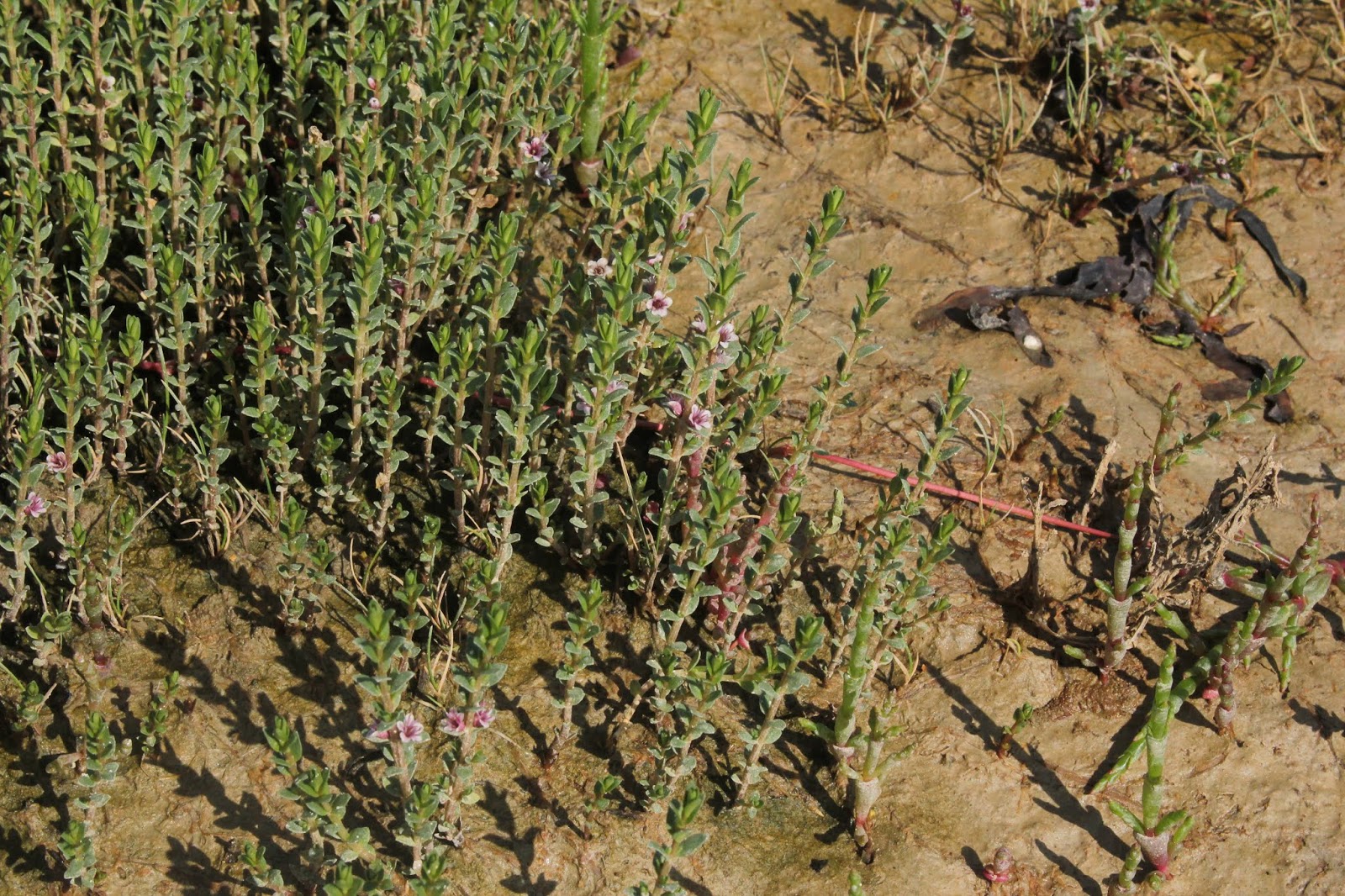 |
| Sea Milkwort (Lysimachia maritima) |
 |
| Marsh Fleawort (Tephroseris palustris) |
Later that evening, I went down to the creek where we get our drinking water, and found another lifer ode, Taiga Bluet.

I caught a Lake Darner on the way back. Lake Darners were the second most abundant species of darner on the coast.
It was a splendid first day, and I was really looking forward to the next month!
August 1-3(ish) 2019
Days sort of got jumbled together, so I won't always have the most exciting stories for each day (though August 21, 2019 is forever burned into my mind), but I'll try to summarize what happened.
We did our first set of surveys on August 1. Amie and Kevin took the North Survey route, and Tyler and I took the "Near South" survey route. I remember "lots" (~6000) White-rumped Sandpipers and a few thousand Semipalmated Sandpipers as being the most numerous birds. Highlights were a couple family groups of Marbled Godwits, which breed in small numbers on the coast. Here are two juveniles.

We had a Marbled Godwit, who became to be known as "Dad", who for over two weeks relentlessly defended his young, which where near adult size by that point! He would regularly divebomb us, and other birds (ravens, cranes, and even a Bald Eagle). We always knew where we where when we heard him! (somewhere about 2.5 km south of camp, as I recall)
Later on in the survey, a bunch of shorebirds went up and the yellowlegs started making a racket. I looked over to see what was the matter, and couldn't believe it! I started screaming "GOSHAWK!!!" At Tyler, but unfortunately he wasn't able to get on it. We had a pair of adult Northern Goshawks at Piskwamish, and saw them almost daily. It was certainly a treat! There were a few times where they passed by us mere meters away.
A couple more plants, this time sedges.
 |
| Golden Sedge (Carex aurea) |
 |
| Common Cotton Grass (Eriophorum angustifolium) |
On August 2nd, Tyler and I did the "Far South" survey route, which was about a 2.5 hour walk just to get to the start point. The weather was not too nice (windy, rainy, cold), but we persevered.
As Tyler promised, I finally got to see some numbers...
The most numerous shorebird was White-rumped Sandpiper, numbering around 12,000. There were thousands of other shorebirds as well, including Semipalmated Sandpipers, Hudsonian Godwits, and Red Knots. Highlights were a Wilson's Phalarope, another first for the season at Piskwamish, and a Short-billed Dowitcher. An even bigger highlight was a flock of American White Pelicans which fly by low to the water at the end of the survey. Pelicans are a somewhat recent addition to the breeding birds of James Bay. They nest up near Akimski Island, and come down to the Moose River to feed.
On August 3rd, Tyler and I made the walk to "The Barge", an old rusted dock portion that has washed up, which is slightly over halfway between Piskwamish and Longridge. Ross Wood from Longridge was walking down to meet us, as were were going to have an exchange of goods. Newspapers for us (to dry boots!) and carrots for them!
The walk, which was somewhere around 13km, was quite enjoyable. It was a little more difficult than it would probably normally be, since our legs and feet were not quite used to the terrain yet (I battled numerous blisters and other walking-related injuries this year). Along the way, we saw the only Black Bears I saw during my time at Piskwamish, a mother and cubs, and a large male.
After the meetup and exchange of goods and intel, we began our walk back. Many Ruddy Turnstones were seen, the most we saw during the two weeks. We did the "North" survey route on our way back, which was highlighted by several Short-billed Dowitchers and a Wilson's Phalarope.
A wonderful start to the month!


